
Is a Sewer Backup an Emergency or Can It Wait Until Morning?
The smell hits you the second you open the basement door. Wastewater. You flip on the light and there's a wet ring around the floor drain — maybe a half inch of brown water spreading toward the wall where the carpet starts.
It's 10 PM. You have already paid one after-hours rate this year. The question rolls in fast: do you call tonight, or does this thing actually wait until morning?
The honest answer depends on what's happening upstream and how much water is still being asked to leave the house. Some sewer backups stop on their own once nobody's running water. Others keep gaining ground every hour. The difference is worth knowing before you decide which call to make.
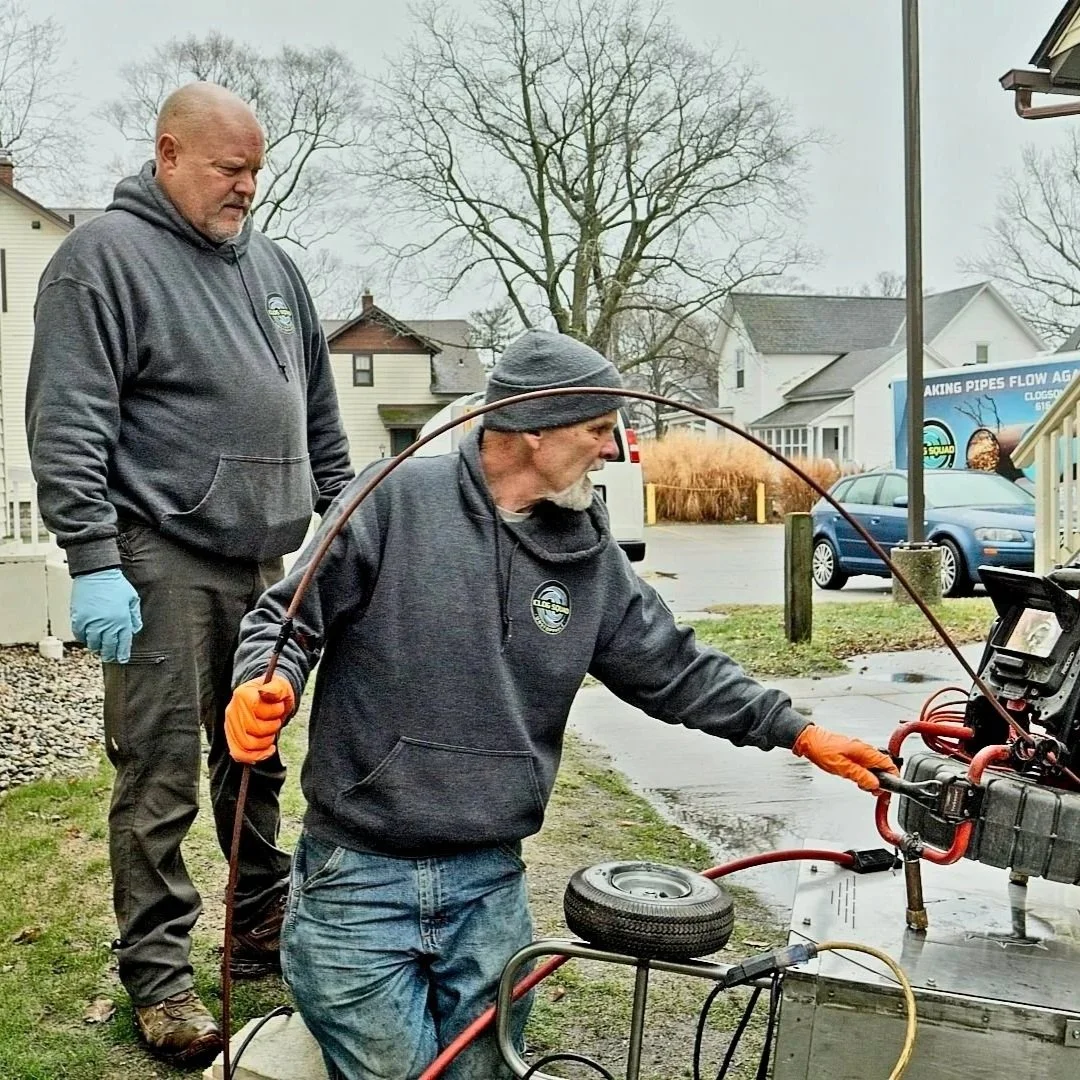
What you're actually looking at when sewage surfaces in the basement
A basement sewer backup means the main line — the pipe carrying every drain in the house out to the city sewer or septic — is restricted enough that wastewater is finding the lowest open outlet. That's usually the basement floor drain. Sometimes it's a basement shower, a basement toilet, or a laundry standpipe.
Here is the mechanism. Every fixture above the restriction is still pushing water into the main line. When the line can't pass that water downstream, the water has to go somewhere. It rises until it finds the first opening that sits below the restriction — and a basement floor drain is the lowest opening in most houses. Think of it like a stopped-up double-bowl kitchen sink: plug one basin, run the tap, and water climbs up the other side until it finds the overflow. Same physics, larger pipe, more uncomfortable contents. The water that comes up isn't a clog from your basement. It's everything from the upstairs bathrooms and the kitchen, looking for the easiest exit.
That's why a backup that started after someone took an upstairs shower usually slows down once the shower stops. The water already in the line has to go somewhere; once nothing new is being added, the rising stops. Until somebody runs the dishwasher.
When it's a definite emergency — call now
A few situations push this from a wait-and-see into a call-tonight. If any of these match what you're seeing, the answer is to stop using water and pick up the phone.
The first is water that keeps rising on the basement floor with nothing running upstairs. That means the restriction is total. The line is full, the surface keeps climbing, and the next gallon coming up is from somewhere — a running toilet flapper, a slow leak, snow melt entering a yard cleanout. This one doesn't wait.
The second is sewage reaching finished surfaces. Drywall, baseboards, carpet, hardwood, subfloor. These materials wick contamination fast, and the cleanup math gets worse by the hour. Stopping the rise and starting cleanup tonight is what keeps the damage in a cleanable footprint.
The third is multiple fixtures involved at the same time. A toilet bubbling while the washing machine drains, a tub filling with wastewater when a sink runs upstairs, a kitchen sink that won't drain at the same time the basement floor drain is wet. Anything happening on multiple fixtures means the main is the problem, and the main needs to be cleared before anyone showers.
The fourth is a household with anyone who has to use the bathroom in the next eight hours. Kids, anyone on dialysis, anyone with a medical schedule that involves water. Telling people not to flush until morning is a much harder ask than it sounds.
The fifth is a known repeat. If this has happened before and the line has been snaked once or twice already this year, the restriction is something a cable machine isn't fixing. Waiting another twelve hours just lets the line fill further before someone gets to it.
If any of those apply, the question isn't really whether it's an emergency. It is. Same-day or same-night service costs more than a weekday morning call, but the cleanup math from a few more hours of contamination usually makes the after-hours rate the cheaper option.
When it can probably wait — and how to keep it stable until morning
Not every basement floor drain showing some wastewater is a 10 PM call. A few situations actually do wait.
The water rose, then stopped, and the level has been steady for an hour with no one running water in the house. Nothing has touched finished surfaces — the wet ring is contained to the unfinished concrete around the floor drain. Only one fixture is involved, and a basement toilet that won't flush is a different problem from a main-line backup. Everyone in the house can avoid water use until morning. No dishwashing, no showers, no laundry. A single late-night flush of an upstairs toilet won't blow the line back open if the rest of the house stays dry.
If those conditions hold, what gets you safely to morning is staying off the water. Every gallon someone runs upstairs has to come up somewhere, and right now "somewhere" is your basement floor.
Put a few old towels around the wet ring to catch any small new rise. Shut the bathroom doors to keep pets and kids out — wastewater carries E. coli, Salmonella, and the same bacterial load that makes raw sewage a health department concern. If your forced-air return is in the basement, shut the HVAC system off so the blower isn't pulling contaminated air upstairs.
If you can reach the main shut-off valve and understand how to use it, shutting off the supply to the house eliminates the risk of an accidental flush in the middle of the night. One more outdoor check, if it's safe and the area is lit: find the main-line cleanout cap in the yard or alongside the foundation. If sewage is spilling out of that cap, the line has found an exterior outlet — messy, but better than another rise inside.
Why waiting often gets more expensive
The case for catching a backup early — even at an after-hours rate — is what happens to the surfaces it touches.
Drywall and unfinished subfloor are porous. Wastewater sits against them, capillary action pulls contamination an inch or two up the wall, and now the bottom row of drywall has to come out. Carpet pads sponge sewage and don't come back from it. Hardwood swells. Subfloor pulls contamination down to the joists. Mold needs only 24 to 48 hours of wet contact to colonize the back side of drywall and the underside of subfloor, which is why restoration crews tear out wet material instead of trying to dry it in place. Two hours of standing wastewater is a different cleanup job than eight hours.
Restoration companies bill by the affected square foot, and the rate per square foot doesn't change based on how the contamination got there. A line cleared at midnight, followed by a wet-vac cleanup with disinfection, is a few hundred dollars and a couple of hours of work. The same backup left until morning is often a four-figure cleanup with replaced drywall and subfloor sections.
The other expense — easy to miss — is what the line itself does while it sits full. Wastewater is corrosive. A cast iron pipe left full of standing sewage for hours accelerates the same rust scale that probably contributed to the backup in the first place. The longer it sits, the worse the pipe behind the restriction gets.
How to read the situation if you're not sure
A useful frame when the situation is in between: imagine the household at 6 AM. Someone wakes up and forgets, flushes the upstairs toilet on autopilot. What happens?
If the line is still restricted, that flush lands in the basement. By the time the household is awake, the wet ring is twice the size, and it's reached the carpet or the baseboards. The decision was effectively made by 6 AM regardless of what got planned the night before.
If you don't trust everyone in the house to stay off the water until a morning appointment, the realistic call is tonight. The marginal cost of an after-hours visit is usually less than the cost of one accidental flush across an already-saturated line.
The other frame is to look at how long it's been since the last clearing. A line that was snaked recently and is backing up again means something fundamental was missed in the first cleaning — usually because a cable machine punched a hole through the obstruction without removing it. A camera inspection paired with full-diameter cleaning is what stops the cycle, and starting that work in the morning costs the same as starting it tonight on a line that's been stable since 8 PM. Starting it on a line still rising at midnight is the higher-stakes version of the same job.
Frequently Asked Questions
What does it mean if water is rising in the floor drain but nothing is running upstairs?
+It means either residual water in the line above the restriction is still draining toward the lowest opening, or something is adding water somewhere — a leaking toilet flapper, a slow drip, snow melt entering a yard cleanout. If the rise doesn't stop within thirty to sixty minutes of full quiet in the house, the line is likely taking on water from outside the building, and that's an emergency-rate situation.
Should I shut off water to the house during a backup?
+If the rise hasn't stopped and you can confidently turn the main shut-off valve without flooding anything, yes. It removes the risk of a sleeping family member running water overnight. If you don't know where the valve is or whether yours works, leave it — call a plumber and ask everyone to stay off the fixtures until they arrive.
Will the backup stop on its own once we stop using water?
+In a partial restriction, often yes — the line drains past the obstruction once nothing new is being added, and the basement water level holds steady or drops a little. In a total restriction, no. The line is full, and nothing is moving until something clears it. The first hour of no water use is the test.
When should I call my insurance company about a backup?
+Photograph the water and the affected area with a timestamp as soon as it's safe, and call the insurer once the line has been cleared and the area is stable. Most homeowners policies require a separate sewer-backup endorsement to cover this kind of event, so the first question to ask is whether your policy includes it. The plumber's invoice and a written description of the cleanup work both go into the claim.
How long can sewage sit before drywall and subfloor are ruined?
+Faster than most people expect. Drywall starts wicking contamination within two to four hours of contact, and disinfection alone doesn't restore it once that's happened — the affected section has to come out. Subfloor lasts a little longer, but capillary action pulls wastewater into wood fibers within a few hours as well. The window for keeping the damage contained to the concrete is usually under six hours from when the water first reached the wall.
Making the call when you are on the fence
When the answer to "is this an emergency" isn't obvious, the deciding question is whether the line is still under load. If the household can stay off water entirely until morning and the surface in the basement is stable, a normal-rate appointment first thing is reasonable. If there's any chance the line is still taking on water — from a slow leak, a yard inflow, a running fixture, or just six other people in the house — the cost of waiting builds while everyone is asleep.
A backup that started rising and has now stopped is a problem that can be diagnosed in daylight. A backup that's still rising at midnight is a problem that gets worse every hour. The cleanup math, not the line itself, is what makes the difference between a routine clearing and a multi-day restoration job.
