
How to Tell If a Kitchen Clog Is Past the Garbage Disposal
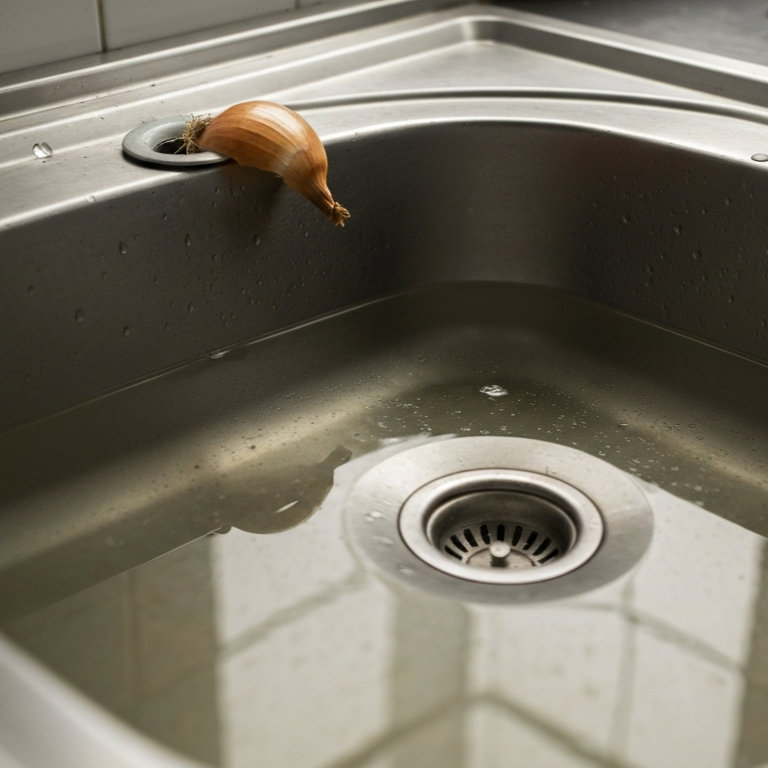
You flip the disposal switch up, listen to it hum for two seconds, flip it back down. The water hasn't moved. You hit it again, holding the switch this time. The grinding gets louder. The basin still has three inches of standing dish water in it, with a film of oil on top and a piece of onion skin pinned against the rim of the sink stopper.
You shut the switch off. The disposal is working. The water still isn't going anywhere.
That's the moment most homeowners realize the disposal isn't the bottleneck. Whatever it sent past the throat is sitting in a line further down, and the line is what's full. Knowing which side of the disposal the clog sits on is the difference between a five-minute reset and a service call.
The disposal is a grinder, not a pump
A garbage disposal doesn't push water down the line — it's a food processor, not a pump. The motor turns a steel plate inside the grinding chamber, food gets caught between the spinning plate and the stationary cutting ring, gets ground into fine pieces, and drops out through the bottom of the chamber into the tailpiece — the short vertical pipe leading to the P-trap.
That's the entire job. Grind, drop, hand off.
Once the slurry leaves the chamber, the disposal has no further influence over what happens to it. If the tailpiece is open and the line beyond it is clear, water moves. If the line is coated with grease, narrowed by old food paste pressed into the wall, or running into a partial blockage past the P-trap, the disposal can grind all day and the water will keep sitting in the basin.
Think of the disposal as a paper shredder mounted above a wastebasket. The shredder turns paper into confetti. The wastebasket is what carries it away. If the basket is full, the shredder still works — but the shreds have nowhere to go. The kitchen drain past the disposal is the wastebasket.
The four-second test that tells you where the clog sits
Before you reach for anything else, run this quick check. It takes the disposal out of the picture by isolating the water flow from the grinding.
Turn the disposal off. Plug the basin without the disposal — the other side of a double-bowl sink, if you have one — and fill it with about an inch of clean water. Pull the stopper and watch.
If the water drains normally out of the non-disposal side, the disposal-side basin is the only one with a problem, and the clog is right at or just below the disposal. Tailpiece restricted, trap full, or food wedged in the chamber's discharge port.
If the water in the non-disposal basin also sits there and doesn't drain, the clog is past the wye fitting — the Y-shaped connector where both basins join into a single pipe before the P-trap. When the line past that wye is blocked, both sides back up at the same rate.
A single-bowl sink doesn't give you the comparison, but the test still works modified. Fill the basin and watch the rate it drains while the disposal is off and empty. Slow drainage with no food in the line means the clog is past the trap — coating the branch line between your sink and the main waste stack inside the wall.
The whole test takes sixty seconds. The answer changes which tools come out of the cabinet next.
What "past the disposal" actually means in pipe terms
The kitchen sink isn't a single drain. It's a four-section pipe assembly, and the clog could be sitting anywhere in it.
The tailpiece is the short vertical pipe directly under the disposal's discharge port — three to six inches before it bends into the trap. A clog here is rare on a working disposal, but possible when something undersized slips through. The P-trap is the U-shaped pipe under the sink that holds standing water to block sewer gas. The bend at the bottom is the lowest point in the assembly, and it's where heavy slurry settles when the line beyond it can't move water fast enough. A clogged trap is the most common past-the-disposal call.
The branch line runs horizontally inside the wall behind the sink, carrying water from the trap to the main waste stack. The branch line is where grease coating lives. Cooled cooking oil and dish-soap residue stick to the inside of the pipe and harden against the wall, and pasta starch, rice, and coffee grounds — three of the worst things to send down with the disposal — get caught in the coating and add to it. After months, the effective diameter can drop to half or less.
The main waste stack is the vertical pipe that carries everything in the house down to the building drain. Clogs here back up multiple fixtures at once, not just the kitchen. If your kitchen is slow and your downstairs toilet is gurgling, the problem isn't past the disposal anymore — it's past the kitchen branch entirely.
Symptoms that put the clog past the grinder
When the disposal is mechanically sound, but the water isn't moving, a few signs tighten the diagnosis. The disposal grinds normally and the basin still holds water during operation. Both basins of a double-bowl sink rise at the same rate, when either drain is in use. The dishwasher backs up into the sink during its drain cycle. Flow that gets worse over weeks. A clog that returns within days of clearing it — a snake punched through a soft restriction without removing the wall coating leaves the line slightly open, and the first heavy dish-cleaning closes the channel again.
The opposite signs put the problem inside the grinder. A disposal humming without grinding has something wedged against the plate — power it down at the wall switch and turn the impeller free with an Allen wrench in the reset slot under the unit. A disposal that won't power on at all has tripped its internal breaker; the red reset button under the unit fixes it. A leak under the sink during disposal use is a worn discharge gasket or a loose tailpiece nut, not a clog.
The double-basin clue most homeowners miss
The double-basin sink is one of the most informative diagnostic tools in the house, and most homeowners never read it correctly.
Both basins share a single drain line. They merge in a wye or tee fitting an inch or two below the basin bottoms, and the combined pipe runs down to the trap. The disposal sits on one side; the other side drains through its own short stub into the wye. Anything blocking the line past that wye affects both basins.
Run the faucet hard on the disposal side and watch the non-disposal side. Water rising in the non-disposal basin tells you the clog sits past the wye — in the trap or the branch line. The reverse test works too: pour a half-gallon of water down the non-disposal side and watch the disposal side. Water rising around the disposal flange means the clog is past the wye. If the non-disposal side drains cleanly and nothing happens at the disposal side, the clog is between the disposal and the wye — wedged in the discharge port or the tailpiece just below it.
The information is sitting there every time water flows. Most homeowners never watch the other basin while running the disposal side, and the diagnostic clue passes by.
When the dishwasher tells you the answer
A dishwasher with a clogged kitchen sink can settle the question on its own. The drain pump pushes water through a flexible hose, up to an air gap or a high loop under the sink, then down into the disposal's dishwasher inlet or a stub on the sink tailpiece. From there it has to get past the same wye fitting and the same branch line as everything else from the sink.
When the kitchen line is clear, the dishwasher empties in two to three minutes. When the line is restricted past the wye, the pump pushes water into a pipe that can't take it fast enough — and the water finds the lowest open path back, up the sink tailpiece into the basin. A dishwasher cycle that ends with two inches of standing water in the kitchen sink is a clean signal that the kitchen branch is restricted. If the dishwasher backs up but the sink alone takes its time draining without overflowing, the branch is restricted enough to fail at the dishwasher's flow rate, and the line usually needs cleaning inside a month or two.
What to try yourself, and when to stop
A few moves are worth the effort before calling for service.
Clear the trap by hand. Place a bucket under the P-trap, loosen the two slip nuts, pull the trap down, and dump the contents into the bucket. Run the trap under hot water in another sink and check the U-bend for settled slurry. Reinstall. This clears about a third of past-the-disposal calls and takes fifteen minutes.
Plunge the non-disposal side. A standard sink plunger over the non-disposal drain, with the disposal-side drain plugged with a wet rag, can break a soft restriction in the trap or just past it. Push down sharply six to ten times. Plunging directly over the disposal flange spreads water across the counter without transferring force into the line — the seal isn't tight enough.
Run hot water with degreaser. A cup of dish soap into the basin followed by a kettle of just-boiled water poured down the disposal side can soften a fresh grease layer. This won't move a hardened coating that's been there months, and the standing soapy water becomes a slip hazard if it overflows. Skip it on a fully blocked line.
Don't pour chemical drain cleaner. Sulfuric acid or sodium hydroxide openers heat the line as they react, and the heat softens older PVC trap connections and erodes the rubber gasket inside the disposal's discharge boot. The damage often costs more to repair than the original clog would have to clear professionally.
The stop point: if the trap is clean, the plunge did nothing, and water still isn't moving, the restriction is past your reach. The branch line is inside the wall, and clearing it takes a tool that scrapes the pipe wall edge to edge rather than punching a hole through the coating. A snake pulled through a kitchen drain coated in grease bores a tunnel that closes inside two weeks. A flex-shaft cable with rotating chains lifts the grease off the wall and restores original interior diameter — which is what keeps the line clear afterward.
Frequently Asked Questions
Will running the disposal again clear a clog past it?
+No. The disposal grinds; it doesn't push water. If the line beyond the discharge port is restricted, running the disposal longer just grinds more food into water that has nowhere to go. Repeated long runs against a clog can also overheat the disposal motor and trip its internal breaker.
What does it mean if water comes up in the other basin when I use the disposal side?
+Both basins of a double-bowl sink share a drain line that joins in a wye fitting below the sink. Water rising in the opposite basin means the line is restricted past that wye — almost always in the P-trap, the branch line behind the wall, or the wye fitting itself. It's the clearest sign the clog isn't in the disposal.
Why is my disposal making noise but not clearing water?
+The grinder is working, but the water isn't draining. That's a downstream restriction. The disposal can macerate the food fine enough to flow, but if the tailpiece, trap, or branch line is blocked, the slurry sits in the basin instead of moving past. Shut the disposal off and run the four-second double-basin test to confirm where the clog sits.
Does ice clean the line past the disposal?
+Ice cubes sharpen the grinding plate and knock soft food residue off the inside of the chamber. They don't travel past the discharge port in a useful form, and they don't scrub the branch line or the trap. Ice is maintenance for the disposal itself, not a fix for a clog past it.
Should I use a plunger on a sink with a garbage disposal?
+Yes, with the disposal side plugged. Plug the disposal-side drain tightly with a wet rag or a basin stopper, then plunge the non-disposal side firmly. Plunging directly over the disposal sends air pressure into the chamber and out around the flange seal, which spreads dish water across the counter without moving the clog. The seal under the other basin is tighter and transfers force into the line.
What about hot water and dish soap to push a grease clog through?
+Worth trying on a fresh restriction. A cup of dish soap followed by a kettle of just-boiled water can soften a recent grease layer enough to clear a partial blockage. The method has limits — a hardened coating that's months old won't move, and the line will need mechanical cleaning. Skip this if the line is fully blocked; the standing soapy water becomes a slip hazard at the basin if it overflows.
Reading the sink as a pipe diagram
The kitchen sink is one of the most diagnosable fixtures in the house once you treat it as a series of connected pipes instead of a single drain. The disposal, the tailpiece, the wye, the trap, the branch — each can clog independently, and each has a symptom that points to it.
When the disposal sounds mechanical and the water still sits, the answer is past the grinder. When the second basin fills while the first drains, the answer is past the wye. When the dishwasher backs up at the end of a cycle, the answer is in the branch line behind the wall. When the trap is clean and the plunge does nothing, the answer needs a Flex-Shaft cable with a chain head — a tool no homeowner keeps in the cabinet.
The four-second test gets the conversation started in the right place. A call about a "clogged disposal" turns into a call about a kitchen branch with grease coating it, and the right tool comes off the truck. The fix takes an hour. The line stays clear for years.
