
Why Does My Kitchen Sink Keep Clogging After Snaking?
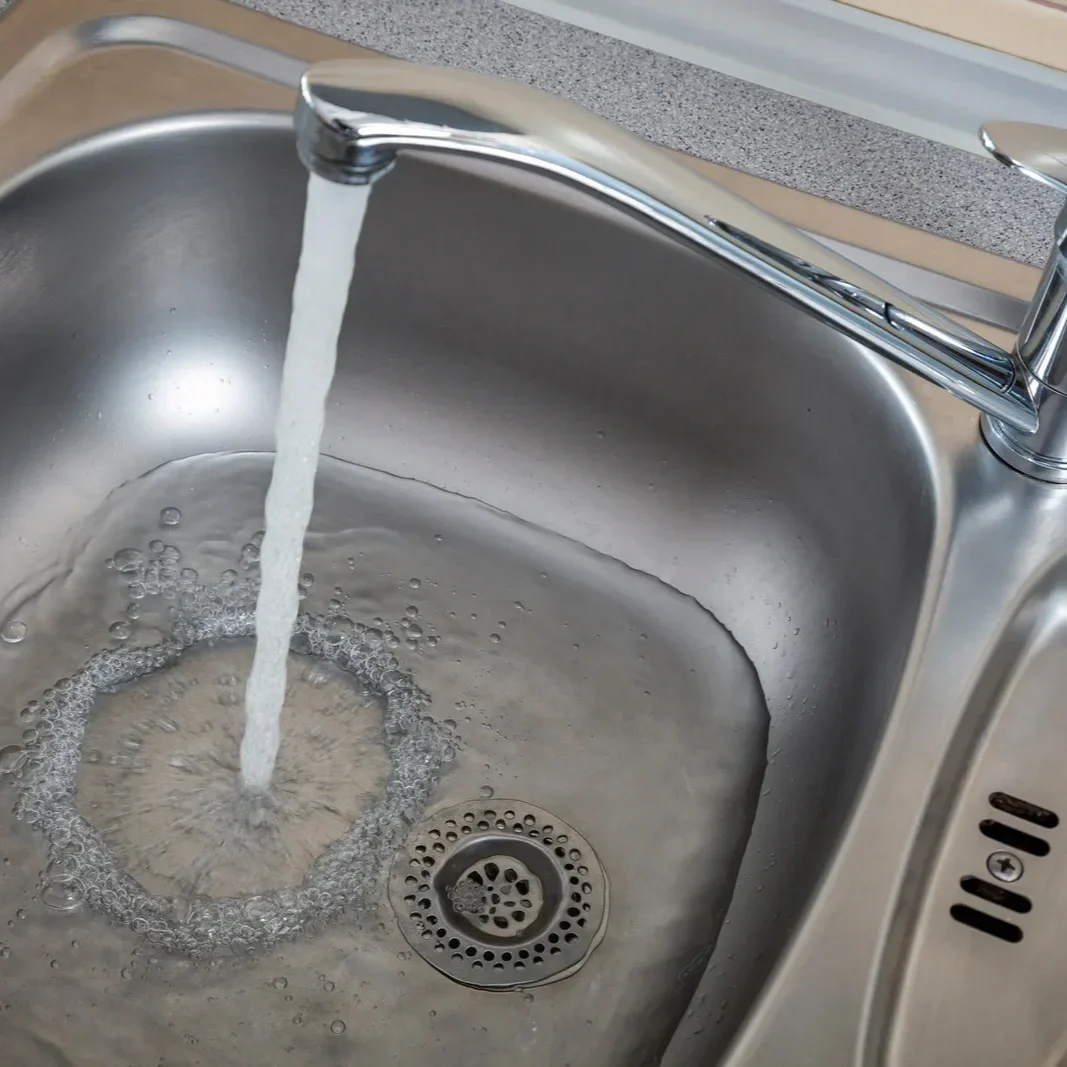
Dinner dishes are stacked next to the basin. The water in the sink isn't moving. Two weeks ago a plumber pulled a cable down this line, charged you $185, and left a drain that sounded like a wind tunnel. Today the basin holds three inches of greasy water and the smell coming back through the strainer is doing its own work.
If this is the third or fourth round of the same scene this year, the line isn't unlucky. It's coated. A cable went through what was in the way and left the rest of the pipe exactly the way the cable found it. The clog recurs on a schedule because the cause remains in the line.
Here is what the snake actually did, where the grease is sitting after the work, and why two to four weeks is almost always the cycle on a kitchen line that keeps backing up.
What the cable actually did to your line
A cable snake is a mechanical tool. The drum spins a length of steel — usually three-eighths to half an inch on residential calls — that pushes down the pipe under torque. The head on the end might be a small auger, a flat cutter, or a chain attachment that whirls out at speed. The cable feeds until it meets resistance. The operator works the head against whatever is blocking the line. The blockage breaks up or gets pushed past the cable's reach. Water moves again.
What the cable doesn't do is touch the rest of the pipe.
Picture the inside of a cold roasting pan after a Sunday dinner. A thick ring of beef fat runs all the way up the side, set hard against the metal. Now drag a butter knife through the middle of the pan. You get a clean track. The ring on either side is right there, untouched, ready to fall back into the channel as soon as anything new comes through.
That's the post-snaking state of most kitchen lines. Open in the center. Coated on the walls. Primed to catch the next round of debris coming down the drain.
Where the grease is actually sitting in the pipe
Kitchen grease arrives in the line as a hot liquid. Bacon drippings poured into the sink, oil rinsed off a pan, fat melted off a roast — all of it goes down warm and stays liquid for the first few feet. Then it hits a pipe wall sitting at room temperature, sometimes basement-cool temperature, and starts to harden.
The hardening doesn't happen uniformly. It happens against the wall. A film cools first, sticks to the pipe, and gets thicker every time another batch of warm fat passes over it. After enough cycles, the line has a ring of solidified grease running its full interior — sometimes a sixteenth of an inch thick, sometimes a half inch in older or heavier-use lines.
A kitchen branch line is usually an inch and a half across. A half-inch ring of grease on either side drops the effective diameter to a half inch. The volume of water a half-inch opening can move per second is a small fraction of what an inch-and-a-half line was designed for. Add the dishwasher's discharge cycle on top of normal sink use and the line simply can't keep up.
That's the line a cable snake spins through. The center opens. The ring stays.
Why two to four weeks is the most common cycle
The pattern repeats on a clock for a reason.
In the first few days after a snaking, the water moves fine. The tunnel the cable bored is wide enough that the grease ring on the wall has room to spare. Nothing catches because nothing has had time to.
By the end of the second week, fresh food residue from normal cooking has started catching on the wall behind the tunnel. Coffee grounds, rice grains, small bits of protein, the suspended fines from a load of dishes — every meal contributes a few specks that adhere to the existing grease layer. The grease is sticky. The new debris doesn't pass through. It builds outward.
By week three, the new debris has reduced the effective tunnel by enough that the flow noticeably slows. The sink takes a beat to drain. The dishwasher runs a little louder.
Week four is when one heavy use day — a big meal, a long dishwashing session — finally drops capacity below what the household generates. The basin holds water. The cycle finishes where it started.
There's no mystery in the timeline. The cable cleared the path. It didn't clean the pipe. The grease ring was always going to catch the next round.
What changes about the line each time it's snaked
A recurring snaking doesn't leave the pipe in the same state it found it. Each pass does small things to the wall.
The cable head shaves a thin layer off the inside of the grease ring. Not a wall-to-wall stripping — more like a sanding pass over the surface that's closest to the cable. The deeper layer of grease, the layer pressed hardest against the pipe, stays. Over multiple snakings, the surface layer compacts into something closer to a hard wax. It catches debris faster than fresh grease did.
The cable also shifts material downstream. Whatever it punches through doesn't disappear. It moves a few feet further into the line, sometimes into a low-slope section where it settles, sometimes into a fitting where it lodges and starts a new restriction. A line snaked four times in a year has more sludge in low spots than a line snaked once.
The result is a drain that clogs faster each time. The first snaking might hold for six weeks. The next holds for four. The one after that holds for two. The cycle compresses because the cleaning never addressed the cause and the line keeps tightening around the cable's path.
What actually breaks a grease-coated kitchen line free
The fix for a coated line is a method that cleans the wall instead of cutting through what's on it.
Hydro jetting is the most common version. A high-pressure hose runs water through a nozzle at 1,500 to 4,000 psi. The nozzle has rear-facing jets that scour the pipe wall as the hose moves through, and a forward jet that breaks up debris ahead. The pressure doesn't tunnel — it strips. A kitchen line cleaned wall-to-wall with the right nozzle comes back to bare interior. The grease ring is gone. Original diameter is restored.
A Flex-Shaft tool with a chain head delivers a similar result on the same kind of line. A flexible drive shaft runs a small chain attachment that spins out at speed and machines the pipe wall edge-to-edge. For kitchen drains specifically, Flex-Shaft cleaning is what makes a one-and-a-half-inch line go back to one and a half inches.
The numbers tell the difference. A kitchen line cleaned with a cable typically holds for two to six weeks before slowing. The same line cleaned wall-to-wall typically holds one to three years. The fix isn't more frequent snaking. It's a different cleaning entirely.
A camera inspection ahead of either method confirms the line is sound enough to clean and shows whether the coating is grease, scale, or something else that changes the tool selection.
When the cable never reached the real problem
A second pattern explains some recurring kitchen clogs that don't fit the grease-coating story. Sometimes the snake cleared the section it could reach and the actual blockage was farther down the line.
A household drum snake typically runs fifteen to twenty-five feet of cable. A kitchen branch line that ties into the main twenty-eight feet from the sink is past that reach, and a clog at the tie-in goes untouched. The cable cleared what it could grab and pulled back up. The downstream restriction stayed. Cleaning the same first twenty feet on every visit produces the same result. A longer-reach professional cable, or a jetter that scours the full run, is what changes the picture.
Sometimes the issue isn't a clog at all — it's a vent problem. Every drain in a house ties into a vent stack that lets air follow water down the pipe. A vent blocked by leaves, a bird's nest, or a frost cap in winter restricts the airflow that lets water drain at full speed. The kitchen sink slows, fills, and sometimes gurgles back. A cable through the trap finds no obstruction. The drain still runs slow after the work because the air supply is the bottleneck, not the line. A vent check from the roof is the diagnostic.
When the cause is the pipe itself, not the cleaning
A few patterns point to a structural problem the line keeps catching debris on, no matter how well it gets cleaned.
A kitchen line that runs through old cast iron — common in houses built before the 1960s — can have rust scale growing inward from the wall. Tuberculation, the trade term for the same chemistry that lines a teakettle that's never been descaled, builds hard knobs of iron oxide that catch food residue almost as fast as fresh grease does. Cleaning helps. The scale stays unless pipe milling grinds it back to bare metal.
A line with an offset joint, a sagging section, or a partially collapsed elbow drops debris in the same spot every time. The cleaning clears the obstruction. The geometry of the line recreates it within weeks. Trenchless lining or a targeted repair is the answer, not more cleaning. Many older homes were also built with drain lines whose slope falls short of modern standards — debris settles where the pipe's floor levels off, and no amount of snaking can change the slope.
A line shared with a poorly maintained grease trap — common in houses converted from commercial use — keeps loading at the rate of whatever's upstream. Until the trap is fixed, no cleaning method holds long.
The picture from a camera is what separates these cases from a straight grease problem. Three minutes of looking at the interior of the line tells you whether the next cleaning will hold or whether the pipe itself is the question.
Frequently Asked Questions
How can I tell if the recurring clog is grease or something else?
+The smell is one cue — grease lines have a faintly sour, organic odor that comes back through the strainer between flushes. The timing is another. A clog that returns on the same two-to-four-week schedule after every snaking, in a kitchen with normal cooking volume, is almost always grease. A clog that returns within days, or that comes with multiple slow drains around the house, points to something farther downstream. A camera resolves the question in a few minutes.
What does it mean if the drain smells even right after a snaking?
+It means the coating on the pipe wall is still there. The cable cleared the obstruction in the middle of the line, but the organic film that's holding bacteria — and producing the smell — wasn't touched. The smell goes away when the wall is stripped clean. A wall-to-wall cleaning is what does that. Bleach poured down the strainer kills surface bacteria for a day or two and doesn't reach the layer that's actually venting the odor.
Is it worth asking for hydro jetting up front on a kitchen line?
+For a one-time clog with no recurrence pattern, no — a cable handles it cheaper and the line probably doesn't have a coating worth jetting. For a line that's been snaked twice in the past year, yes. The math over twelve months almost always favors a single jetting over four snakings, and the line stays clear for ten times as long.
When should I stop paying for another snaking and switch tools?
+After the second snaking on the same drain within a year, the question worth asking is what a camera shows on the wall. If the picture shows coating, more snaking is going to keep producing the same two-to-four-week cycle. The cleaning method needs to change, or the cause needs to be addressed structurally. Either of those costs more once and less over time than four cable visits.
Will a garbage disposal make my kitchen line clog faster?
+It can, depending on use. A disposal grinds food into small particles, which makes the particles easier for water to carry — but only if there's enough fat-free water moving through the line to flush them. Disposals used with fatty scraps, or with not enough water during operation, add more material to the grease coating than they remove. The result is a line that builds its ring faster. The disposal isn't the cause, but it accelerates the timeline for a line that's already coated.
Does pouring hot water or boiling water down the drain help?
+For a brief moment, yes — hot water can soften the grease ring enough that some of it shifts. Almost none of it leaves the line. The grease re-solidifies a foot or two downstream where the pipe is cooler, and the coating just relocates. Caustic chemical cleaners do something similar with worse side effects on older pipe. Neither is a substitute for cleaning the wall.
Why the next snaking won't be different either
The recurring kitchen clog isn't a debate about whether the plumber did the job. It's a debate about whether a snake is the right tool for grease. It isn't. A cable punches a hole through the soft middle of any clog and restores enough flow to look like a fix, but the wall of the pipe still has the same wax-thick coating it had before the cable went in. Two weeks of dish loads layer a little more onto it. The hole shrinks. Another stack of plates sits in the sink.
The line needs the coating off the wall, not a tunnel through the middle. That means a Flex-Shaft with rotating chains scraping edge to edge, or a hydro jet at 1,500 to 4,000 PSI scouring the interior with water. Either method returns the pipe to its original diameter, which is the only diameter that won't catch fresh debris on a thinned layer. Done right, the kitchen line stays clear for one to three years instead of two weeks.
