
Sewer Camera Inspection: What It Really Shows You
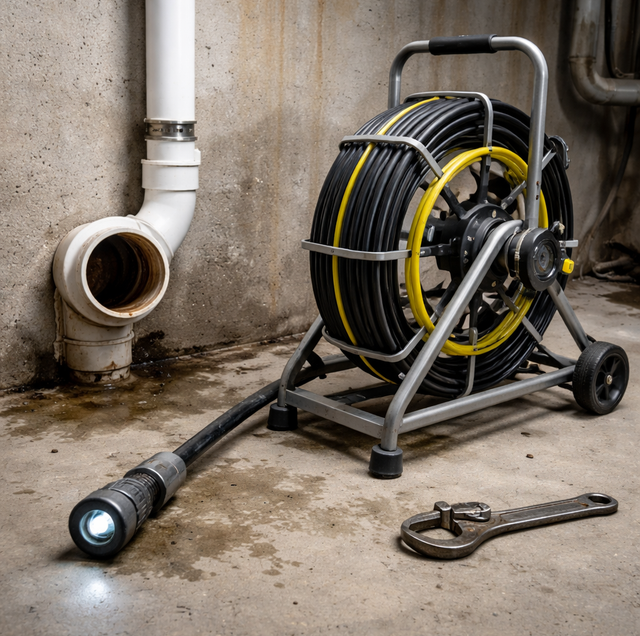
Quick Answer: A sewer camera inspection is a live video look inside your sewer line using a camera on a flexible cable, paired with a locator that pinpoints the depth and ground position of any fault. It separates a one-off clog from a broken pipe so you stop paying to clear a line that is actually failing.
A sewer camera inspection sends a waterproof camera on a flexible push cable down your drain or sewer line, and a plumber watches the live feed on a monitor as the head travels through the pipe. A second tool, a locator, tracks the camera head from above ground and marks how deep the fault sits and where it lands under the yard or slab. Together they turn a hidden pipe into something you can actually see and point to, instead of guessing from the symptoms alone.
Most homeowners meet this tool only after a drain has backed up more than once. Knowing how the camera and locator work, and what they can and cannot see, tells you when the inspection is worth booking and when a snake is all you need.
How the Camera and Locator Work Together
The camera itself is a small, sealed head, usually an inch or two across, mounted on the end of a semi-rigid push rod coiled on a reel. The plumber feeds it in through a cleanout, a pulled toilet, or a roof vent, and pushes it forward foot by foot while the LED ring around the lens lights up the pipe. The picture runs back up the cable to a monitor at the reel, and most rigs record the whole run and stamp a footage counter on screen so you can see exactly how far in a problem shows up.
The locator is the part people forget about. The camera head holds a small transmitter called a sonde that broadcasts a signal at a set frequency. A handheld receiver picks up that signal at ground level, so the plumber can walk the yard and mark the exact spot above the camera, then read the depth. Without it, you would know a pipe is cracked but not whether it sits under the flower bed or three feet under the driveway. That difference decides whether a repair means a small dig or cutting concrete.
Why the two tools matter as a pair: The camera tells you what is wrong. The locator tells you where and how deep. A repair crew needs both before they can quote honest work, which is why a proper scope always includes locating the fault, not just filming it.
What a Sewer Camera Inspection Reveals
Once the head is moving cleanly through the line, the video shows the kinds of trouble that never appear from the surface.
Tree-root intrusion: Fine roots push through joints and old pipe seams chasing moisture, then thicken into a mat that snags waste. On camera, they look like white or tan hair fanning into the pipe, often right at a joint.
Cracks, breaks, and collapse: Longitudinal cracks, missing pipe walls, and sections that have caved in show up plainly. A full collapse reads as a wall of soil or a sudden dead end where the pipe should continue.
Bellies and sags: When a section of pipe settles below grade, it holds standing water instead of draining fully. The camera reaches the low spot, and the lens goes underwater, a clear sign waste is pooling and collecting solids there.
Offset or separated joints: Ground movement can shift two pipe sections out of line so their edges no longer meet. That lip catches paper and grease and starts the next clog.
Grease and scale buildup: Congealed grease narrows the bore in kitchen lines, and mineral scale or rust tubercles build up inside older metal pipe. The camera shows how much of the opening is left.
Pipe material and its age: A scope often reveals what the line is made of: clay tile with its short-jointed sections, cast iron with rough scaled walls, or Orangeburg, a tar-paper pipe from the mid-1900s that delaminates and blisters shut as it ages. Knowing the material tells you a lot about what failure to expect next.
The connection to the city main: A good run can follow the lateral out to where it ties into the municipal main, confirming whether the problem is on your side of the property line or the utility's.
Foreign objects: Toys, wipes that never break down, a dropped tool, or a chunk of construction debris left in the line all appear on video and explain a clog that clearing alone keeps failing to solve.
Why It Separates a Clog From a Structural Defect
This is the real value of a scope. A cable machine or a jetter can clear a blockage and get water moving again, but clearing tells you nothing about why the line clogged. If the cause is a belly, an offset joint, or a root-cracked section, the pipe will clog again on the same schedule, and you end up paying for the same clearing every few months.
A camera answers the question underneath the symptom. Picture a leaky roof where you keep emptying the bucket without ever finding the hole. Clearing a structurally failing pipe is the same trap, and the video is what finally locates the hole. Seeing the defect on screen lets you decide once: keep maintaining a line that is basically sound, or repair the section that keeps causing the trouble. It also protects you from paying for a repair you do not need, since a clean scope can prove the line is fine and the backup was a one-time object or a stubborn grease plug.
When to Get a Sewer Camera Inspection
A scope earns its keep in a handful of situations.
If the same drain or main line backs up two or three times a year, that pattern points to a structural defect rather than bad luck. A one-time clog is usually debris, but a repeat at the same spot is worth a camera scope, which finds what repeated snaking keeps missing.
Buying a home: An older house with mature trees over the sewer path is a strong candidate before you close. A scope of the main line can reveal a collapsed clay section or an Orangeburg lateral that would otherwise become the new owner's surprise.
Before a trenchless repair: Pipe lining and pipe bursting both depend on knowing the exact condition, length, and location of the run. The camera and locator supply the map the repair method needs.
Slow drainage across the whole house: When every fixture drains sluggishly at once, the problem is usually in the main line rather than any single trap. A scope of the main tells you whether it is buildup, a belly, or root intrusion.
The Limits of a Sewer Camera
A camera is a diagnostic tool, not a magic window, and it has honest limits.
The biggest one: the line has to be reasonably clear to scope. A camera cannot push through a solid blockage or see through standing sewage, so if the line is fully clogged, a plumber clears it first, then scopes the clean pipe. Trying to film a plugged line just shows a wall of debris.
A camera also shows the inside surface, not the pipe wall thickness or what is happening in the surrounding soil. It can reveal a crack but not always tell you how close that crack is to a full break. And a sonde locator reads depth and position well in open ground, but heavy rebar or certain soils can throw the signal, so the marked spot is a strong estimate that the repair crew confirms when they dig.
A safety note worth stating plainly: Scoping and any repair that follows are professional work. Do not reach into a cleanout or an open line yourself, since sewer gas is a real biohazard and standing sewage carries pathogens. A camera can confirm a defect, but an active mainline blockage or backup is a hazard to handle carefully, not a DIY project. And do not pour chemical drain cleaner down the line before a plumber scopes or services it. Caustic product sitting in a pipe is dangerous to the technician who opens it and can damage the camera, and it rarely fixes a structural problem anyway.
Frequently Asked Questions
For a typical residential main line, the camera run itself often takes 30 to 60 minutes once access is open, though pulling a toilet to get a clean entry point or clearing a partial blockage first can add time. The footage counter and recorded video mean the plumber can review a questionable spot without re-running the whole line.
It shows the extent inside the pipe, but the follow-up matters as much as the video. After a scope finds roots, a plumber often runs a cutting head or a hydro-jetter to clear them and then re-scopes, because clearing the root mat exposes the joint or crack the roots came through. That second look reveals whether the pipe underneath is sound or cracked.
A dedicated cleanout is the easiest access, but it is not the only one. When a home has no accessible cleanout, plumbers can enter through a pulled toilet flange or, for some runs, down a roof vent stack. Homes built before cleanouts were standard sometimes need one installed, which is worth knowing before the appointment.
Push-camera heads are sized for the job. A smaller self-leveling head fits 1.5 to 2 inch branch and fixture lines, while a larger head is used for 3 to 6 inch main lines. Sending a large head into a small line risks getting it stuck, so the plumber matches the camera to the pipe before starting.
Yes. A dated video file documents the pipe's condition, which is useful when a home sale, an insurance claim, or a shared lateral between neighbors is involved. The recording also gives a baseline, so a scope a few years later shows whether a belly or root problem is stable or getting worse.
Not directly, because a camera sees the inside of the pipe, not water escaping into soil. It can spot the crack or open joint that a leak comes from, but pinpointing an exhaust of water into the ground usually pairs the camera with the sonde locator to mark the fault position, and sometimes a separate leak-detection method confirms it.
Book a camera inspection before you clear that recurring backup again — know if it is a clog or a failing pipe before you spend another dollar. Clog Squad serves Holland, Grand Rapids, and Grand Haven. Call (616) 779-7675.
