
What Happens During a Trenchless Sewer Pipe Repair Step by Step
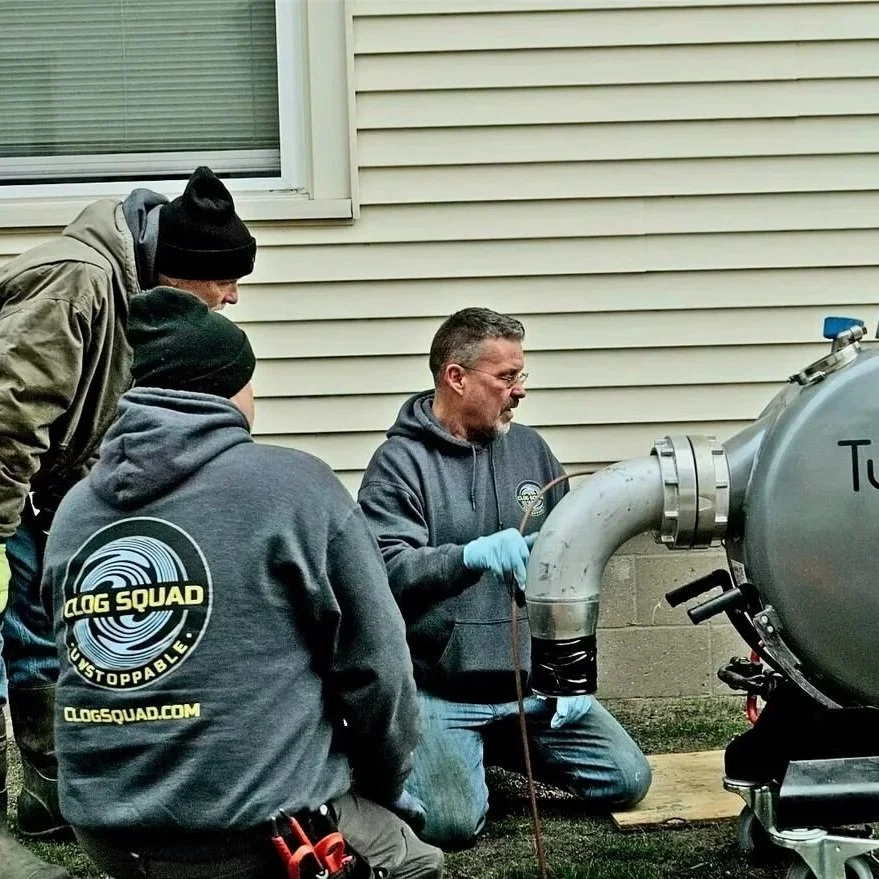
A service truck parks at the curb a little after eight. The back door rolls up and the crew unloads a portable generator, a steel drum the size of a small water heater, and a long roll of resin-saturated felt on a flat reel. No backhoe in the driveway. No spray-painted utility marks across the yard. The neighbor across the street walks her dog past, looks twice at the rig, and keeps moving.
The work happening inside this lateral is structural — a failed clay sewer rebuilt as a new pipe from the inside, end to end, in a single day. The yard the homeowner expected to lose isn't going anywhere. That's the difference between the trenchless install and the dig it replaced.
Two trenchless methods, and which one the truck is here to install
Trenchless sewer work covers two related techniques. The walk-through below follows cured-in-place pipe lining — the most common residential method, and the one the truck above is set up to install. A resin-saturated felt sleeve goes into the existing pipe and cures into a new structural surface bonded to the host. CIPP fits when the host is cracked, fractured at a joint, root-intruded at a clay coupling, or rusted from the inside but still continuous along its length.
Pipe bursting is the other trenchless method. A tapered steel head is pulled through the failing pipe with a winch cable; as it advances, the old pipe fractures outward into the soil while a new HDPE pipe is pulled in behind it. Bursting is the call when the host has lost shape — collapsed sections, severe deformation, full crushing. Both methods finish in a day. Both replace what used to be a week of yard restoration with two access pits and a service truck on the driveway. The camera decides which one fits.
Before the truck shows up: scheduling, scoping, and the camera survey
Trenchless work doesn't start on install day. The job is scoped a week or two earlier, and most of what decides whether the install runs clean happens before any equipment lands at the house.
The first step is a push-camera survey through the cleanout. The footage gets read against three questions — is the host intact enough to support a liner, is the grade workable, and can each branch be reinstated through the new wall after cure. Material, length, diameter, and the location of every defect get marked in feet from the access. A liner ordered for a 4-inch by 52-foot lateral is built to that spec; ordering a 50-foot liner for a 52-foot line is one of the ways an install fails before the truck arrives.
A utility locate is the second piece. Gas, electric, water, and telecom services get marked across the access zone so the pit doesn't catch a service line. Permits go in if the city requires them. The homeowner is told the day, the window, and what plumbing won't be usable.
The hour the camera went down the line is when the install started.
The morning of the install: access, pit prep, and rig setup
The first hour at the house is access work. The crew opens the cleanout cap, runs a brief verification camera pass to confirm conditions haven't changed since the original survey, and digs the access pit if one is needed. On a yard cleanout flush to grade, that's a shallow ring around the cap. On a buried cleanout under a planter or paver, it's a small targeted hole — eighteen inches square, just enough room for the equipment to clear the riser.
The generator stages on the driveway with hose paths laid out to the access. A second access — usually an upstream pit or an interior cleanout in the basement — gets opened if the run length needs an entry on both ends. Cones go around the work zone. Drop cloths cover any indoor floor the hose passes over.
What the homeowner sees walking out for coffee is undramatic. A truck, a generator running quietly, two crew members moving between the pit and the rig. The dramatic part — the rotating cutter, the saturated liner, the pressurized cure — is still an hour away.
Cleaning the host pipe: jetting, milling, and the pre-liner camera
A liner can only bond to bare pipe wall. Any scale, grease, root mass, or biofilm left on the interior becomes a layer between the resin and the host, and a liner bonded to dirt isn't bonded at all. The clean is the longest step in most trenchless jobs.
On a clay lateral with roots and soft sediment, the cleaning is hydro-jetting — high-pressure water through a rear-facing nozzle that shears material off the wall edge-to-edge as it pulls back through the line. On a cast iron host with mineral scale and rust crust, the cleaning is pipe milling — a carbide-tipped cutter on a flexible shaft, run from the cleanout, that grinds the deposit back to bare metal. On some lines the work is both, in sequence: jet to clear soft material, mill to take hard scale to the wall.
After the cleaning, a second camera pass goes down the line. The picture has to show continuous clean pipe wall, no remaining scale, no missed root mass, and no water pooling in a belly. If the camera shows anything the liner can't bond to, the cleaning continues. Skipping this verification is one of the most common failure modes on a botched install — a liner cured against leftover grease or scale doesn't bond, and what looks like a structural pipe on day one is a delaminating tube on month six.
Building the wet-out: where the new pipe gets mixed
The new pipe itself doesn't exist until an hour before it goes in the ground. It gets built on site, in a process called the wet-out.
A felt or fiberglass sleeve — sized for the host diameter and cut to the survey length — is laid out flat on a clean tarp or wet-out table. A two-part epoxy resin is mixed in measured proportions according to the manufacturer's spec for the temperature and the cure method. The mix is poured into one end of the sleeve and pressed down its length with a roller, pinch-pressing the resin through every fiber of the felt until the sleeve is saturated end to end with no dry patches and no excess pooling.
The chemistry has a working window — typically thirty to ninety minutes between mixing the resin and starting the install. Once curing begins, it can't be reversed. The next steps follow the wet-out without pause, and the saturated sleeve gets loaded into an inversion drum or a pull-in rig depending on the system. From here the resin is on a clock, and so is the crew.
The installation: pulling or inverting the new pipe into place
The two main installation methods deliver the same product through different mechanics. The choice depends on the system, the access geometry, and the run length.
In an inversion installation, the saturated sleeve goes into a pressurized drum at one end of the line with the inside of the felt facing out. Compressed air or pressurized water pushes the sleeve through the host inside-out, like rolling a sock onto a foot from the toe end. As the sleeve everts down the line, the resin-coated side rolls outward and presses against the host wall. Pressure holds the new pipe against the old one through the cure.
In a pull-in installation, the sleeve is pulled through the host with a winch cable from the far access, then inflated against the wall with a bladder inside it. The mechanics differ; the result is the same — a saturated felt sleeve held in firm contact with the host along its full length.
Either method takes roughly fifteen to forty minutes on a typical residential lateral. The crew watches pressures, sleeve advancement, and cure timing on instruments at the rig. If anything reads off-spec, the install gets paused and corrected before the resin sets.
The cure: heat, water, light, and the hours that turn felt into pipe
Curing converts the saturated sleeve into a structural pipe. The chemistry is the same epoxy reaction that hardens a two-part glue, on a larger scale and with tighter tolerances on temperature and time.
Three cure methods are in common use on residential lines. Ambient cure uses the resin's own exothermic reaction and runs slowest — eight to twenty-four hours depending on temperature, with the line out of service the whole time. Steam cure pumps warm steam through the inflated sleeve and runs in two to four hours. UV cure uses a chain of ultraviolet lights pulled through a clear sleeve and runs fastest — thirty minutes to an hour on a residential lateral.
The cure isn't a passive step. Pressure has to stay constant inside the sleeve so the new pipe maintains contact with the host wall. Temperature has to stay in range — too cold and the cure stalls, too hot and the resin loses strength. The crew monitors the entire window from the rig. A failed cure is the worst possible outcome on the day, and the rarest, because the systems are built with margin and the operators are watching the gauges.
Reinstating the branches: robotic cutters and every connection reopened
A cured liner seals across every opening in the host pipe — kitchen drain branch, laundry tie-in, basement floor drain, every fixture connection along the run. From inside the new pipe, those connections show as smooth bumps where the sleeve pressed across the openings.
Reinstatement reopens each branch through the new wall. A robotic cutter — a remote-controlled grinding head on a small tractor that drives through the lined pipe — gets pushed into the cured liner from the access. The operator runs a camera on the cutter and locates each connection from the footage marks recorded during the original survey. At each branch, the cutter spins a carbide head against the liner wall and grinds a clean oval through the new pipe back into the existing branch.
Every branch in the run gets cut. Missing one means a fixture that won't drain when the line returns to service. On a typical residential lateral with two or three connections, reinstatement takes thirty to sixty minutes.
The final camera pass: footage the homeowner keeps
A trenchless job ends with a high-definition camera pass through the cured, reinstated pipe — the same camera that started the job ten days earlier, now showing the finished product.
The footage has to show a continuous smooth interior with no wrinkles, no dry patches, no resin runs, and no debris. Each reinstated branch has to show a clean oval cut at the right location and size. The grade has to match the host pipe — lining doesn't change grade, and any belly that existed before the install still shows on the post-cure footage. (When grade is the cause of recurring backups, the trenchless conversation moves to pipe bursting or a dig-and-relay on the bellied section instead.)
The post-cure footage gets handed to the homeowner on a USB drive or a shared link. It's part of the deliverable, not an extra. A trenchless job without a final camera pass isn't finished, and a contractor who won't provide the footage hasn't completed the work that was sold.
By mid-afternoon the access pit is backfilled, the cones are loaded, and the truck pulls away. The yard looks the same as it did at eight. The pipe behind it is fifty years younger.
Frequently Asked Questions
How many hours is the crew at the house for a typical lateral?
+Most single-lateral trenchless jobs run four to eight hours from arrival to cleanup. The variables are run length, cure method, and how many branches need reinstatement. Steam-cured lines finish in a half day; UV-cured runs are sometimes done in three to four hours. Ambient-cure systems can leave the line out of service overnight even when the crew is gone.
Can I run water and use toilets during the install?
+No. The line being repaired is out of service from the time the cleaning starts until the cured liner is inspected and the branches are reinstated — usually four to eight hours. The crew gives a specific window when fixtures on that line can be used again, and any plumbing on a separate run keeps working through the install.
What kind of access does the crew need around the cleanout?
+Roughly six to eight feet of clear ground around the access point and a path from the curb to the cleanout the equipment can move through. A truck parking spot within fifty feet keeps hose runs short. If the cleanout sits under a planter, paver, or finished surface, the crew opens a small targeted pit and restores the surface at the end of the job — major restoration isn't typical, because the pit is the size of a recycling bin.
Will I have to leave the house during the work?
+In most cases no. The exterior work doesn't disrupt the inside of the house, and fixtures on a separate drain line keep working. The exception is jobs where an interior cleanout is being used as a second access — those involve equipment passing through a basement or utility room for the install, with floor protection laid down along the path.
Is the cured liner inspected before the crew leaves?
+Yes — every install ends with a post-cure camera pass that confirms the interior is smooth, the branches are reopened cleanly, and the grade matches the original survey. The footage is a deliverable the homeowner keeps, and it's part of how the warranty starts.
What happens to the existing branch connections after the liner cures?
+A robotic cutter goes into the cured pipe, locates each branch from the footage marks recorded during the original survey, and grinds a precise oval through the liner at each tie-in. Every branch in the run gets cut; missing one means a fixture that won't drain.
What stays in the ground for the next fifty years
A trenchless install replaces what the yard used to look like during a sewer repair with what the camera shows on the way out — a smooth, jointless new pipe inside the old one, every branch reopened, grade unchanged. Most of the day was the cleaning, wet-out, and cure. What mattered most was the camera, the resin, and the operator at the gauges.
A reputable trenchless pipe lining job leaves a homeowner with three things in hand. A cured liner rated for a 50-year service life. Camera footage of the post-cure interior. A warranty written against both the liner material and the install. The yard the homeowner expected to lose stays where it was.
