
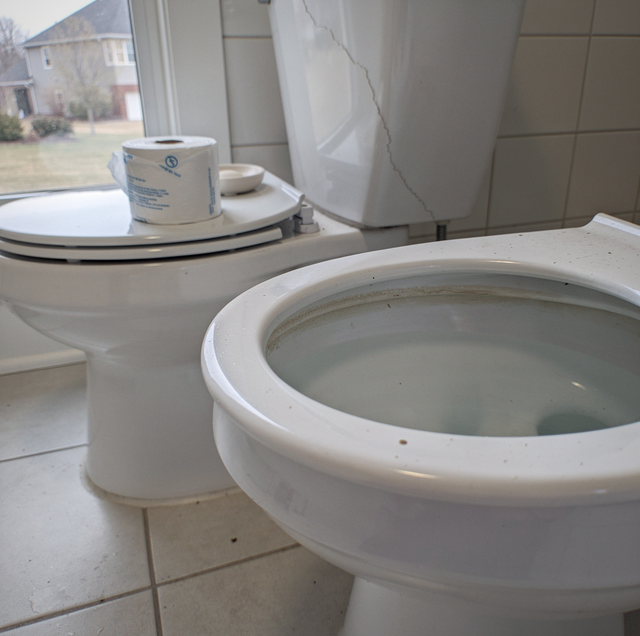
The package says flushable. The bowl empties on the first try, and nothing about that moment suggests a problem. Whatever happens next happens out of sight, in a four-inch line under the yard, where a sheet of nonwoven fabric either comes apart or does not. Toilet paper loses its structure in seconds. A wipe, by design, does not.
That difference has been measured, not asserted: a full-scale model of a home drain, from the toilet through the bends and out to the sewer. What follows is what these sheets are made from, what happens between the factory and your bathroom shelf, why the mat it forms resists a cable, and what you can see on the outside of the packaging before any of it starts.
What a Flushable Wipe Is Actually Made Of, Fiber by Fiber
A wipe is not paper. It is a nonwoven web: loose fibers laid down wet and then bonded into a sheet strong enough to survive a hand pulling it out of a pouch and scrubbing with it. Toilet paper is built to fail in water. A wipe is built to hold water, because a wipe that comes apart in the palm would be worthless for the job it is sold for.
The fibers themselves are mostly plant-based. Over half of the raw materials in wet wipes are natural cellulosic biopolymers, including rayon, lyocell, wood pulp, and cotton, all of which biodegrade in water. The line that matters on a package is this: for a product to be fully biodegradable, it has to consist entirely of those materials, and synthetic fibers can still turn up in wipes labeled flushable.
Biodegradable, then, is a claim about what happens to a material over months in the environment. Flushable is a claim about what happens to a sheet in the next few minutes, inside a pipe four inches across. The property that determines the second question has its own name: dispersibility, the ability of the web to fall back into loose fibers when it is wet and moving. Toilet paper has it. A wipe built for a wet hand does not.
Why the Sheet Holds Together Long After the Toilet Flushes
Strength in a wipe does not come from glue. In the process used to make most of them, a loose wet web of fibers passes under banks of high-pressure water jets, and those jets whip the fibers around one another until the sheet holds real tensile strength. Nothing is added to bond it. The fabric is held together by its own tangle, and a tangle that took pressurized water to create does not undo itself in still water.
There is a second mechanism that acts before the wipe is ever used. A wipe sits in a sealed, wet pouch for weeks or months before anyone opens it, and that storage changes the fabric. This kind of wipe loses its initially good dispersive properties the longer it sits in wet storage. A sheet that would have broken up acceptably on the day it was made is harder to break up by the time it reaches a bathroom, and nothing on the pouch shows which stage of that decline you are holding.
That has a practical consequence for testing. Flushability assessments should include tests run after set periods of wet storage, since a sheet tested fresh off the line is not the sheet a household actually flushes. Until that becomes normal practice, an approval earned in a laboratory describes a product at its best moment, not at the moment it matters.
How Long Does a Wipe Take to Break Down in a Sewer Line?
Time is the wrong unit for this question, and that is worth saying before an answer. A wipe is not sitting still in warm water waiting to dissolve. It is being carried through a run of pipe with bends, a slope, and a limited volume of water behind it, and it either clears that run, or it stops somewhere in it. The useful question is distance, not duration. A wipe still intact at the end of that run has failed the test.
That is how the question gets set up in testing: 101 single-use products, 23 of them labeled flushable by the manufacturer, run through a purpose-built rig that modeled the average home's lavatory system from toilet to sewer, including the bends and slope, at average water pressure typical of urban infrastructure.
Each sample was then tested against the clearance and disintegration limits for toilet and drain lines. The result was not a close call: none of the wipe samples fell apart or dispersed sufficiently to pass through the sewer system safely, without risking clogging or damaging infrastructure. That covers the 23 products labeled flushable along with the rest.
Inside the Blockage
A wipe rarely stops on its own. It catches on something already there: a root at a joint, a lip where one pipe section sits slightly off from the next, a ridge of scale inside old cast iron. The first sheet snags, the second catches on the first, and grease binds the pile into one mat that holds together as a sheet does.
Wastewater backing up over a floor is a biohazard, so stop running water and have a drain technician clear and camera the line before anyone touches it.
A cable driven through that mat opens a channel, and the fixture drains again, which is why the same line backs up a few weeks later with nothing apparently changed. A camera places the mat on a screen, and a wall-to-wall cleaning method removes the fabric from the pipe wall rather than punching through it.
Reading the Package Before the Wipe Ever Reaches the Toilet
There is something to look at on the packaging. A Do Not Flush symbol appears on packs of wipes that are not meant for the toilet, and it boils down to one line: check and follow the disposal instructions on the package. A symbol that has to exist is already telling you how often the question comes up.
Two things about that symbol are worth holding onto. It is voluntary, not something a shopper can assume every pack follows: an updated flushability assessment guideline and labeling code of practice took effect on November 1, 2018, and adoption is a decision each company makes. And the symbol comes from the wipes industry itself, which cuts both ways: the people who make the product are the ones asking that most of it be kept out of the drain.
Which leaves disposal, the least complicated part of the subject: a lined bin within arm's reach of the toilet, emptied with the household trash. The assumption worth dropping is the one that makes wipes feel harmless in the first place. A wipe that clears the bowl has not left the house. It has only reached the part of the system nobody looks at, and it is still there.
Frequently Asked Questions
The symbol is used for products that were never meant for the toilet, and baby wipes carry it anyway since they are used in your bathroom too. The mark you find on your baby-wipe pack is the same one, printed for a different reason.
Different in kind. Toilet paper consists solely of cellulosic pulp and disintegrates well after disposal. No entangling step and no long fibers holding the sheet, so nothing you flush behaves like fabric in your line.
Different from the two things you are picturing. Roots enter at a joint as fine hairs fanning into your pipe. Grease shows up as a smooth, pale shelf that narrows the bore. A wipe mat looks like cloth: a gray, ropey mass with edges, wrapped around whatever caught it first in your line.
It does not stop at your property line. The risk first reaches household plumbing and then municipal sewage infrastructure, and the disposal instructions you follow prevent clogs in your home and in the wastewater system alike. Same object, two owners.
Plant-based is about what the fibers are, not how the sheet in your hand is held together. A viscose and wood pulp blend gives a wipe enough strength for ordinary use, and that strength is what your drain has to undo. You can flush a wipe of natural fiber and still be flushing fabric.
Not really. A fiber set exists that maintains its dispersibility through wet storage, but it is not currently used in any commercial product, which means the wipes sold today are losing dispersibility during wet storage in the package, at least within the first week. The wipe that works is not one you buy.
Have the line camera-inspected after wipes have gone down a slow drain — a mat of fabric does not clear itself and the next backup starts sooner. Clog Squad serves Holland, Grand Rapids, and Grand Haven. Call (616) 779-7675.
