
The estimate sits on the kitchen counter. Two options. A basic cabling at three hundred dollars, or a hydro-jet pass with a camera at twelve hundred. The line in question is the cast iron main running out to the street — the one that backed up at Easter and again last weekend. The plumber said the cheaper option would buy a few months. The bigger one would probably end the problem for a couple of years.
The question on the counter is whether this drain is the kind that needs the bigger tool, or whether the cable would handle it fine and the jet would be overkill. There's a real set of conditions that make a residential drain a candidate for hydro jetting, and a separate set that argue against it. Reading the line correctly before the quote turns into a job is most of what separates a cleaning that holds for years from one that gets repeated.
What "candidate" actually means for hydro jetting
Hydro jetting is a tool with a narrow sweet spot. It's not a fancier snake. It does a different job — well on one kind of pipe problem and poorly on others.
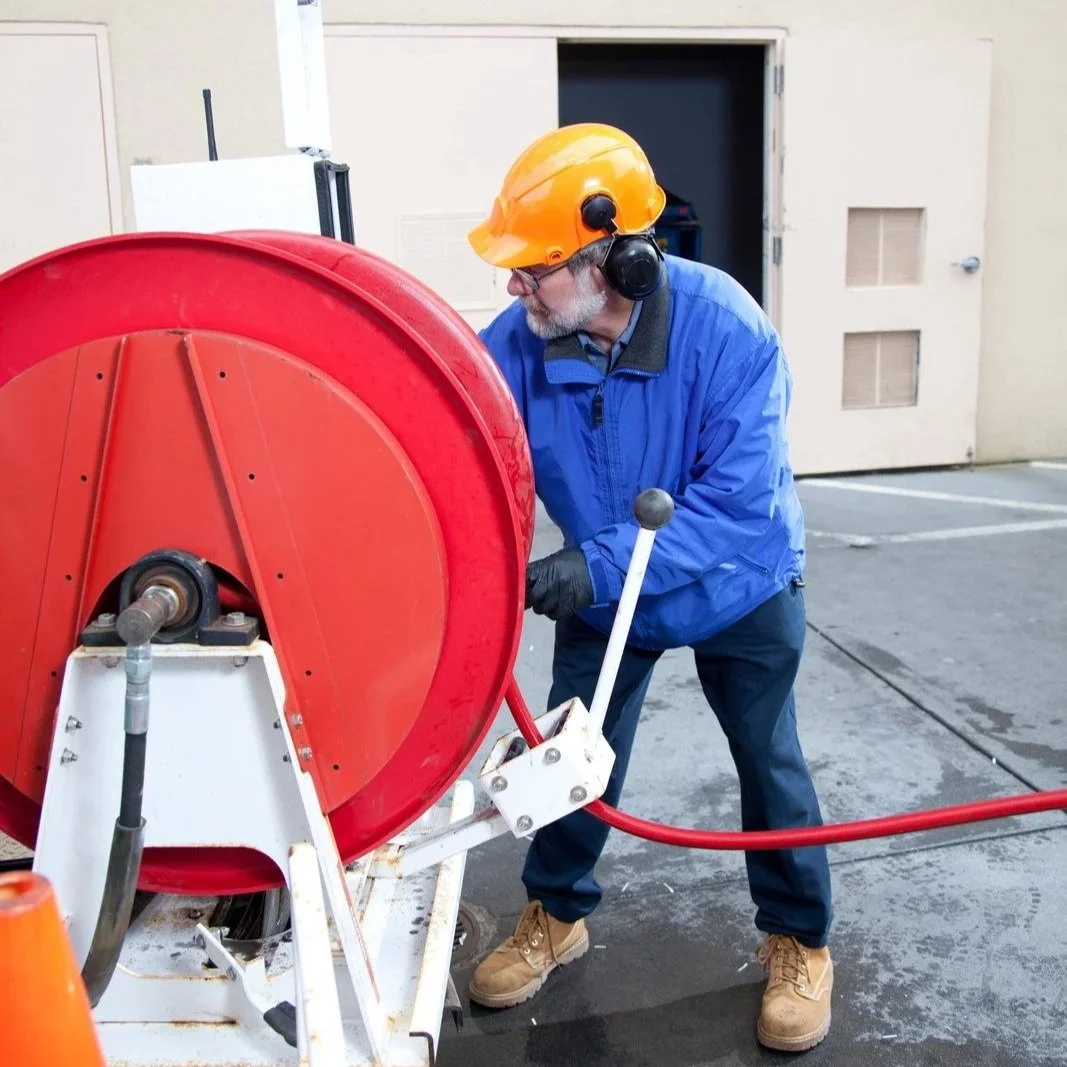
A jetter is a high-pressure pump pushing water through a flexible hose with a specialty nozzle. Residential rigs run 1,500 to 4,000 psi at the nozzle, with flow between 4 and 18 gallons per minute. The nozzle has a forward jet that drills through soft material and three to six rear-facing jets that propel the hose and shear material off the pipe wall as it pulls back through. The cleaning is edge-to-edge along the pipe interior, not a tunnel through the middle.
The right job for a jet is a line restricted by material on the wall — material the cable can't reach. The wrong job is a single blockage at one point, where a cable clears it in twenty minutes for a fraction of the cost.
A drain is a candidate when the cause sits on the pipe interior in a layer, and the line is sound enough to take the pressure. Both halves have to be true.
The cleaning uses water and nothing else — no sodium hydroxide, no sulfuric acid, no detergents. The pipe and seals don't see chemistry that ages them, and no caustic slug heads to the septic field or treatment plant. High-pressure water shearing material off the wall is the mechanism.
The clearest candidate: a grease-coated kitchen or laundry line
The line that benefits most from hydro jetting in a residential setting is one that's been slowing for months on a coated cause.
Grease enters a kitchen drain as a hot liquid — bacon fat down the sink, oil rinsed off a pan, fat melted off chicken skin under running water. The pipe wall sits at room temperature or cooler. The fat cools against the wall in seconds and hardens into a layer along the upper interior. The next dose lays down on top. After a year of normal cooking, a 1.5- or 2-inch kitchen branch can carry a quarter-inch of cooled fat on the wall, dropping effective diameter by a third.
A cable bores through the soft center of that ring. The drain runs for two or three weeks, then slows again as fresh fat hits the existing layer. A jet shears the ring off the wall edge-to-edge — 4,000-psi water cuts cleanly through cooled grease the way a hot wire cuts through wax. Original diameter back. Years before the next call.
Laundry lines run on the same physics with different material. Lint, detergent residue, and softener sit on the wall like grease does in a kitchen — different chemistry, identical pattern. A standpipe that overflows once a month during the wash cycle is a coating problem on a 2-inch line that a jet ends in one visit.
The other clear candidate: roots in a main with intact pipe
The second strong candidate is a main sewer line restricted by tree roots — provided the pipe behind the roots is structurally sound.
Roots find drain lines because they're looking for moisture. A hairline crack at a clay tile joint or a small offset at a cast iron coupling lets moisture seep into the soil. A root finds the seep, pushes through the gap, fans out inside the line, and over a year or two forms a fibrous mass that catches everything passing through.
A standard cable cuts a hole through the center of that mesh and leaves the rest anchored to the wall. A hydro-jet with a root-cutting nozzle — a rotating head with carbide chains or hardened jets — slices the roots back to the joint and flushes the fragments out. The line returns to full diameter and the spring backup that's been happening every April stops.
The qualifier is pipe condition. Jetting on a sound, intact 4-inch clay or cast iron main is routine. Jetting on a clay sewer that's lost half its wall thickness to corrosion, or on a clay joint already shifted out of alignment by an inch, can finish the pipe instead of cleaning it. A camera run before the jetter goes in tells the difference.
The lasting fix for a rooted main is jetting plus joint sealing — clearing the mesh, then closing the entry point with a trenchless pipe lining at the cracked section. Cleaning alone is maintenance. Cleaning plus lining is the one-time exit from the cycle.
Scale on cast iron — sometimes a candidate, sometimes not
Older homes with original cast iron drain lines bring a third candidate category, and it takes the most judgment.
Cast iron scales from the inside on a known schedule. Decades of warm wastewater deposit iron oxide and mineral scale on the interior wall, building a crusty, pitted layer that narrows the diameter and roughens the surface. Snaking buys days, not weeks — the cable rides past the scale or punches a small hole that closes at the next pass.
A hydro-jet at 3,500 to 4,000 psi can shear soft mineral deposits and biofilm off cast iron and restore some of the original diameter. On lighter scale, that's an effective cleaning that holds a year or two. On heavy decades-old crust, the jet cleans the soft outer layer and leaves the hard inner crust on the wall. The line runs better, not new.
Heavy cast iron scale is usually the better fit for pipe milling — a carbide cutter inside a sheath that grinds the layer back to bare iron. Thin, soft scale shows on camera as a tan-to-rust film on the lower half of the pipe; that's a jetting job. A thick, ridged, almost coral-like crust eating into the pipe wall is a milling job. A 1920s cast iron stack with thinning walls might need lining before any cleaning — the jetter pressure that strips scale can also strip the last sound bit of pipe wall behind it. No reputable shop jets aged cast iron without a camera.
When the line size says yes
A second pass at "candidate" runs through pipe diameter. Residential drain lines come in standard sizes — bathroom branch arms typically 1.5 inches, kitchen and laundry branches 2 inches, toilet flanges and soil stacks 3 inches, main building drains and laterals 4 inches.
Hydro jetting fits all of those, but the math changes by size. On a 2-inch kitchen branch, a residential jetter at 1,500 to 2,500 psi clears coated grease cleanly. On a 4-inch main, the same rig can run higher pressure with a larger nozzle and clear the long horizontal run from cleanout to tap. On a 1.5-inch bathroom branch, a Flex-Shaft cable with a chain head sometimes works as well or better than a jet.
A commercial rig at 8,000 psi on a 1.5-inch branch can split the pipe at a weak joint; a residential rig at 2,500 psi cleans the same line without stressing it. A reputable shop matches nozzle and pressure to line size before opening the tank.
When the pipe condition says no
Some drains are not candidates for hydro jetting regardless of what's on the wall.
A line with visible structural damage on a camera — a transverse crack, a section that's lost wall thickness to corrosion, a coupling separated by half an inch — needs repair before any pressurized cleaning. Jetting a broken pipe can finish the failure. Water exits through the existing breach into the soil, undermining the bed and turning a bad section into a worse one.
A line with a known belly — a settled low spot where the pipe sags into a U — isn't a strong candidate. The jet clears whatever's in the belly, but the belly itself is a pipe-position problem. Wastewater pools in the low section the same week the jetter leaves. Spot excavation and re-bedding is the actual fix.
Drum traps in older homes and undersized cleanouts both block the hose at the access point — the trap or the cleanout has to be replaced before any jetting happens. A line full of standing water from a complete blockage isn't a same-visit jetting job either; the column has to be moved first with a cable or mainline auger before the jetter can push past and clean back toward the cleanout.
Galvanized steel branches from mid-century homes belong on the "no" list for a separate reason. Galvanized corrodes from the inside and ends up thin in random places, and a jet on thin galvanized can punch through the wall. These lines are usually past cleaning anyway — the right answer is replacement in PVC.
Why the camera comes first on any jetting decision
Hydro jetting earns its place on lines where the cause and the pipe condition both check out — and the only way to read both is a camera before the cleaning.
A push camera through the soil-stack or main-line cleanout shows the wall, the joints, and the fittings in real time. Grease shows as a tan-to-brown coating along long horizontal runs. Roots show as fine threads at a joint. Scale shows as crusty ridges on the lower interior. A belly shows as standing water that doesn't move when the line is otherwise empty. A structural defect shows as a transverse crack, an offset joint, or a section daylighting through soil.
Each one tells the operator something different. A coated grease line is a candidate. A rooted joint on intact pipe is a candidate. Heavy scale is sometimes a candidate, sometimes a milling job. A cracked section is not a candidate until it's repaired.
The other reason the camera matters is matching tool to cause. A soft hair clog at a bathroom trap doesn't need a jetter — it needs a six-foot snake. A wad of paper in a toilet bend doesn't need a jetter — it needs a closet auger. Jetting on a single soft point clog is a $1,200 cleaning solving a $40 problem. The camera prevents that mismatch.
Frequently Asked Questions
When does a residential drain actually need hydro jetting instead of cabling?
+When the cause is a coating on the pipe wall, not a single-point clog, and when the pipe behind the coating is sound. A kitchen line slowing every four to six weeks is signaling grease on the wall. A main backing up every spring and fall is signaling roots in the line. A drain that suddenly stopped after working fine yesterday is signaling a single-point clog — a cabling job, not a jetting job.
Is hydro jetting safe on every kind of residential pipe?
+No. Sound PVC, ABS, copper, and modern cast iron handle residential jetting pressures cleanly. Aged cast iron with thin walls, galvanized branches with interior corrosion, clay tile sewer with shifted joints, and any line with visible structural damage on a camera are not safe candidates until the damage is addressed. A camera run before the jet decides whether the pipe qualifies.
What's the difference between residential and commercial hydro jetting?
+Pressure, flow, and hose size. Commercial jetters run 4,000 to 10,000 psi with flow up to 60 gallons per minute and 1-inch hose feeding 6-inch mains in restaurants and industrial settings. Residential jetters run 1,500 to 4,000 psi with 4-to-18-gpm flow and smaller hose for 1.5-inch through 4-inch lines. Using a commercial rig on a residential branch is too much pressure and flow for the pipe.
Does jetting damage the seals or gaskets in a residential line?
+A correctly run jetting at residential pressure on sound pipe and sound seals doesn't damage either. The water shears parallel to the wall instead of pushing against it. A line where the seals have already aged out from repeat chemical cleaners can fail during cleaning regardless of the tool — that's not jetting damage, that's an exhausted seal showing on the day the cleaning was scheduled.
How much does a residential hydro jetting cost compared to snaking?
+A basic cabling on a single fixture runs $200 to $400, and a hydro-jet pass on a residential main typically runs $400 to $900 with a camera-paired inspection. A cabling on a coating returns to slow flow in four to twelve weeks; the next cabling is another $200 to $400. A wall-to-wall jetting on the same coating holds twelve to thirty-six months. Three cablings in a year on a coating costs about the same as one jetting that solves it.
Should I let a plumber jet a slow drain without a camera first?
+In most cases, no. Jetting is the right tool for some causes and the wrong tool for others; the camera tells the operator which. The camera also tells whether the pipe is sound enough for the cleaning at all. A shop that wants to jet on the first visit without seeing the line is selling a service, not solving a problem.
Picking the right job for the jetter
A residential drain becomes a candidate for hydro jetting when two things are true. The cause is a wall coating — grease, soap film, root mesh, or soft scale — that a cable can't reach. The pipe is sound enough to take the pressure without structural damage. A coated line on broken pipe gets relined; a sound line with a hair clog gets snaked. The jet earns its keep on coated lines with intact walls, and on rooted mains where the cleaning is followed by joint sealing.
The other piece is the camera. Without footage of the line interior, a jetting quote is a guess. With it, the cleaning matches what's actually on the pipe wall — and the math on a cleaning that holds for years instead of weeks turns the bigger tool into the cheaper one over the life of the line. Where the candidate test comes back yes, a yearly or every-other-year preventive pass keeps the coating from rebuilding.