
How Hard Winters Affect Drains Long After the Thaw
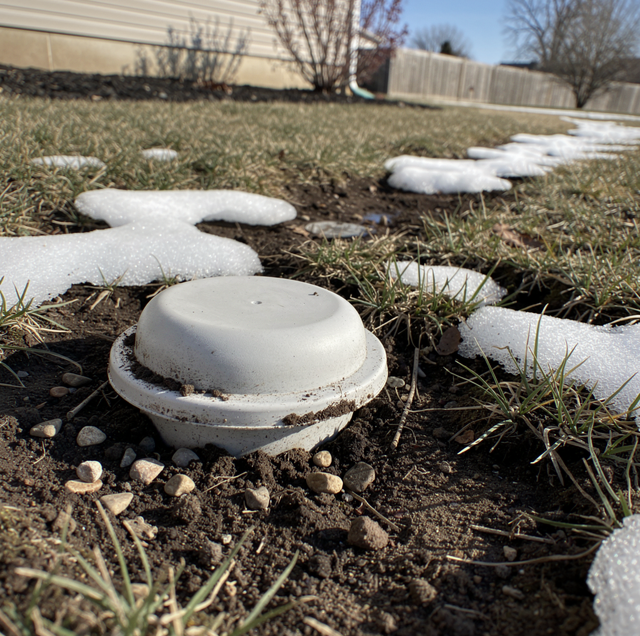
Winter does more to your drains than it does to your water pipes, and you may never notice. You wrap and warm your water lines because you know a burst supply pipe floods your home fast. Your drain line gets none of that care, yet cold works on it as hard, through the ground around it, the water inside it, and the grease your household sends down it.
You will not see any of this happen to your line. What you will notice, once your ground warms, is your drain that runs slower than it did last year, gurgles when you least expect it, or backs up on the one cold morning you had no time to deal with it yourself.
Why Cold Weather Puts Real Strain on a Drain Line
A drain line is not just a pipe waiting for water. It carries whatever you send down it, and cold changes how every part of that mix behaves. Water slows and can partly freeze in an exposed run. Grease that flowed fine in July turns thick and clings to the pipe wall in January. Even the ground wrapped around a buried line stiffens, and stiff ground grips a pipe differently than loose, warm soil does.
None of this happens because a homeowner did something wrong. It happens because temperature changes the physics of what is already inside a drain system: water, grease, waste, and the pipe itself. A system built and tested under mild conditions faces a set of forces every winter that it never encounters the rest of the year. The same strain reaches a quiet rental and a busy family home alike.
Older drain lines feel this more than newer ones. Clay and cast iron move and crack differently than modern pipe, and a joint that has flexed through thirty mild winters can shift enough in a hard one to open a gap. That gap does not close again once the thaw arrives; it stays, and it invites roots and groundwater in behind it.
What Freezing Ground Does to Pipes and Joints
Below a certain depth, the ground itself moves when it freezes. Water in the soil expands as it turns to ice, and that expansion pushes against anything buried in it, including a drain line. As the ground temperature drops and the pipe joints shift slightly under that freeze-thaw stress, a line that has sat quiet for years can develop a hairline gap at a joint that never leaked before. Once the ground warms and the soil packs down again, that gap does not always close completely, so the pipe can end up worse after the thaw than during the freeze, with no visible sign above ground.
A shifted joint by itself does not always cause a problem right away. It becomes a problem when it lets in something the pipe was never meant to carry, most often fine roots chasing moisture, or groundwater that adds volume to a line already close to its limit. Once either gets in, the drain does the same job with less room to work. That narrower path rarely shows itself right away; it just makes the next heavy load harder to move through.
The deeper concern is that this kind of damage is gradual and mostly hidden. You will not see a joint shift in the yard, and you will not feel it in a sink or a tub. It shows up later as a symptom somewhere else in the house, on a schedule that has nothing to do with when the joint moved.
Signs a Drain Is Already Feeling the Cold
A vent stack that runs to the roof is supposed to let air into the drain system as water leaves it. In winter, that vent opening can frost over or cap with ice. With the vent partly blocked, draining water cannot draw air from above as it should, resulting in the gurgle you hear from a tub or floor drain right after you run another fixture.
A slow drain that only shows up in the coldest months is telling you something similar. Cold grease in a kitchen line does not flow the way it did in summer, so it collects in a smaller space and narrows the path water has to take. If that same drain runs fine again once the weather warms, the cold, not a new clog, is doing the work.
What You Can Check Before Calling for Help
You do not need tools to catch some of this early. Walk around the outside of the house on a cold day and check any exposed cleanout or drain line for frost, ice, or any section that looks different from the pipe around it. Inside, run water in a sink or tub you rarely use and listen for a gurgle, a slow swirl, or a smell that was not there in warmer months.
If you have a floor drain in a basement or garage, check that its trap still holds water rather than running dry, since a dry trap lets cold air and sewer odor into the house instead of keeping them out. A dry trap is common in winter simply because the drain gets used less, and it is one of the easiest things on this list to fix yourself, with nothing more than a cup of water poured down it.
What you cannot check safely is anything below the floor or behind a wall, and that is where a shifted joint or a narrowing grease line lives. A camera inspection is built for exactly that gap: it lets a technician see the inside of the pipe without opening a wall or digging up a yard, turning a guess about a winter drain problem into a plain physical fact.
What Sticks After a Hard Freeze?
Grease is the part of this story that does not go away when the ground thaws. Cold makes grease thicken and cling to the inside of a pipe wall rather than rinse through with the rest of the wastewater, and a warm week does not undo months of that buildup on its own. Once enough of it has hardened along a cold stretch of pipe, that narrowed section stays narrow through spring, summer, and the next winter, unless something removes it.
This is why a drain that struggled all winter can still run slow in June. The freeze did not cause a new problem; it hardened one that grease had already started on a piece of pipe that a homeowner will never see and a camera can. Left alone through another cold season, that same narrowed section is usually what finally closes enough to send water back up through the nearest drain in the house.
Pour a few cups of hot tap water down any drain you rarely use, once every few cold weeks in winter. It keeps the trap sealed against sewer odor and cold air, and it takes only a minute each time.
Frequently Asked Questions
Usually both. Cold does not create a joint gap or a grease clog out of nothing, but it stresses whatever weakness was already there. If your drain line was already close to a problem, winter is often what pushes it past the point where you notice it in your own house.
A frosted or ice-capped vent on your roof is the common cause, but not the only one. A gurgle at just one sink, not the whole house, means the blockage is in your fixture's own trap, not your shared vent. Skip the ladder yourself and call a technician.
Not the part below ground. You cannot reach a buried joint or add insulation to an existing line, and digging near a working sewer line on your own is not safe. What you can do is keep the drains you use clear and let a technician check the rest.
There is no fixed timeline, and anyone quoting one number is guessing on your behalf. A joint that opened last winter might carry roots or groundwater for a full year before you notice a slow drain or a sewer smell. A camera inspection is the only way to know before a small symptom turns into a full backup.
Not for the drain itself. A dripping faucet protects a pressurized supply line, but a drain line carries water only when you send it down, so a drip does nothing for it. Running water through your rarely used drains sometimes does far more good.
Nothing forces the issue on its own, which is part of the danger. A narrowed line does not stay at the same width; it catches more paper, grease, and hair with each use, the way a smaller opening always traps more than a wide one does. By the time spring storms add extra water to your system, a line that was slow in January can be the one that stops, and the first sign is usually water rising in the lowest fixture in your house.
Book a Pre-Winter Drain Check — before hard freezes move into the ground, so a technician can find a shifting joint, a narrowing grease line, or early root growth before it becomes a backup. Clog Squad serves Holland, Grand Rapids, and Grand Haven. Call (616) 779-7675.
