
Why Does My Shower Drain Smell Like Sewage?
The smell hits before you flip the bathroom light. Sharp, organic, a little wet — the kind that gets into the towels if it sits long enough. The toilet is clean. The sink is clean. You bend to the shower drain, lift the cover, and the air coming up the strainer is the source
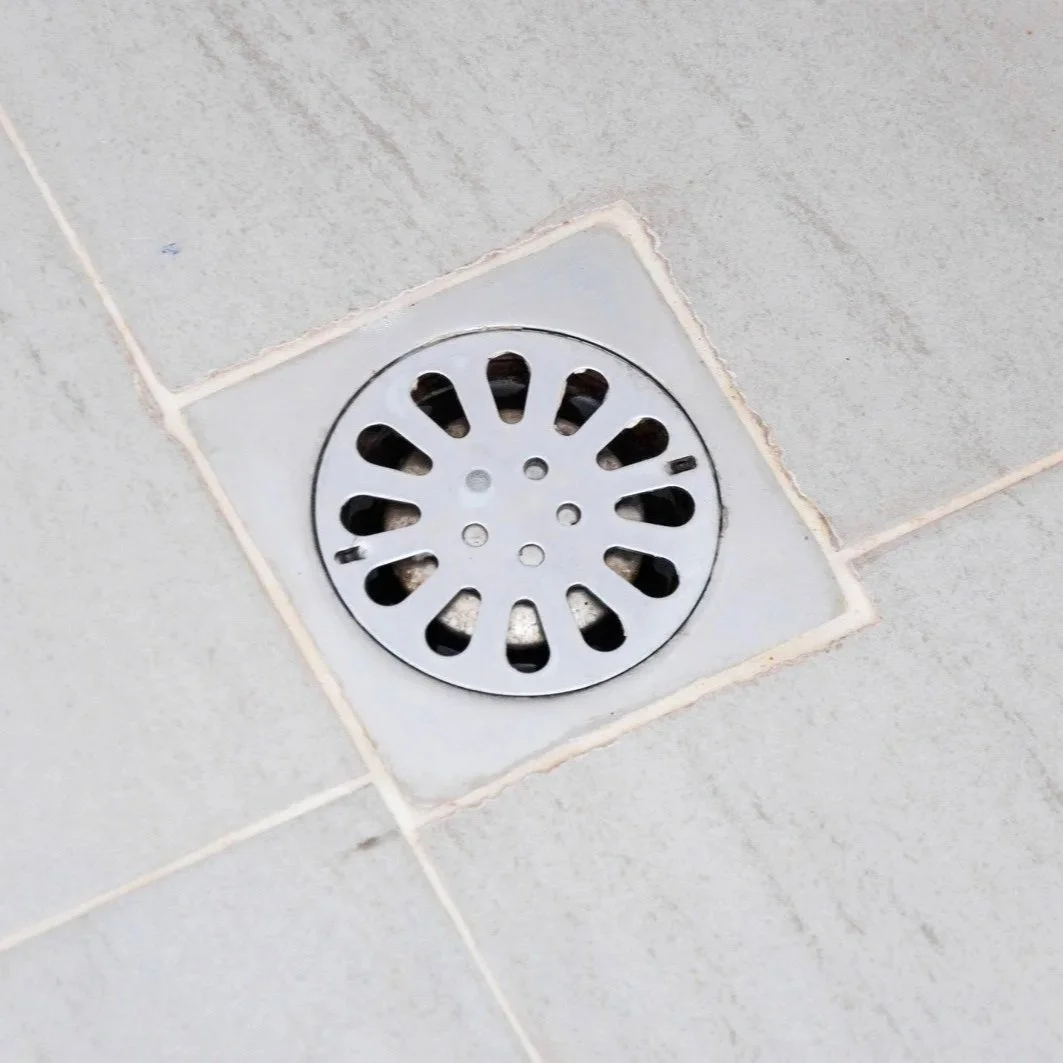
Here's how to read the smell back to the cause, and why a fix that works for your neighbor's shower might not touch yours.
What "sewer smell" actually is
The smell coming up through a shower drain isn't usually raw sewage. It's a mix of gases produced by the bacterial film that lives in any drain line — hydrogen sulfide, the part that smells like rotten eggs, plus methane, ammonia, and the byproducts of decomposing organic matter. The gas exists in every working sewer line. Your plumbing is built to keep it on the sewer side of the fixtures. The seal between the sewer and your bathroom is the P-trap — the U-shaped bend of pipe directly under the shower drain. The bend holds a couple of inches of water at the low point, and that water column is the only thing separating the inside of your shower from the inside of the city sewer.
As long as the trap holds water and air moves freely through the vent stack on the roof, the gas stays where it belongs. When the smell comes up the drain, something has broken that arrangement. Either the trap isn't sealed, the vent isn't drawing, or the gas is coming from inside the drain line itself. A note before the causes — a musty, mildew smell is different. That points to active mold colonizing wet areas under the strainer, and it usually clears with a scrub of the drain cover and the area immediately under it. Sewage smell — sharp, organic, sulfur-like — is what follows.
The P-trap dried out
Of every cause of a smelly shower, this one is the most common and the easiest to test. A P-trap holds its water seal by gravity. The bend stays full as long as water passes through it on a reasonable cadence. A shower used every day refills the trap with each rinse.
A guest bathroom used twice a month evaporates the trap dry between visits, and a dry trap is just an open pipe to the sewer.
Evaporation runs faster than people expect. A trap holding two inches of water in dry winter air can lose its seal in three to six weeks of no use. An attic bathroom with sun on the wall loses it faster. The smell shows up overnight once the seal breaks.
The test is a pitcher of water. Pour a quart down the shower drain, wait a minute, smell again. If the smell is gone within an hour and stays gone for a few days, the trap was dry. For showers that don't get used often, a tablespoon of mineral oil floated on top of the trap water slows evaporation to a fraction of normal.
If the smell comes back within a day after refilling, the trap isn't the problem. The water is being pulled out faster than it should be — which points to one of the next two causes.
Biofilm and soap scum coating the line
The second cause is a smell coming from inside the drain line, not from the sewer beyond it. The pipe under a regularly used shower picks up a layer of organic material — soap residue, body oil, shampoo, hair fragments, skin cells — that bacteria feed on. Over a couple of years that layer thickens into a slick, dark biofilm lining the pipe wall for several feet past the trap.
Bacteria in that film produce the same hydrogen sulfide and ammonia byproducts as the sewer downstream, just on a smaller scale and much closer to your nose. The smell rises every time air moves over the film, which happens every shower, every fan run, every time the bathroom door opens.
The mechanism is the same one that puts a film on the inside of an unwashed coffee thermos. A wet surface plus organic residue plus warmth grows a colony, and the colony smells.
Bleach knocks down the surface layer for a couple of weeks. Enzyme drain treatments work better because the enzymes digest the organic substrate the bacteria need. Neither removes the film at the bottom of the pipe where it's thickest. The fix that lasts is a wall-to-wall cleaning of the branch line — a small Flex-Shaft head spinning a chain attachment scours the inside of a 1.5-inch shower line back to bare pipe in twenty minutes, and the smell goes when the film does.
A shower line cleaned this way usually goes three to five years before the film grows back enough to smell again.
The vent stack is blocked or undersized
The third cause is one most homeowners never check, because the part that fails is on the roof. The plumbing in a house has vent pipes that run up through the wall cavity and exit through the roof. They do two jobs — let sewer gas escape above the roofline, and let outside air into the drain system so water can move down the lines without pulling a vacuum behind it.
When a vent is blocked — a leaf mat at the top, a bird nest in the opening, a frost plug in a January cold snap — the drain system can't pull air from outside, so it pulls air from the next-easiest place. Often that's the P-trap under a shower. A flush in another room, a washing machine dump, or a long fill cycle on a bath can siphon enough water out of an unused shower trap to break the seal in one event.
A second pattern is the smell that comes and goes. The trap holds water most of the time but loses the seal whenever a large drain event happens elsewhere. Run the washer, then check the upstairs shower — a half inch of water missing from the trap is a vent that isn't keeping up.
The inside giveaway is the gurgle. Sluggish water in a fixture combined with a soft glugging sound during draining is the signature of an air-starved line. A vent cleaning runs an hour for a plumber with a ladder and a small auger, and the smell from siphoned traps usually quits within a day of fresh airflow.
A cracked drainpipe behind the wall or under the slab
The fourth cause is the one where the smell isn't coming through the trap at all. It's coming through the wall.
Shower drain assemblies have several seal points. The drain body screws into the pipe stub. A rubber gasket or wax seal under the strainer plate seals the body to the shower pan. If any seal fails — gasket dried out, wax cold-flowed in an older install, pipe joint loosened by house movement — sewer gas takes a path around the trap entirely and vents through the gap.
The same thing happens with a cracked or settled pipe. cast iron drain pipes installed before the 1970s rust from the inside until a section pinholes through, and the hole vents gas into the wall cavity instead of carrying water down the line. PVC installed cheap can pull apart at a glued joint if the framing settles. A pipe under a slab foundation can hairline-fracture and let gas seep up through grout joints in tile.
The signature is a smell that bleach and water in the trap don't touch. The trap is full. The vent is fine. The smell is still there. Often it's worse near the floor than at the drain opening, because the gas is coming up through the floor itself.
The fix is access. A camera with a sonde locates the break inside the wall or under the slab. A small access cut, or a more invasive repair under a tile floor, exposes the failed section. Replacing six inches of cracked pipe stops the smell.
A main-line restriction pushing gas upstream
The fifth cause is downstream of every fixture. When the main sewer line — the 4-inch pipe carrying everything out to the city tap — is restricted by grease, sludge, scale, or roots, it changes the air pressure inside the drain system.
A clean main vents at normal pressure. A restricted one runs at slightly positive pressure on its way to a backup, because the gas inside has fewer ways to escape. That pressure pushes back up through the path of least resistance — usually the lowest-used trap, often a guest shower or basement floor drain. The seal water gets pushed up and over, and sewer gas comes up behind it.
The signature is a smell that gets worse when the house is using water heavily. A laundry day with three loads. Family visiting with everyone showering. Each event raises pressure inside the main, and the smell swells with it. The other clue is a gurgle elsewhere — toilets that bubble when the washer drains, a floor drain that started smelling this month. Same restriction.
A bathroom drain cleaning of the shower line does nothing for a main-line problem. The right fix is a camera from the main-line cleanout and a cleaning method matched to the picture — hydro jetting for grease and sludge, a Flex-Shaft cutter for roots at a clay joint, pipe milling for cast iron scale, trenchless lining for the joint roots keep coming back through.
A short diagnostic to narrow it down before you call anyone
Five causes, five fixes, two minutes of testing.
Pour a quart of water down the shower drain. Wait an hour. If the smell is gone for two or three days, the trap was dry — add a tablespoon of mineral oil to the trap on showers that don't get used weekly.
If the smell comes back the same day, run the bathroom sink and flush the toilet in the same bathroom. Listen for a gurgle from the shower drain. A gurgle says the vent is restricted — schedule a vent inspection on the roof.
If there's no gurgle and the trap stays full, smell along the floor near the shower base and along the grout outside the curb. Stronger smell at floor level than at drain level means a leak behind the assembly or under the slab — a camera-and-access job, not a cleaning.
If the trap is full, the vent is clear, and the floor doesn't smell — biofilm inside the line is the cause, and a branch-line cleaning resets it.
If the smell tracks with heavy water use elsewhere or other drains are gurgling, the main line is the source and the shower is the path of least resistance. Camera the main before cleaning anything.
Frequently Asked Questions
Why does the sewage smell come back a few days after I bleach the drain?
+Bleach kills the surface bacteria on the film coating the pipe, but the film itself stays. Fresh bacteria recolonize the substrate within seventy-two hours. A bleach treatment is a four-to-seven-day reset. A wall-to-wall cleaning of the branch line removes the film, and the smell stays gone for years rather than days.
Can a cracked drainpipe really make the bathroom smell without leaking water?
+Yes, more often than people expect. Sewer gas is lighter than water and finds gaps long before liquid does. A pinhole through cast iron, a loose slip joint, a dry rubber gasket — any can vent gas into a wall cavity or under a slab without ever wetting drywall or flooring. The smell shows up before the water damage does.
Should I pour drain cleaner down the shower if the smell keeps coming back?
+Probably not. Sodium hydroxide and sulfuric acid drain cleaners are formulated to dissolve hair and grease clogs, not to remove biofilm or fix a venting problem. They sit on the trap water and corrode older metal drain components if left sitting. An enzyme drain treatment is gentler for organic film, and a mechanical cleaning of the branch line beats both.
Is sewer gas dangerous to breathe in a bathroom?
+In small amounts, mostly unpleasant. Hydrogen sulfide at the parts-per-million levels typical of a leaky trap causes headaches, nausea, and irritated eyes after long exposure. Methane in higher concentrations is flammable. Neither is a typical home hazard at the levels coming up through a single drain, but a basement with multiple smelly fixtures warrants a same-week service call.
Does running the shower for a few minutes clear a sewer smell?
+Sometimes, briefly. Running water refills a dry trap and rinses the strainer area, which knocks the immediate smell down for an hour or two. If the smell is back the same evening, the source isn't the trap — that pattern points to biofilm in the line, a venting issue, or a main-line restriction.
What happens if I ignore a persistent shower drain smell for months?
+A dry trap stays a smell and not much else. A vent problem is the same. Biofilm grows thicker the longer it sits — the cleaning that fixes it gets bigger over time, but the line itself isn't damaged. The two causes worth not ignoring are a cracked pipe behind the wall, which can rot framing and let mold colonize wet drywall before the leak shows, and a restricting main line, which is usually weeks to months from a backup by the time the smell starts.
Reading the smell before paying for the wrong fix
A shower drain that smells like sewage is the line telling you which part of the system needs attention. The smell itself isn't the problem — it's the diagnostic. Bleach, drain cleaner, baking-soda-and-vinegar, masking sprays — all treat the symptom. None of them touch a dry seal, a blocked vent, a cracked pipe, or a restricting main, which are the real sources in four out of five bathrooms.
The fix that works is the one matched to the cause. Pour a quart, listen for a gurgle, smell the floor, check whether the smell tracks with heavy water use elsewhere. Either the bathroom tells you the answer or it tells you which camera run is worth the call. Either way, the next step costs less than the third bottle of bleach.
