
How Tree Roots Get Into Your Sewer Line and Cause Backups
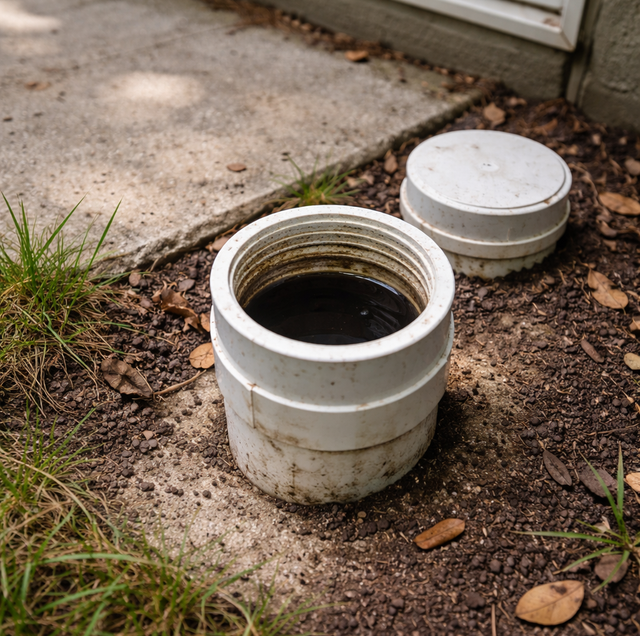
Quick Answer: Tree roots enter a sewer line through joints, hairline cracks, and loose seals, drawn by the warm, moist vapor that leaks out of the pipe. Once a single root hair slips through a gap, it branches into a dense mass inside the line. Older clay, Orangeburg, and cast iron pipe are the most vulnerable; a camera inspection confirms the intrusion, and mechanical cutting, hydro jetting, or a spot repair clears and controls it.
Roots do not smash their way through a healthy pipe. That is the first thing worth understanding, because it changes how you think about the problem. A sewer line carries warm wastewater, and where two sections of pipe meet, a small amount of that warmth and moisture escapes as vapor into the surrounding soil. To a tree, that vapor is a signal: water and dissolved nutrients, exactly what a root system is built to hunt for. The root grows toward the source, finds the gap, and slips a fine hair through an opening you would need a magnifying glass to see.
Why Roots Go After A Sewer Line At All
A tree's feeder roots are opportunists. They spread far wider than the canopy above, often two to three times the height of the tree, and they follow the path of least resistance toward whatever offers steady moisture. In dry stretches, a sewer line becomes one of the most reliable water sources in the yard because the flow inside never stops for long.
The intrusion point is almost always a joint or a flaw, not the middle of a solid pipe wall. Every place two lengths of pipe connect is sealed, and every seal ages. Rubber gaskets stiffen and shrink, old mortar collars crack, and the fitting loosens a fraction of an inch as the ground shifts through freeze-and-thaw cycles in cold months and settles again in warm ones. That movement happens year-round, not just in one season, and each cycle widens the gap a little more. A hairline opening is all a root hair needs.
Once inside, the root behaves like any plant that has found rich soil. It thickens, branches, and multiplies in the nutrient-heavy flow, building a fibrous mass that looks a lot like a wet mop wedged crosswise in the pipe. That mass is what actually causes the trouble. It snags toilet paper, grease, and solids, and what started as a single thread becomes a plug.
Which Pipe Materials Are Most At Risk
Not every sewer line is equally inviting, and the material under your yard tells you a lot about the odds.
Older clay pipe: Vitrified clay was the standard for decades and is still in the ground under many older homes. It is joined in short sections, so a single run has many joints, and each joint is a potential entry point. Clay is also brittle and cracks under soil pressure, giving roots even more openings.
Orangeburg pipe: Orangeburg is a fiber-and-tar pipe used in the mid-twentieth century. It was never meant to last as long as it has. It softens, blisters, and deforms with age, and once the wall starts to break down, roots enter almost anywhere along its length rather than only at the joints.
Cast iron: Cast iron holds up better than clay or Orangeburg, but its joints were sealed with materials that erode, and the interior scales and corrodes over the decades. Roots exploit the weakened seals and the rough, pitted surface.
PVC and modern plastic: Solvent-welded PVC has far fewer, tighter joints and a smooth wall that resists cracking, so it is the least root-prone of the common materials. It is not immune. A poorly glued joint, a fitting knocked loose during backfill, or damage from later digging can still let a root find its way in.
Early Warning Signs Worth Catching
Root intrusion is gradual, which is the good news, because it announces itself long before a full backup. The trick is reading the signals for what they are.
The earliest is often a gurgle. When a partial root mass narrows the line, water rushing past it pulls air through the nearest trap, and you hear a bubbling or glugging from a toilet or floor drain after a sink empties. Slow drains across more than one fixture point to a shared blockage downstream rather than a local clog under a single sink. The most telling sign is a recurring clog at the same spot that comes back weeks or months after you cleared it. A one-time clog is usually debris. A clog that keeps returning to the identical location is a fixed obstruction, and roots are the classic cause, because you can cut them but they regrow from what stays anchored in the joint.
Timing gives another clue. Root-driven backups often worsen during heavy-use periods and can flare in dry weather, when the tree pushes harder toward the moisture in the line, though a mass large enough will cause trouble in any season.
How Professionals Diagnose It
Guesswork is expensive underground, so the diagnosis starts with looking, not digging. A plumber feeds a waterproof camera on a flexible cable through a cleanout and down the line, watching a live feed. The camera shows exactly what is in the pipe, whether it is roots, grease, a collapse, or a bellied section holding standing water, and it marks how far down the intrusion sits so any repair is aimed at the right spot.
A cleanout is a direct opening into the sewer system, and the gas rising from it can contain hydrogen sulfide and methane, which are toxic in a confined space. Do not lean into a cleanout, reach down it, or run equipment into it yourself. That work belongs to a technician with the right protective gear.
How The Roots Get Cleared And Treated
Clearing roots is a mechanical job first and a chemical one second.
Mechanical cutting: A rootsaw or root-cutting head on a flexible shaft is driven down the line and spun to shear the mass off flush with the pipe wall. This restores flow quickly and is often the immediate fix when a line is backing up. It cuts what is inside the pipe, but the root still lives in the soil, so cutting alone buys time rather than a permanent end.
Hydro jetting: Hydro jetting sends water through a specialized nozzle at high pressure, scouring the full inside diameter of the pipe. It strips out the root debris left after cutting, along with the grease and scale that the roots had trapped, leaving a truly clean wall rather than a channel bored through the middle of the blockage.
Foaming root treatment: A foaming herbicide treatment coats the pipe interior and kills the root tissue on contact, discouraging quick regrowth at the cut. One older home remedy, copper sulfate, is sometimes poured down the toilet, but it must be used strictly as the product label directs and kept away from gardens, lawns, and any private well, because misused, it can harm plants you want to keep and contaminate water. When in doubt, leave chemical treatment to a pro who knows the line and the yard.
How To Keep Roots From Coming Back
Clearing the line treats the symptom. Stopping the intrusion means closing the door the roots came through.
Spot repair: If the camera finds the damage confined to one joint or a short cracked section, a plumber can excavate just that spot and replace the failed piece, sealing the specific opening the roots used.
Pipe lining: For lines with damage in several places, a cured-in-place liner can be pulled through the existing pipe and hardened to form a smooth, jointless inner wall. With no gaps and no seams for a root to probe, the pathway closes off along the whole lined run. Lining is a specialized job and is done by a trained crew, not a do-it-yourself fix.
Tree placement and root barriers: Going forward, keep the biggest offenders away from the line. Willows, poplars, silver maples, and other fast-growing, water-loving species are the worst near a sewer run. When planting, set aggressive trees well clear of the pipe's path, and a physical root barrier, a rigid panel buried alongside the line, can steer roots down and away rather than toward the joints.
Frequently Asked Questions
Rock salt is a common suggestion, but it works poorly and carries a real risk. Flushing salt in the volume needed to affect roots corrodes older cast iron and can kill nearby plantings if the line leaks it into the soil. It also does nothing about the mass already anchored in the pipe. Foaming treatments made for sewer use cling to the pipe wall and reach the roots directly, which salt washed straight through the line cannot do.
After mechanical cutting, roots commonly return to a flow-blocking size within one to three years, depending on the tree species and how large the opening is. Fast growers like willow and poplar rebound at the quicker end of that range. This is why many homeowners on an unrepaired line set up a routine cleaning every twelve to twenty-four months until the joint itself is sealed or the pipe is lined.
Standard homeowners policies typically exclude gradual damage, and root intrusion is treated as gradual wear rather than a sudden event, so the repair itself is usually not covered. Some insurers offer a separate service-line endorsement that can apply. Coverage varies by policy, so the specifics are worth confirming with your own insurer rather than assuming either way.
No. Roots travel far beyond the canopy, so the culprit can be a neighbor's tree, a street tree in the public right-of-way, or even shrubs and hedges with surprisingly aggressive root systems. A camera inspection shows where the roots enter the line, but it cannot always name the exact plant they came from, which is why removing one nearby tree does not guarantee the intrusion stops.
Cutting down the tree removes the source of new growth from that tree, but the roots already in the ground can keep living for a time, and other nearby roots will still seek the leak. Stump grinding does not pull the underground roots out of the pipe. The reliable fix is closing the opening in the line itself, because as long as vapor escapes from a gap, some root will eventually find it.
Yes, over time. As a root thickens inside a joint, it exerts outward pressure, and in brittle clay or degraded Orangeburg, that wedging force can widen a hairline into a full crack or shift a section out of alignment. A minor intrusion caught on camera and treated early is far cheaper to handle than the pipe failure it can grow into if left for years.
Book a camera inspection before a slow drain becomes a backup — catch root intrusion early and clear it right. Clog Squad serves Holland, Grand Rapids, and Grand Haven. Call (616) 779-7675.
