
Cast Iron Pipe Replacement vs Pipe Lining: Which Costs Less?
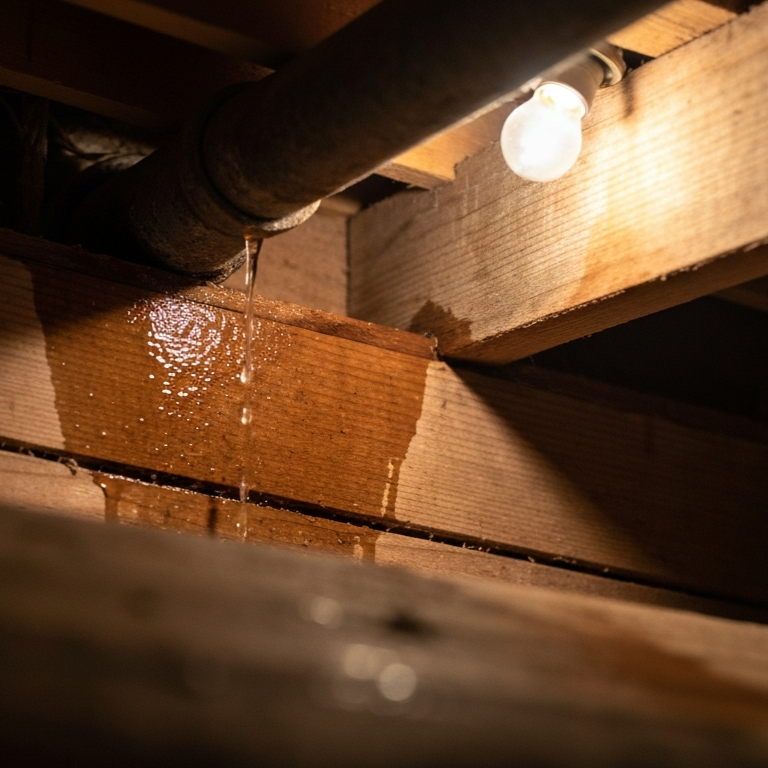
The laundry room ceiling has a brown ring around the cast iron stack where it disappears into the joist bay above. You noticed it last winter. The drip on the floor under the elbow showed up this spring. The plumber who came out yesterday left a number on the kitchen island that's going to drive the next decision.
A second number lands the day after — different company, different method, different total. The gap between the two quotes is bigger than any single repair you've ever paid for. One says replace the pipe. The other says line it. The dollars don't match because the work doesn't match.
What "replacement" actually means when the pipe is cast iron
Replacement is the original method, and it's still the right call in plenty of cases. The job has the same shape on every project. The plumber locates the failed run with a camera, opens whatever floors or walls cover it, cuts the old cast iron out section by section, installs new pipe in the same path — usually PVC or ABS for drain work — ties it back into the rest of the system, and closes everything up.
What drives the cost is everything that isn't pipe.
If the failed run is in a basement utility space with exposed joists, the labor is mostly plumbing labor. Cut, fit, glue, pressure-test, done. If the run is under a finished slab, the job adds jackhammer work, dust containment, slab patching, and a concrete pour that needs cure time. If the run is under a finished floor with tile, hardwood, or vinyl, you're paying for floor removal and floor restoration too. The replacement cost on the same length of pipe can swing by a factor of three or four depending on what's above it.
The pipe itself is rarely the expensive part. It's the access and the rebuild on either side of it.
What "lining" actually means and why the number looks different
Pipe lining — formally cured-in-place pipe, or CIPP — leaves the old pipe in the ground and rebuilds it from the inside, like a sock liner inside a worn boot. A shop that does the lining in-house, with cameras before and after the cure, is the version of this job that actually delivers the 50-year rating.
The crew cameras the line, jets and mills the inside back to bare metal so the resin bonds. A felt or fiberglass sleeve gets saturated with a two-part epoxy, inverted or pulled through the host pipe, and pressed against the inner wall by air or water pressure. The resin cures — ambient, steam, or UV, depending on the system — and the result is a continuous structural pipe inside the old one, with a smooth bore and no joints. At branch connections, the crew cuts reinstatements with a robotic cutter so the kitchen line, the laundry line, and every fixture stub-out reconnect through the liner.
Most of that work happens through a single access point. No jackhammer. No slab work. No flooring to put back. The labor stays inside the existing footprint, which is where the cost gap with replacement opens up.
The sticker price, side by side
Industry-typical pricing for residential cast iron repair runs in these ranges. Local rates vary, so treat the numbers as a comparison shape, not a quote:
| Job profile | Replacement | Lining (CIPP) |
|---|---|---|
| 30 ft cast iron, exposed in basement | $4,500 – $9,000 | $4,000 – $7,500 |
| 30 ft under finished slab | $9,000 – $18,000 | $4,500 – $9,000 |
| 50 ft from house out to street, intact pipe | $8,000 – $25,000+ | $6,000 – $14,000 |
| Vertical stack inside finished wall, 20 ft | $7,500 – $20,000 | $4,500 – $9,500 |
The pattern is consistent. When the pipe is exposed and easy to reach, the two methods land in similar territory. The more the pipe is buried under finished surfaces, the wider the gap, and the more lining saves on the project total. Under a finished basement with tile or under a driveway, lining can come in at thirty to fifty percent of the replacement cost.
When the pipe runs under nothing — a crawlspace with bare dirt, exposed basement joists, a yard run nobody minds digging — replacement sometimes wins by a small margin. Lining still requires camera work, pre-cleaning, resin, and a robotic cutter. When access is free, that prep cost can't be undercut.
The hidden cost of replacement nobody mentions in the estimate
The plumbing estimate covers the pipe. It often doesn't cover what comes after.
A slab cut in a finished basement leaves a patch of bare concrete six inches wider than the trench. The patch isn't level with the original slab and isn't the same color. If the basement had vinyl plank, tile, or laminate before, that flooring is gone above the trench and a few feet on either side. The drywall along the wall where the pipe ran often comes off, too. Paint won't match. Trim has to come off and go back on. Putting the room back the way it looked can match or exceed the plumbing itself.
Outdoors is similar. A 50-foot trench across a front yard takes out turf, sometimes a section of driveway, sometimes mature shrubs. Sod returns in patches that don't blend for a year or two. A driveway cut and re-pour rarely matches the existing concrete, and asphalt patches show as a darker stripe for the life of the surface.
A $14,000 replacement under a finished basement floor often turns into a $20,000 project by the time restoration is done. A $9,000 lining job on the same pipe leaves the floor untouched and ends at $9,000.
Where lining can't go, and replacement wins by default
Lining isn't an option on every pipe. The host pipe has to be intact enough to support the liner during the cure, and the geometry has to be something the liner can navigate. There are three situations where the lining quote either doesn't come in or comes in with significant exclusions.
Collapsed pipe. A section of cast iron that has caved in — the bottom rusted through and the top dropped into the void — has no host to line. The crew has to spot-replace the collapsed section and can line the rest if the homeowner wants. The cost benefit drops because the dig is happening anyway.
Severe offsets at joints. When ground movement has pulled a clay or cast iron joint apart by more than the liner can bridge — usually about an inch — the liner can't follow the offset cleanly. Some offsets get spot-repaired first and lined over; others force replacement of the offset section.
Tight bends past 45 degrees back-to-back. Liners follow the host pipe, but very tight directional changes — particularly back-to-back ells — can wrinkle the liner or thin the wall on the outside of the bend. Most residential drain layouts don't hit this, but it shows up occasionally in old additions or remodels where the line zigzags around obstructions.
When any of these come up on the camera, a reputable contractor will tell you lining isn't the right call and quote replacement instead. If a contractor quotes lining on a collapsed line without disclosing the dig that's coming anyway, the lining quote isn't honest.
Pipe bursting: the third option that sometimes splits the cost
A buried lateral that can't be lined doesn't always mean a full open-trench replacement. Pipe bursting is the middle option — a trenchless replacement method where a bursting head is pulled through the old pipe, fracturing it outward into the surrounding soil while pulling a new HDPE pipe in behind it. The job needs two access pits, one at the house and one near the property line or street, but everything between those two pits stays buried.
Pipe bursting typically runs $150 to $200 per linear foot plus the two excavations, putting most residential bursts in the $7,500 to $15,000 range. The use case is specific: a lateral that's too compromised to line, but in a path where a full dig would mean tearing up a driveway, a mature yard, or a concrete walkway. When the camera rules out lining, asking whether bursting is on the table is worth a question.
Insurance, financing, and what each policy actually covers
Coverage on cast iron failure depends on the type of damage and the carrier, and it varies more than most homeowners expect.
Standard homeowners policies typically cover sudden, accidental damage caused by the pipe failure — water and sewage cleanup on belongings, drywall and flooring damaged by the backup. They typically do not cover the pipe repair itself, on the reasoning that pipe deterioration over decades is wear and tear. Some carriers offer service-line endorsements that cover the buried lateral from the house to the street, with sublimits that range from $5,000 to $20,000. The endorsement runs about $40 to $75 a year and can change which method actually costs less out of pocket.
For the contractor side, lining and replacement are usually treated the same way for financing. A 0% promotional period over 12 to 18 months is common on either method. The interest rate after the promotional window matters more than the headline 0% — that's where the math turns. Worth asking any contractor whether they finance in-house or refer to a lender, and whether the rate sheet is available before you commit.
What you're buying for the higher number, when the higher number is replacement
Cost comparisons that stop at the up-front number miss a real consideration. The two methods don't deliver the same product.
A new PVC drain line installed properly should last 75 to 100 years before material failure becomes a concern. A CIPP liner installed properly is engineered for a 50-year service life, and most manufacturers warranty the liner for that period. Both are long timelines. Both will outlast most homeowners in the house.
The shape of the long-term cost is slightly different. Replacement gives you a fresh pipe in a fresh path — no remaining cast iron, no host pipe to fail behind the liner. Lining gives you a structural sleeve inside a host that will continue to corrode behind it, but the liner is the load-bearing member at that point, and the host's deterioration doesn't reach water. Both methods, installed by competent contractors, are long-term fixes and not stopgaps.
The lifespan math changes on partial jobs. If only 30 feet of a 90-foot lateral are bad, lining the bad 30 is a real fix today and a callback in fifteen years when another section fails. Replacing the whole 90 feet costs more now and skips that callback. The question is whether the savings on a partial lining beat the eventual second mobilization.
Why the camera report drives the cost decision more than the quotes
Pipe condition, not pipe age, drives the decision between lining and replacement. Two houses on the same street, both with 1955 cast iron, can score very differently on the camera — one with a thinning wall that lines beautifully, the other with collapse points that need spot replacement first. A lot of the cast iron under West Michigan basements went in between 1940 and 1975, which is why so many laterals are reaching decision territory at the same time. Trenchless pipe lining has become the default first-look on residential failure for the same reason: floor and yard restoration usually costs more than the lining itself.
What makes the cost decision honest on either side is a written camera report with footage marks — distance to each defect, defect type, host-pipe wall condition. Without that, both quotes are guesses.
Frequently Asked Questions
Why is replacement so much more expensive when the finished floor is involved?
+The plumbing work is roughly the same. What changes is the cost of cutting through the slab, the cost of restoring the slab, and the cost of replacing whatever finish was on top of it. On a finished basement, those three line items can match or exceed the plumbing itself.
How long does CIPP pipe lining actually last?
+The structural epoxy liners used in residential CIPP are engineered for 50 years of service. Most manufacturers warranty the liner material for the same period when it's installed by a certified contractor. Field installations from the early 1990s are now 30+ years old and continuing to perform.
Is lining really cheaper than replacing in every case?
+No. On exposed pipe in a crawlspace or unfinished basement with nothing above it, the two methods can land within a few hundred dollars of each other, and replacement sometimes wins by a small margin because lining still has to pay for the camera work, the pre-cleaning, and the resin. Lining's cost advantage shows up when access is hard — under slabs, under finished floors, under driveways, under landscaping.
Can a pipe be lined if part of it has already collapsed?
+Not the collapsed section itself. A collapsed section has to be spot-replaced because there's no host pipe to support the liner during cure. The rest of the line can be lined after the spot repair if it's otherwise intact. This is the case where the cost gap between the two methods narrows.
Does lining work on the vertical stack inside a finished wall?
+In most cases, yes. Vertical stacks are actually one of the strongest cases for lining because replacement means opening drywall on multiple floors. Lining a stack uses access points at the cleanout and a top-floor connection. The wall stays closed.
Will a lining job pass plumbing inspection the same as replacement?
+CIPP installations are recognized under standard plumbing codes when installed by certified contractors using approved materials. Permits and inspections follow the same general process as replacement, with the inspector typically reviewing the camera footage of the cured liner instead of the open-trench installation.
How to read the two estimates without getting talked into the wrong one
The right comparison isn't quote-to-quote. It's project-to-project — what each contractor actually plans to do, and what the price will be when the work is finished and the room is back together.
A replacement quote that doesn't itemize floor or wall restoration is incomplete. Ask whether the patch will be flush with the existing slab, whether the flooring is included, whether the trim and paint go back on. The plumbing number is real. The restoration number is real too.
A lining quote that doesn't include the post-cure camera and the reinstatement cuts at every branch is also incomplete. Ask what happens at the kitchen drain branch, the laundry tie-in, and the toilet stub-out, and whether the final camera footage is yours to keep. The two quotes usually tell a clear story once both projects are scoped honestly.
