
A USB drive and a stapled printout sit on the dining-room table next to a half-empty coffee mug. The crew left an hour ago. The video on the laptop is forty-three minutes long — dark tunnel scrolling past, two minutes of what looks like a wet, hairy obstruction, then dark again. The printout has five sentences on it and a quote, six pages later, for $8,400.
That's the moment most homeowners realize they don't know what they're looking at. The inspection was supposed to be the diagnostic. What got handed back was a video file with no map and a price tag with no defense. A camera report is the second opinion on every repair quote that follows it — and when it's missing the right pieces, the quote isn't standing on much.
What the inspection was actually paid to find
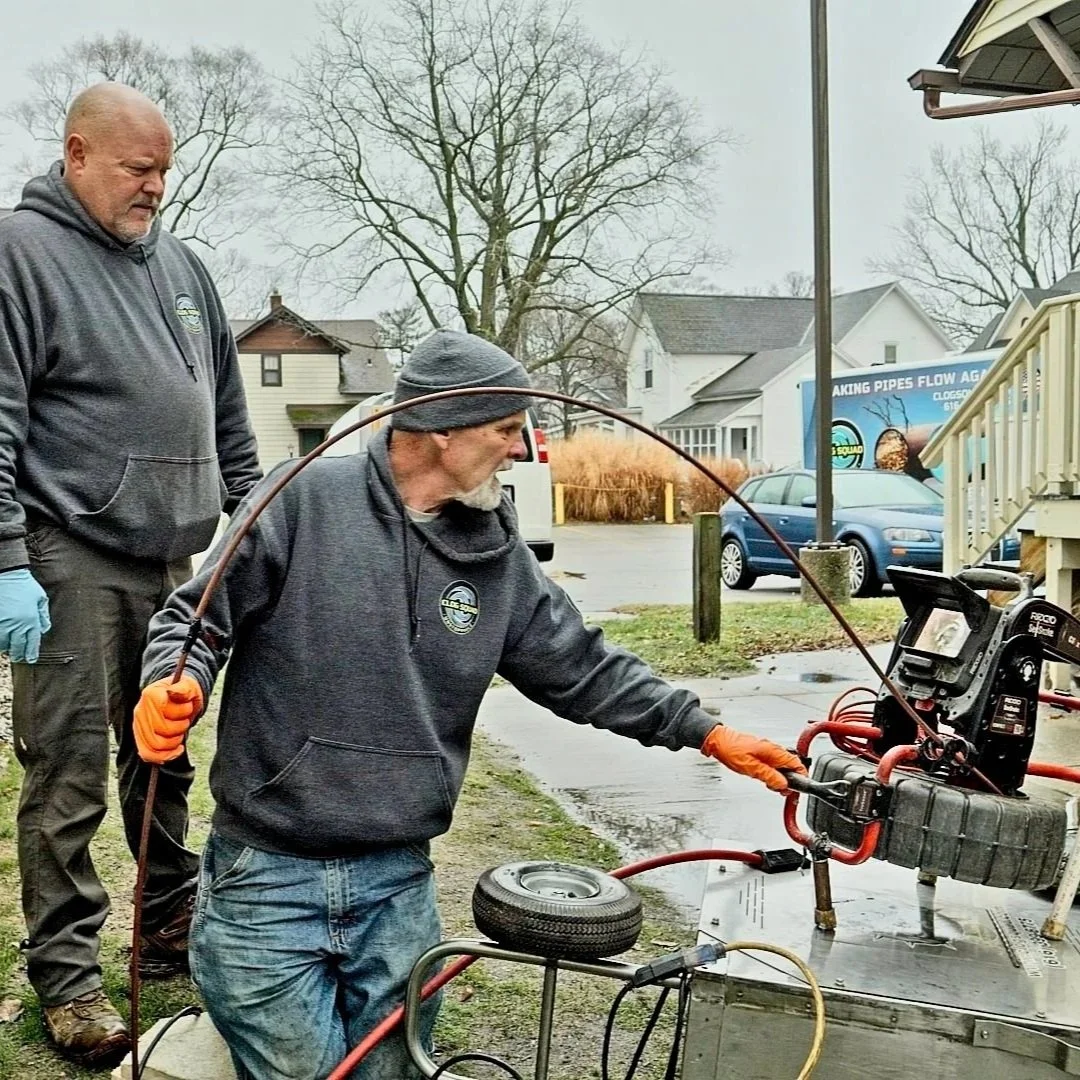
A push-camera survey down a residential lateral takes about an hour at the house and produces a single deliverable: a record of what the inside of your sewer line looked like on that day. The job isn't to recommend a repair. The job is to put the line on screen.
A record of what's down there has four parts. The video itself, recorded continuously from cleanout to the city tap, no jump cuts. A written summary that calls out each defect by what it is and where it sits in the run. The locator data — the path the line takes under the yard and the depth at each point. A signed statement of pipe material, diameter, and total run length.
If any one of those four is missing, the report isn't finished. The first question to ask of the printout in front of you isn't whether the recommendation is right. It's whether the report has the four pieces, a defensible recommendation needs to rest on.
The video footage, and what makes it usable
The video is the primary evidence. Everything else in the report is the technician's reading of what shows up on it. A useful recording has a few traits, a homeowner can verify without any plumbing background.
The footage runs continuously from access to the terminus. No edited highlights, no skipped sections. Footage that starts at the cleanout, jumps to a single defect, and ends is a clip reel, not a survey.
A footage counter has to be visible in frame. Most modern push-camera rigs overlay the distance from the access point on screen, updating as the cable feeds out. That number is how every defect gets pinned to a location. When the report says "crack at 38 feet," you need to see "38 ft" on the screen at the moment the crack appears.
The picture has to be readable. A modern HD push-camera survey shows pipe wall clearly enough to identify scale ridges, hairline cracks, the dark seam of a separated joint, and the white edges of root mass against dark biofilm. A blurred, low-light survey from a fifteen-year-old camera leaves too much room for guesses.
Defect locations — measured in feet from the access point
The single most important number in any sewer report is the footage mark. Every defect gets called out by how far from the access point it sits. A defect at twelve feet is under the front walkway. A defect at fifty-five feet is past the property line and possibly the city's responsibility.
A report that says "root intrusion in the main line" is uninformative. "Root intrusion at 22 feet, 6 inches" is actionable. The contractor doing the repair knows where to dig. The homeowner reading the second-opinion quote knows whether the alternative shop is talking about the same defect.
Footage marks also pin down responsibility. Most residential laterals run forty to sixty feet from the house to the city tap. Defects between zero and the property line belong to the homeowner; defects past the property line sometimes belong to the city. A report that doesn't mark where the property line falls is failing to answer who pays.
Locator readings are the same evidence in a different form. A camera with a transmitter at the head can be tracked from the surface, and the locator records the path and depth at each footage point. That data tells you where the line bends, how deep it sits, and what's directly above any defect — sod, walkway, driveway, mature maple. Without locator data, the dig plan is a guess.
Pipe material, diameter, and what those tell you about the rest of the line
The material running the length of the line says a lot about what the rest of the run is doing besides the defects on screen.
Clay tile shows up dark gray with hub-and-spigot couplings every 24 to 30 inches. Joints are the failure points — every clay coupling is a potential root entry once the cement seal weathers. A clay line with one rooted joint usually has the next intrusion two couplings down, and an honest report calls out every rooted joint, not just the worst one.
Cast iron looks black and tar-coated when new, rust-orange and scaled when aged. It loses wall from the inside via channel rot — the bottom of the pipe wears thin while the top stays sound. A report on a cast iron line needs to call out scale thickness, pitting locations, and any zones where wall loss is visible. Two pinhole zones in different sections usually mean the whole run is approaching the same condition.
PVC has a white interior, smooth walls, and glued couplings every ten feet. Failures show up as cracked elbows, settled bellies in poor bedding, and joint separations. Any pitting or wall damage on a younger PVC line is unusual and needs a specific cause noted.
Orangeburg is a bitumen-impregnated fiber pipe, brown to black, soft, found in houses built roughly 1945 to 1972, and aging out of service across the same window. It deforms inward under soil load into oval cross-sections. A camera that hits an Orangeburg run with any deformation has hit a line near the end of its life.
A 4-inch lateral is sized for the flow it has to carry, and any defect that reduces effective diameter by more than about a third starts to back the line up.
The repair recommendation — and how to read it skeptically
Most camera reports end with a recommendation. That recommendation isn't part of the record — it's a sales position based on the record. The two need to be read separately.
A useful repair recommendation names the method, ties it to the specific defects on the footage, and explains why that method is the right call for this line. "Trenchless pipe lining recommended, full length, $9,800," with no reference to specific footage marks is a quote, not a diagnosis. "Trenchless pipe lining recommended over the 22-foot to 48-foot section to seal joint separations at 24 and 36 feet; spot repair at 18 feet for the offset that exceeds liner tolerance; remaining run sound" is a diagnosis written against the survey.
Alternative methods should appear. A report that names only the most expensive option without acknowledging that hydro-jetting, spot repair, or pipe milling might also be on the table is missing something. Every defect type has more than one repair path, and the right method depends on the defect, the host material, and the access — not on what the contractor sells first.
If the recommendation upsizes from the defects shown on screen, that's a signal to slow down and read the footage yourself. A line with one rooted joint at 30 feet doesn't need a full liner; it needs the root cut, the joint sealed, and a follow-up camera in a year. A line with twelve defects across sixty feet is a different conversation.
What the camera can't see, and when that matters
A push camera is a strong tool inside the pipe. Outside the pipe, it's a blind instrument, and a report that pretends otherwise is overstating what the survey found.
Soil condition is invisible to the camera. A belly on the footage means the pipe has settled, but whether that's from poor bedding, washed-out fill, a shifting tree, or a void under a slab is something the camera can't answer. A report that calls "belly at 41 feet" is reporting a finding. A report that adds "caused by soil settlement, requiring excavation" is making an inference that the footage can't actually support without a second method.
Wall thickness on cast iron is hard to read precisely from inside the pipe. The camera sees scale and surface pitting — it doesn't see how much intact metal sits behind them. A line that looks heavily scaled might have an eighth-inch of sound wall left under the deposit; it might have nothing. Wall-thickness reading takes ultrasonic testing, not camera footage alone.
When the camera reaches its limit, the next step is more diagnostic work — hydro-excavation at a flagged spot, ultrasonic testing, a second survey, not a larger repair recommendation written to cover what the camera couldn't see.
Questions to ask before signing any repair quote
The shop holding the camera and the shop bidding the repair don't always have your interests aligned. A few specific questions sort the careful reports from the ones written to land a sale.
Will you provide the raw video on a USB drive or download link, in a standard format, with no expiration? The footage belongs to the homeowner who paid for the survey. A shop that won't hand it over is keeping evidence private — and the only reason to do that is to keep a competing contractor from reading it differently.
Are the footage marks for every defect on the written summary? Without those marks, the defects can't be verified by anyone else, including a second camera. Ask for them in writing before the next conversation.
Will you surface-mark every defect the recommendation calls for repair on? A locator pass from the truck takes ten minutes, and seeing the marks in chalk on the actual lawn confirms the camera reading hasn't been transposed onto the wrong section.
What other methods could address the defects, and why is the recommended one the right one for my line? A shop with one product to sell will recommend it. A shop with several methods will explain which applies and why.
If the line is sound, will you put that in writing? A clean survey is as valuable as one that finds defects — and a written "no significant defects observed" lets the homeowner skip the repair quote and shelve the question for five to seven years.
A second-opinion camera, run by an independent shop, is rarely a waste of money when a major repair is on the table. It costs about a quarter of what most spot repairs do. When two reports differ by a $400 spot versus a $9,000 reline, the second opinion has paid for itself.
Frequently Asked Questions
What should a sewer camera inspection report actually include?
+A continuous video recording from access to terminus with a visible footage counter; a written summary identifying each defect by type and footage location; locator data showing the line's path and depth; and a statement of pipe material, diameter, and total run length. The repair recommendation is separate from the record and should reference specific footage marks, name alternative methods where they apply, and state what does not need repair.
How accurate is a sewer camera at finding defects in residential lines?
+For interior pipe-wall findings — cracks, root intrusion, scale, joint separations, corrosion patterns — a modern HD push camera in trained hands catches almost everything visible. For substrate-side problems — wall thickness behind scale, soil condition around the pipe, voids under bedding — the camera shows symptoms but not cause, and confirming those takes a second method like ultrasonic testing or hydro-excavation at the flagged spot.
Can I get the raw footage to keep on a USB or shared link?
+Yes, and a shop that refuses or charges a fee for the video is keeping evidence private that the homeowner already paid for. The raw footage should be a standard deliverable, in a format that opens on a normal laptop, with no expiration. Keep a copy independent of the contractor's portal. If a different shop bids the repair later, the original footage is the comparison.
How long is the camera footage useful as a reference?
+For an existing defect, the footage is useful indefinitely — that crack at 38 feet is still at 38 feet next year. For overall pipe condition, footage stays representative for five to seven years on a stable line, or one to two years on one that's actively deteriorating. A re-survey at five years is reasonable for older laterals, sooner if symptoms return.
What happens if the report shows no defects worth repairing?
+That's the best outcome a survey can produce and it should be noted as such — in writing, with footage and the technician's signed assessment. A clean inspection lets the homeowner shelve the question for five to seven years and use the footage as a baseline if symptoms appear later.
Why does the report sometimes recommend lining the whole run when only one section looks bad?
+Sometimes that's the right call — when the host material is failing along most of the line and the visible defect is the worst spot on a generally tired pipe. Other times it fits the contractor's product mix. The way to tell which is to look at the footage marks: a line with one defect at 22 feet and sound pipe on either side has a different right answer than a line with twelve defects across sixty feet.
What a Useful Report Leaves Behind
A camera survey at its best leaves the homeowner with three things and one decision. The three things are the raw footage, the written summary with locations, and the locator data showing the path of the line under the yard. The decision belongs to the homeowner, not the contractor who ran the camera.
When the report has the pieces it's supposed to have, every quote that follows can be read against the same evidence. A second-opinion estimate stands on the same footage marks. A bid two years from now reads the same baseline. When the report is missing pieces, every later conversation is partial — a repair gets bought based on a recommendation no other contractor can verify.
A thorough inspection runs around $250 to $450 in most West Michigan markets. A useless one is the same money spent on a deliverable that can't be acted on. The homeowner with the right four pieces in hand is the one whose next call goes well.