
Snaking vs. Hydro Jetting: Which Does Your Clog Need?
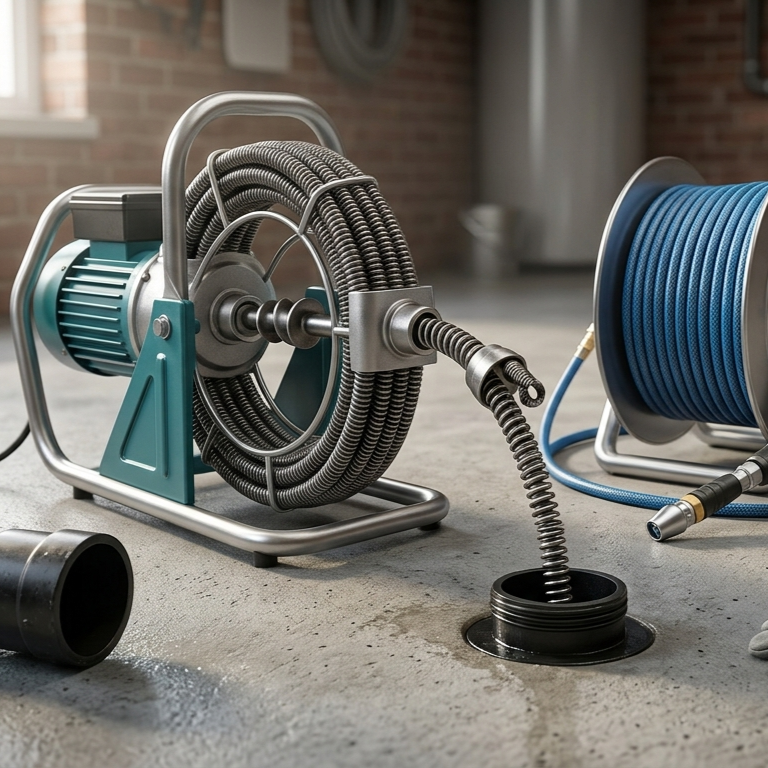
Quick Answer: Snaking (using a drain snake or auger) and hydro jetting are two methods for clearing drains, and they suit different clogs. A drain snake is a flexible cable that's pushed into the pipe to break through or pull out a specific clog — it's effective for many common, localized clogs and obstructions. Hydro jetting uses high-pressure water to scour the inside of the pipe, blasting away clogs and also clearing buildup, grease, and debris from the pipe walls along the whole line — it's powerful for stubborn clogs, heavy buildup, grease, and recurring problems, and can handle tree roots in some cases. So snaking is often the choice for a specific or simpler clog, while hydro jetting is the more thorough, powerful option for heavy buildup, recurring clogs, or whole-line cleaning.
When a drain is clogged, there is more than one way to clear it — and the two main professional methods, snaking and hydro jetting, work quite differently and suit different situations. Choosing the right method matters for actually solving the problem. Understanding how each works and what each is best for helps you know which your clog needs. Here's the comparison.
How Snaking Works
Snaking uses a drain snake (also called an auger) — a long, flexible cable that's fed into the drain and pushed through the pipe to reach the clog. Once it reaches the obstruction, the snake can break through it or hook and pull it out, clearing the blockage. It's a mechanical method that targets a specific clog and physically clears it. Snaking is effective for many common clogs and obstructions, especially localized blockages — a clog at a particular spot in the line. It's a go-to method for clearing a specific clog and is often the right tool for typical, simpler drain clogs. So snaking is about reaching and clearing a particular obstruction in the pipe.
How Hydro Jetting Works
Hydro jetting uses high-pressure water to clear and clean the pipe. A hose with a specialized nozzle is inserted into the drain, blasting high-pressure water that powerfully clears clogs and scours the inside of the pipe. Unlike snaking, which targets a specific clog, hydro jetting cleans the entire pipe length — blasting away not just the clog but also buildup, grease, scale, and debris coating the pipe walls. This thorough cleaning is hydro jetting's strength: it doesn't just punch through a clog; it cleans the pipe. So hydro jetting is a more powerful, thorough method that addresses heavy buildup and whole-line cleaning, not just a single obstruction.
| Factor | Snaking | Hydro Jetting |
|---|---|---|
| Method | Cable breaks/pulls out clog | High-pressure water scours pipe |
| Best for | Specific, localized clogs | Heavy buildup, grease, recurring clogs |
| Cleans pipe walls? | No — targets the clog | Yes — cleans the whole line |
| Power | Effective for many clogs | More powerful, thorough |
| Tree roots | Limited | Can handle in some cases |
Which Clog Needs Which
The right method depends on the clog. For a specific, localized clog or a simpler, common obstruction, snaking is often the appropriate choice — it reaches and clears the particular blockage effectively. For stubborn clogs, heavy buildup, grease accumulation, or recurring clogs where buildup keeps causing problems, hydro jetting is the more thorough option, because it cleans the buildup off the pipe walls along the whole line rather than just clearing a single spot. Hydro jetting can also handle tree roots in some cases, whereas snaking is more limited in that regard. So if you have a one-off or specific clog, snaking may be all you need; if you have a stubborn, recurring, or buildup-related problem, hydro jetting's thorough cleaning is often the better solution. The nature of the clog points to the method.
Why Hydro Jetting Helps With Recurring Clogs
A key advantage of hydro jetting is for recurring clogs. When a drain keeps clogging, it's often because buildup — grease, scale, gunk — coats the pipe walls and keeps catching debris, so clearing the immediate clog with a snake doesn't stop it from returning. Hydro jetting addresses this by scouring that buildup off the pipe walls, cleaning the line more thoroughly so there's less for debris to grab onto. This is why hydro jetting is often recommended for recurring clogs and heavy buildup, where snaking alone may only provide temporary relief. So, for a drain that keeps clogging despite snaking, hydro jetting's whole-pipe cleaning can be what finally addresses the underlying buildup. The thoroughness is what makes the difference for persistent problems.
If snaking clears your clog but it keeps coming back, that's a sign the issue is buildup coating the pipe, not just a single obstruction — and hydro jetting, which cleans the pipe walls along the whole line, is likely the more lasting solution. Recurring clogs often call for the more thorough method.
Letting a Professional Choose
Because the two methods suit different situations, and because clearing a drain properly matters, a professional can assess your clog and determine which method it needs — and has the equipment for both. A plumber can evaluate whether snaking will clear a specific clog or whether hydro jetting's thorough cleaning is needed for heavy buildup, grease, recurring clogs, or roots. They can also identify whether there's an underlying issue, like a pipe problem. Matching the method to the clog ensures it's actually solved, rather than using the wrong approach. So, for a stubborn or recurring clog, especially, having a professional assess and clear it with the right method is the most effective route, ensuring the drain is properly cleared and addressing the real cause.
Frequently Asked Questions
Snaking uses a flexible cable (auger) pushed into the pipe to break through or pull out a specific clog. Hydro jetting uses high-pressure water to scour the inside of the pipe, blasting away clogs and cleaning buildup, grease, and debris off the pipe walls along the whole line. Snaking targets a specific clog; hydro jetting cleans the entire pipe more thoroughly.
It depends on the clog. For a specific, localized, or simpler clog, snaking is often the right choice, reaching and clearing the particular blockage. For stubborn clogs, heavy buildup, grease, or recurring clogs, hydro jetting is the more thorough option, cleaning buildup off the pipe walls along the whole line. The nature of your clog — a one-off obstruction versus a buildup or recurring problem — points to the method.
Neither is universally better — they suit different situations. Snaking is effective and appropriate for many common, specific clogs. Hydro jetting is more powerful and thorough, cleaning the whole pipe, which makes it better for heavy buildup, grease, recurring clogs, and some tree roots. So, hydro jetting is more thorough, but snaking is often all that's needed for a simpler clog. The right choice depends on the clog.
Because recurring clogs are often caused by buildup coating the pipe walls that keeps catching debris, and snaking clears the immediate clog without removing that buildup, so it returns. Hydro jetting scours the buildup off the pipe walls along the entire line, cleaning it more thoroughly so there's less for debris to grab onto. This is why it's often recommended for recurring clogs where snaking gives only temporary relief.
Hydro jetting can handle tree roots in some cases, using its high-pressure water to cut through and clear root intrusion, while snaking is more limited against roots. So, for a clog caused by tree roots in the line, hydro jetting is often the more capable method. A professional can assess whether roots are the cause and whether hydro jetting or another approach is needed to address them.
Yes, it's wise. Because the methods suit different situations and clearing a drain properly matters, a plumber can assess your clog, determine which method is needed, and use the right equipment. They can also identify any underlying issue, like a pipe problem. Matching the method to the clog — snaking for a specific clog, hydro jetting for heavy buildup or recurring problems — ensures it's actually solved.
Match the Method to the Clog
Snaking and hydro jetting both clear drains, but they suit different clogs: snaking reaches and clears a specific, localized obstruction, while hydro jetting scours the whole pipe, blasting away clogs and the buildup that causes recurring problems. For a simpler clog, snaking may be all you need; for heavy buildup, grease, recurring clogs, or roots, hydro jetting's thorough cleaning is often the answer. Letting a professional match the method to your clog ensures it's properly solved.
Not sure if your clog needs snaking or hydro jetting? — Get it assessed and cleared with the right method. Clog Squad serves Holland, Grand Rapids, Grand Haven. Call (616) 779-7675.
