
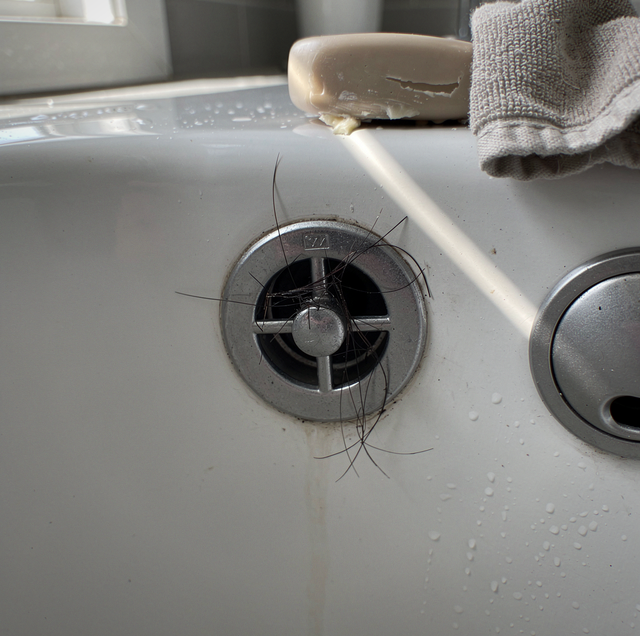
A bathtub drain works differently from a bathroom sink, because on trip-lever and pop-up tubs, the drain opening sits under a stopper linkage that runs down inside the overflow tube instead of a plain open pipe you can look into. That extra hardware, plus the shape of the trap under the tub, gives a slow bathtub several separate points where flow can narrow. Matching the pattern of the slowdown to its mechanism indicates which one you have; the patterns to check against are in the table below.
| Pattern | What it means | What to do |
|---|---|---|
| Slow from day one after a remodel | Debris left in the line, a misaligned trap, or a crushed section from the work itself | Have the drain and trap checked before the pattern gets written off as normal |
| Slows over weeks | Hair and soap film building at the stopper or the trap | Clear the linkage and trap; if it returns fast, look further down the line |
| Gurgles as it drains | Air struggling to reach the trap from the vent | Check for a dry trap first, then a venting or blockage issue |
| Separate shower on the same branch is also slow | A restriction in the branch both traps drain into | Clear the shared branch, not each fixture alone |
| Water comes back up in the tub when other fixtures run | A blockage downstream of where the tub joins another fixture's line, in the shared branch or, when a toilet flush or washer drain pushes it up, the main line | Have the branch and, if needed, the main line inspected |
| Stopper won't open fully | A binding or disconnected linkage, not a clog at all | Check the linkage before reaching for a cable or chemical |
Hair and Soap Film at the Stopper and the Trap
Every bath or shower taken in the tub sends a full rinse of hair and soap residue straight to the drain opening, and that combination narrows a tub drain at its tightest points. Soap is a fatty acid compound that reacts with minerals in water to form a soft curd, and that curd binds to strands of hair and builds into a mat inside the flow path. The mix catches on the crossbar in the drain opening or the stopper's mesh, where the flow path is already narrower than the drain hole itself, and it catches again at the bend in the trap just below the tub. Neither spot needs much material to matter, because both are the tightest points the water passes through on its way out. A drain that has slowed gradually over weeks, rather than all at once, points first to this buildup narrowing the path a little more with every use, though buildup further down the branch can creep the same way.
The Stopper and Overflow Linkage
A bathtub's stopper is not a simple plug sitting in the drain hole. On a trip-lever tub, a lever on the overflow plate near the top of the tub raises and lowers a plunger inside the overflow tube itself, which blocks or opens the drain from above rather than from the visible opening. A pop-up stopper works differently: a rocking linkage arm connects the visible stopper in the drain hole to a lever at the overflow plate, and the stopper tips open or closed as the arm pivots. Both designs share a weakness. Hair and soap film collect on the linkage parts inside the tube, and over time that buildup can bind the mechanism so the stopper doesn't lift or seat fully, which can read as a slow or stopped drain even though the pipe underneath is open. A stopper that won't open all the way, or one that used to move freely and now feels stiff, points at the linkage rather than the trap.
Remove the overflow plate's two screws and slide the linkage out of the tube; on a pop-up tub, also lift the stopper and its rocker arm out of the drain opening. Pull any hair off the plunger or arm before refitting.
The Trap Under the Tub
A bathtub drains through a trap, a P-trap in newer work and, in some older houses, a drum trap, the section of pipe that keeps a standing pocket of water sealed against sewer gas coming back into the bathroom. That curve is also where hair and soap film that make it past the stopper come to rest, because water slows and swirls through the bend rather than flowing straight. A trap that's been collecting material over a stretch of regular use gradually narrows at the curve, and the slowdown first shows up as a drain that empties noticeably more slowly before it stops carrying water altogether. Because the trap sits low and is not something you can reach by hand from the tub opening, fully clearing a P-trap requires a flexible cable fed down to the bend rather than a plunger working at the surface. A plunger builds pressure in a tub only when the overflow opening is covered, since otherwise the push escapes up the overflow tube, and a mass packed into the trap bend is cable work.
A Venting Problem
Every drain, including a bathtub's, relies on a vent pipe that lets air into the system so draining water doesn't have to pull that air through the trap itself. When the vent can't supply enough air fast enough, because it's blocked, undersized for the fixture, or shared awkwardly with another line, the draining tub pulls air wherever it can, down its own drain opening or back through a nearby fixture's trap, and that is the gurgle you hear as the tub empties. A venting problem on its own doesn't stop the water from going down; it just makes the drain noisy and can leave the trap holding a little less water afterward. If the gurgle shows up alongside a slow drain rather than just noise, a partial blockage further down the line may be pulling on the vent's air supply as well, and the two problems are worth separating before either is addressed.
When the Line Past the Tub Is the Issue
In a tub-and-shower combination, the shower drains through the tub's own drain opening and trap, since the shower water lands in the tub first, so a blockage there slows both at once. A separate shower fixture on the same branch is a different case: it has its own trap, but if the branch both traps drain into develops a restriction downstream of where they join, the tub and the shower slow together even though each has its own opening. Past that branch, the line carries wastewater toward the main stack, and a blockage downstream of where the tub joins another fixture's line can show up in either place: the shared branch itself, or, when flushing a toilet or running a washer, pushes water back up into the main line. That pattern, water rising in the tub when a different fixture drains, points past the tub itself and calls for the branch or the main line to be inspected rather than the tub drain alone.
What a Professional Clearing Involves
Clearing a bathtub drain properly starts with confirming which part is restricted, since a bound linkage, a clogged trap, and a blocked branch line each call for a different approach. A technician can remove the overflow plate and feed a cable through the tube and past the linkage directly into the trap, reaching material that a surface-level tool working from the visible drain opening can't reach on its own. If the trap is clear but the shared branch is the problem, the cable needs to go further, past the trap and into the section of pipe the tub shares with another fixture, to find and clear the actual restriction. For a tub that clogs again within a short stretch after being cleared, a camera run through the line can show whether buildup is rebuilding on the pipe wall or whether a structural issue, such as a sag or a joint out of alignment, is catching debris at the same spot.
What Not to Pour Down the Drain
A slow tub drain leads people to pour caustic cleaner straight down the drain, and that move deserves a second thought, especially for a bathtub. Bath oils, bath bombs, and bar soap residue already coat the inside of a tub's trap with an oily film, and pouring a caustic or acidic cleaner on top of that film sets off a reaction against both the film and the pipe holding it. The reaction generates heat that acts against the pipe and its joints, not just the blockage, which is why mechanical clearing reaches the actual blockage without chemical heat on the pipe.
Chemical drain openers are caustic and burn skin and eyes. Never mix two products, and never work a plunger or open a tub drain that still holds standing chemical; the technician needs to know what was poured before anyone opens that line.
Frequently Asked Questions
A lift-and-turn or toe-touch stopper screws onto a post set in the drain opening and can be unscrewed; there is no linkage in the overflow tube to pull. Hair can wrap around that post just under the stopper, which is the first place to check on either style before assuming the clog sits deeper.
A mesh or silicone catcher over the drain opening stops strands before they reach the crossbar or the stopper post, where a mat starts. It needs to be emptied after use, since a full catcher slows the drain on its own.
Some older homes use a drum trap instead of a P-trap under the tub, a cylindrical trap opened through a cap set flush with the floor or accessed from below rather than through the overflow tube. A cable fed from inside the tub can't reach past a drum trap, so clearing it requires opening it directly.
The nearest bathroom sink and the tub can tie into the same branch line before it reaches the main stack. That means a problem introduced at the sink, not just at the tub itself, can be behind a slow or rising tub drain.
A standard bathtub trap is 1 1/2 inches across, while a stall shower's drain is 2 inches, since a tub holds its water and a shower floor has none in reserve. The narrower tub trap needs less hair and soap to start slowing.
Bath oils and bath bombs pose a problem beyond the oil itself: their colorants and any exfoliant beads or glitter don't dissolve, so they can catch in a trap, just like hair. Rinsing the tub with hot water right after a bath that used oils or bombs keeps that residue from settling in the trap.
Arrange a tub drain clearing that starts at the stopper linkage — a technician finds whether the linkage, the trap, or the shared branch line is restricted and clears that one. Clog Squad serves Holland, Grand Rapids, and Grand Haven. Call (616) 779-7675.