
What Is a Sewer Cleanout and Why It Matters
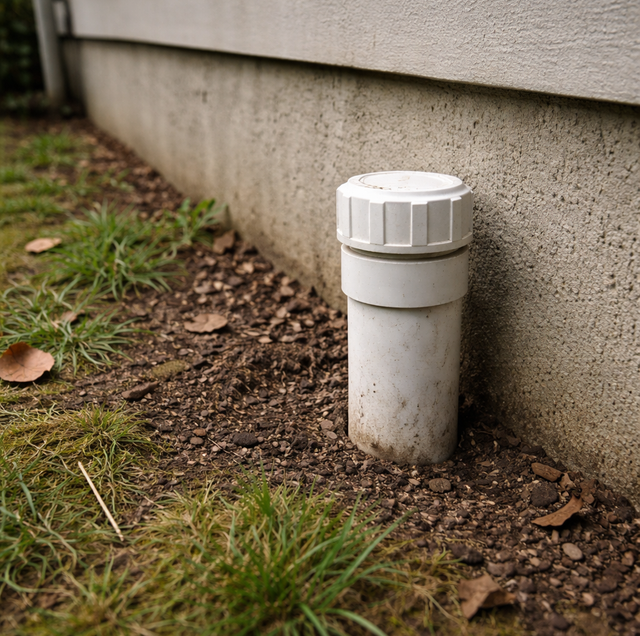
Most homeowners never think about their sewer cleanout until the day a plumber asks where it is and nobody in the house has an answer. It sits quietly on your property doing nothing visible, then becomes the single most useful fitting in your plumbing the moment a main line clogs. Knowing what it is, where it sits, and what it does turns a stressful backup into a faster, cleaner fix.
Quick Answer: A sewer cleanout is a capped access point tied into your home's main sewer line. It gives a plumber a direct opening to clear a clog, run a camera, and locate a blockage without pulling a toilet or climbing to a roof vent. Most homes have at least one, usually near the foundation, along an exterior wall, or as a round cap set in the yard or basement floor.
What a Sewer Cleanout Actually Is
A sewer cleanout is a short, capped section of pipe that branches off your main sewer line and stops at an accessible point. The main line is the single large pipe that carries everything from your sinks, tubs, toilets, and floor drains out to the city sewer or a septic tank. The cleanout is the door into that pipe.
Under the cap you'll find a threaded or plug-style fitting, usually on a 4-inch pipe for a home main line, sometimes 3-inch on older or smaller systems. Unscrew or pull the plug, and a plumber has a straight shot into the line. That access is the whole point. Without it, reaching the main means going in through a toilet flange, a removed fixture, or the roof vent stack, all of which are slower and messier.
The cap is designed to stay sealed under normal conditions and be opened only for service. It keeps sewer gas in the pipe and debris out, while marking the exact spot where the line can be entered.
What It Looks Like and Where It Sits
Cleanouts are easy to overlook because they are meant to blend in. Once you know the shapes to look for, you tend to spot them everywhere.
Outside, near the foundation: The most common location is a capped pipe sticking a few inches out of the ground close to the house, often on the side where the main line exits toward the street. The cap is frequently a screw-on plug in white PVC or black ABS, or a brass or cast fitting on older homes.
A round cap in the yard: On longer runs, a cleanout may sit farther out in the lawn, sometimes flush with the grass under a small round lid or a green or black plastic cover. These are simple to bury under mulch or sod over the years, which is exactly why they go missing.
Indoors, in the floor: Basement and slab homes often have a floor cleanout, a round threaded plug set flush in the concrete, usually near where the main line leaves the building. In a garage or utility area, it may sit at the base of a wall.
The fitting itself is usually a Y or T branch tied into the main, angled so a cable or jetting hose feeds smoothly downstream toward the blockage rather than fighting a sharp turn.
Why the Cleanout Exists
Everything a plumber needs to do to a clogged main line runs through the cleanout, which is why it earns its keep.
Direct access to clear the line: A drain cable, called a snake or auger, feeds through the open cleanout and down the main to chew through a clog. For heavier buildup like grease or root mass, a hydro-jetter sends high-pressure water through the same opening to scour the pipe walls clean. Both tools need a straight entry point, and the cleanout provides it.
A path for the camera: A sewer camera is a small waterproof head on a flexible push rod. Fed through the cleanout, it shows the inside of the pipe on a screen, revealing cracks, root intrusion, sags, or a foreign object. Running a camera without a cleanout usually means pulling a toilet first.
Fast blockage location: Because the plumber knows the cleanout's position relative to the house, footage from a cable or camera fed in points to roughly where the trouble sits. A locating transmitter on the camera head can then mark the depth and spot on the surface, so any digging is precise instead of guesswork.
Think of the cleanout as the service hatch on the one pipe you can least afford to reach through your living space. The line is buried and sealed for good reasons, and the hatch is the only clean way in.
Why Some Homes Need One Added
Not every house has an accessible cleanout. Older homes built before cleanouts were standard, or homes where a remodel, an addition, or years of landscaping buried the original, may leave a plumber with no easy entry.
When there is no usable cleanout, the alternatives are all worse. Access might mean pulling a toilet and working through the flange, removing a fixture, or going up onto the roof to feed a cable down the vent stack, which is slower, riskier, and rarely lets a camera reach the main cleanly. In those situations, a plumber often recommends installing a cleanout, cutting into the main line at a smart access point and bringing a capped fitting up to grade or to a wall. It is a one-time investment that makes every future service faster and cleaner.
Types and Locations You Might Have
Homes vary, and so do their cleanouts. Knowing which type you have helps you point a plumber to it fast.
Indoor floor cleanout: A threaded plug flush with a basement or garage floor, tied into the main before it leaves the building. Convenient in bad weather, though clearing a clog here risks minor backflow indoors, so plumbers plan for that.
Exterior ground cleanout: A capped riser near the foundation or out in the yard. This is the workhorse location because a clog cleared here pushes debris away from the house toward the city main.
Two-way cleanout: A single fitting with two openings, one facing toward the house and one toward the street. It lets a plumber run a cable in either direction from one spot, which is useful for pinning down whether a blockage sits under the house or out in the yard line.
Signs the Clog Is in Your Main Line
A cleanout matters most when the problem is the main line rather than a single fixture. A few signals point that way.
Multiple fixtures backing up at once: If your toilet, tub, and floor drain all act up together, the shared main is the likely culprit, not any one branch.
Gurgling and odd cross-talk: Flushing a toilet makes a nearby tub gurgle, or running the washer bubbles up in a shower drain. Air is being forced through water because the main is partly blocked.
Sewage at the lowest drain: Water and waste back up first at the lowest opening in the house, often a basement floor drain or a first-floor shower, because that is where a full main overflows first.
When these show up together, the cleanout is where a plumber will head to confirm the diagnosis and clear the line.
What to Do If the Cleanout Overflows
Sometimes you'll find water or sewage seeping from around a cleanout cap, or the cap already popped. That is not random. A cleanout can act as a relief point, letting a backed-up main vent outside near the ground instead of forcing waste up into your tubs and toilets indoors. An overflowing exterior cleanout is doing you a small favor by keeping the mess out of the house.
Treat what comes out as a biohazard. Sewage carries bacteria and pathogens, so avoid skin contact, keep children and pets away, ventilate the area if any backup reaches indoors, and disinfect surfaces afterward. Do not reach into the pipe.
Just as important, do not remove a cleanout cap yourself when the line is backed up or clearly under pressure. A sealed cap on a full line can be holding back standing sewage, and popping it can release a rush of waste. A plumber opens a pressurized cleanout in a controlled way, with the right protection and a plan for where the flow goes. The safe move is to stop using water in the house and call for service.
Do not remove a cleanout cap yourself when the line is backed up or under pressure. A sealed cap on a full line can be holding back standing sewage, and popping it can release a rush of waste. Treat any sewage that escapes as a biohazard: avoid skin contact, keep children and pets away, and disinfect afterward. Stop using water in the house and call for service rather than opening a pressurized cleanout.
Skip the harsh chemical drain cleaners too. They rarely clear a true main-line clog; they can damage pipes over time, and if they splash back during later work, they are dangerous to skin and eyes. Main-line clearing is professional work with professional tools.
Keeping Your Cleanout Useful
A cleanout only helps if someone can reach it, so a little upkeep pays off.
Keep it accessible and marked. Note where each cleanout is and keep the area clear. A cap buried under a shrub, a deck, or six inches of new sod costs time and money to find on the day you need it most.
Do not pave or build over it. When adding a patio, driveway, or landscaping, keep cleanouts exposed or bring the riser up to the new grade. Sealing one under concrete defeats its purpose.
Add one if you don't have an accessible cleanout: If a plumber has ever had to reach your main through a toilet or the roof, ask about installing a proper cleanout. It is far easier to plan that work calmly than to discover the gap during a backup.
Have the main inspected if clogs recur: If you clear the same line more than once, a camera run through the cleanout can show whether roots, a sag, or a cracked section is the real cause, so the fix addresses the pipe and not just the symptom.
Frequently Asked Questions
A short handheld auger might reach a clog close to the opening, but a home main line often needs 50 to 100 feet of cable and a powered drum machine to reach and break through root mass or a deep blockage. A hand tool usually stalls at the first bend. There is also the backflow risk: on a full line, cracking the cap releases whatever is standing behind it. Diagnosing depth and direction first is what keeps a DIY attempt from becoming a flooded basement.
They serve opposite ends of the system. The vent stack is the vertical pipe that runs up through the roof to let air into the drain lines so water flows smoothly and traps stay sealed. The cleanout is a horizontal-line access point for clearing and inspection. A plumber can feed a cable down a vent in a pinch, but it is a poor substitute because the path bends and a camera rarely reaches the main cleanly.
Longer or more complex drain systems get multiple cleanouts so no single run is too far from an access point, and so a plumber can isolate which section is blocked. You might have one where the main leaves the house, another partway across the yard, and a two-way fitting near the property line. Each one shortens the distance a cable or camera has to travel, which speeds up the job.
Yes, though it is often an interior floor cleanout, a flush plug set in the slab near where the main exits, rather than a pipe standing up in the yard. Some slab homes also have an exterior cleanout at the point the line leaves the footprint of the house. If you can't find either, that is a strong sign to have one located or installed before a backup forces the issue.
Roots rarely enter at the capped cleanout, since the cap seals it. They get in at joints and hairline cracks farther down the buried line, drawn by the moisture and nutrients inside. The cleanout is actually the tool for dealing with them: a camera run through it spots the intrusion, and a jetter or a root-cutting cable fed through the same opening clears it.
Trace the likely path of the main from where the lowest plumbing sits toward the street, then look for a capped pipe near the foundation on that side. Indoors, check basement or garage floors for a round threaded plug set flush in the concrete. If nothing turns up, a plumber can locate the buried line electronically and, if none exists, recommend installing an accessible one so future service isn't a scavenger hunt.
Not sure where your cleanout is or dealing with a backup? Get your main line found, cleared, and camera-checked by pros. Clog Squad serves Holland, Grand Rapids, and Grand Haven. Call (616) 779-7675.
