
What Is Trenchless Sewer Repair? A No-Dig Fix Explained
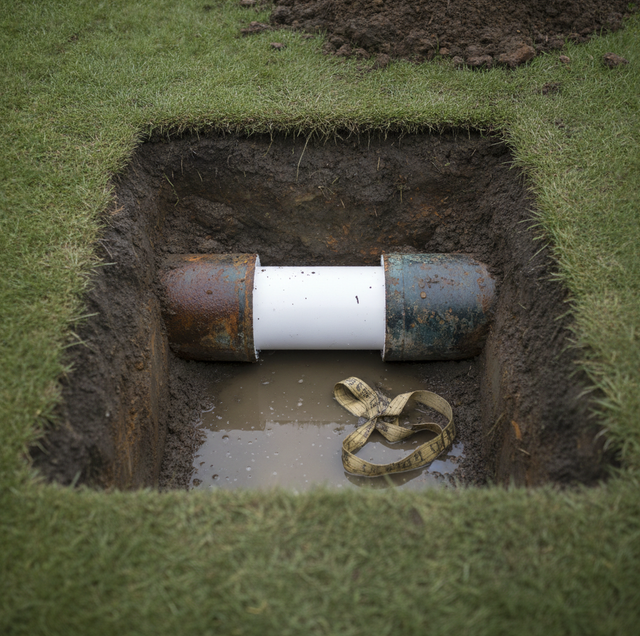
Quick Answer: Trenchless sewer repair rebuilds a buried sewer line through small access pits instead of a full trench. The two methods are pipe lining, which cures a new pipe inside the old one, and pipe bursting, which breaks the old pipe apart and pulls a new one in behind it. A camera inspection determines which, if either, your line can take.
A cracked or root-choked sewer line used to mean one thing: a backhoe, a trench running the length of your yard, and a lawn, driveway, or patio torn apart to reach a pipe buried several feet down. Trenchless sewer repair changed that. It fixes or replaces the buried line with little or no excavation, so the pipe gets rebuilt without the surface above it being dug up end to end.
If you have been told your sewer line needs work, it helps to know what "trenchless" means, how the two main methods work, and why not every line qualifies. Here is how the work is done underground and how a plumber decides whether your line is a candidate.
The Problem Trenchless Repair Solves
A sewer lateral, the pipe carrying waste from your house to the municipal main, often runs 30 to 100 feet and sits several feet underground. Many older laterals are clay or cast iron, materials that crack at the joints, corrode from the inside, and give tree roots a path in. When one fails, the fix has to reach the damaged section.
The traditional method, dig-and-replace, does exactly what it sounds like: an excavator opens a trench along the whole run of pipe, crews remove the broken line, lay new pipe, then backfill and restore the surface. It works, but it is destructive to whatever sits on top, and the restoration afterward is often the slowest and messiest part.
Trenchless methods reach the same pipe without that trench. Instead of opening the ground along the entire line, a crew digs one or two small access pits, usually one at each end of the run, and works through them. The pipe gets repaired or replaced from the inside, so the yard, slab, or driveway above it stays mostly intact.
Method One: Pipe Lining (Cured-in-Place Pipe)
Pipe lining, known in the trade as CIPP (cured-in-place pipe), installs a new pipe inside the old one. A resin-soaked tube goes into the cleaned host pipe, gets pressed tight against its walls, and is then hardened in place. The old pipe becomes the mold, and the cured liner becomes the working pipe.
Here is the sequence. A flexible liner, typically a felt or fiberglass tube saturated with epoxy resin, gets pulled or inverted (turned inside out under pressure) into the cleaned host pipe. Once it is in position and pressed tight against the old walls, the crew cures the resin so it sets hard. Curing is done with hot water, steam, or ultraviolet light, depending on the system. When it hardens, you have a rigid new pipe formed inside the old one, sometimes described as a pipe within a pipe.
Lining works only when the old pipe still holds its shape. Because the liner takes the form of the host pipe as it cures, the host pipe must be sufficiently intact to press against. A line that is cracked, corroded, or letting roots through at the joints, but remains round and continuous, is a strong candidate for lining. A line that has caved in has nothing for the liner to form against.
Method Two: Pipe Bursting
Pipe bursting takes the opposite approach. Instead of preserving the old pipe as a mold, it destroys it and threads a brand-new pipe into the space it leaves behind.
A cone-shaped bursting head is pulled through the old line by a cable run between the two access pits. As the head advances, it fractures the old pipe outward, pushing the broken pieces into the surrounding soil, and it drags a new pipe, usually jointless HDPE, in right behind it. When the head reaches the far pit, a continuous new line sits where the old one was.
Bursting is the method for lines that lining cannot save. A pipe that has collapsed, crushed, or badly separated at the joints has no usable shape to line against, so it gets burst and replaced instead. Bursting also allows upsizing: because the head clears a slightly larger path than the old pipe occupied, a crew can pull in a new pipe of the same or a larger diameter, which helps when the original line was undersized.
What Both Methods Have in Common
The shared advantage is access. Both lining and bursting work through small pits at the ends of the run rather than a trench along the whole thing. That is the difference homeowners feel most: the lawn, the driveway, the patio, and the mature plantings above the pipe are left largely undisturbed.
Both methods also produce a line that resists the two problems that kill older sewers. The new liner or pipe has no open joints for tree roots to work into, so the root intrusion common in aging clay and cast iron is shut out. And the resin or HDPE does not corrode the way old metal pipe does, so the interior stays smoother over time.
Because there is far less ground to open and refill, trenchless jobs are often quicker than a full dig once the crew is set up, and the surface restoration afterward is minor by comparison, patching a couple of pits rather than reseeding or repaving a long strip.
When Trenchless Is Not the Answer
Trenchless is not automatic, and a good plumber will not promise it before looking inside the pipe. The gate for every trenchless job is a camera inspection: a plumber runs a sewer camera down the line to see the actual condition, locate the damage, and measure the run.
That inspection is what separates a candidate from a case for traditional digging. A line that still holds its shape can usually be lined. A collapsed, severely bellied (sagging so water pools), or badly offset line, where joints have shifted out of alignment, may not take a liner and sometimes cannot be burst cleanly either. In those cases, dig-and-replace remains the right repair. The camera is what tells the plumber which of the three approaches, lining, bursting, or a conventional dig, your specific line needs.
It is also worth setting expectations on the pits. Trenchless reduces digging dramatically, but it does not eliminate it. Small access pits still have to be opened so the equipment can reach the pipe at each end. The savings come from skipping the long trench between them, not from touching no soil at all.
Why This Work Stays Off the DIY List
Sewer work carries risks a homeowner cannot safely take on. A failing line means exposure to raw sewage and the bacteria it carries, which is a real biohazard, and the equipment involved, from resin curing systems to hydraulic bursting rigs, is specialized and run by trained crews. Reading a camera inspection to judge whether a line can be lined, burst, or has to be dug is its own skill. A licensed sewer professional inspects the line, tells you which method actually fits, and stands behind the repair.
Frequently Asked Questions
Pipe lining cures a resin-saturated liner inside your existing pipe, which still has to hold its shape to serve as the mold. The cured liner is usually only about 3 to 5 millimeters thick and sets in a few hours once the resin kicks off. Pipe bursting does the reverse: a bursting head fractures the old pipe outward while pulling a new one in behind it, and because the head clears a wider path, it can upsize the line, taking a 4-inch clay lateral up to a 6-inch replacement, for example.
Not quite. Trenchless avoids the long trench that would otherwise run the length of your yard, but small access pits still get dug at each end, usually only about 3 to 4 feet across. Often, one of those pits is opened right at your existing cleanout, so it uses access that is already there rather than fresh digging. The pits are a fraction of what a full dig requires, which is where the savings on your lawn come from, but the ground is not left completely untouched.
A plumber runs a camera inspection down the line first, because the pipe's condition decides the method. A pipe that still holds its shape can typically be lined, while one that has collapsed, bellied, or shifted at the joints may need to be burst or dug instead. The camera has limits worth knowing: it shows the pipe wall but not how deep the line sits or what the surrounding soil is doing, so the crew runs a sonde, a small transmitter, through the line and uses a locator above ground to mark the exact depth and dig point on the surface.
The liner does add a thin layer to the inside wall, so the finished diameter is slightly smaller than the bare host pipe. In practice, that rarely costs you flow, because the new surface is smooth and jointless, whereas the old pipe it replaced was usually narrowed by scale, corrosion, or roots. A smooth, thinner channel often carries water as well as or better than a rough, wider one, so capacity is generally maintained.
Largely, yes. Tree roots get into old sewers through the gaps at pipe joints, and both a cured liner and a burst-in HDPE pipe run continuously with no open joints for roots to enter. Mechanical root cutting or a foaming root-killer treatment only buys you months, because those joints are still there for roots to find again. A jointless liner or new pipe removes the entry path entirely, which is why homeowners with root-plagued clay lines choose trenchless over repeat cleanings.
Once the access pits are open, many trenchless jobs are completed in about a day because the pipe is repaired from the inside rather than exposed and replaced section by section. A full dig-and-replace, by contrast, can take several days, including excavation, laying new pipe, backfilling, and restoring the surface. The exact time still depends on how long your line is and which method it needs, but the trenchless path is usually the faster one.
Book a camera inspection to see if your sewer line qualifies for a no-dig repair — and skip the torn-up yard. Clog Squad serves Holland, Grand Rapids, Grand Haven, and West Michigan. Call (616) 779-7675 to schedule.
