
Why Does My Floor Drain Smell? Trace It to the Trap
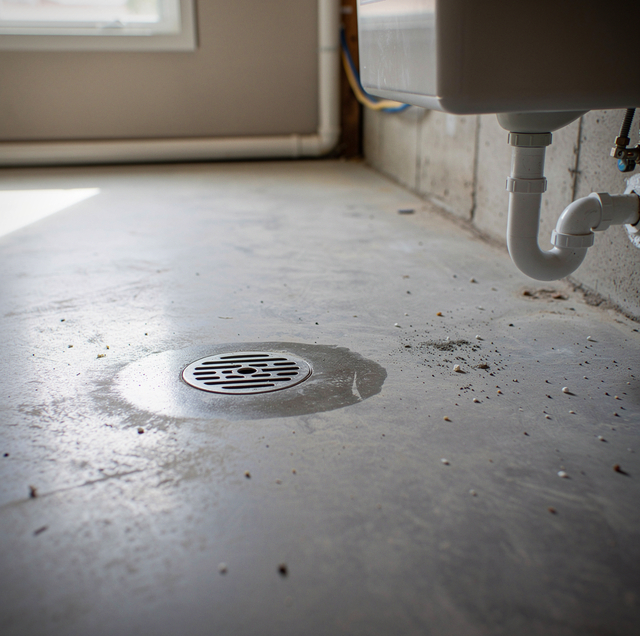
You are not imagining it. The basement or utility room smells like a sewer, but only some days, and only near that round metal or plastic grate cut into the floor that everyone forgot was even there. It isn't backing up. Nothing overflows; there's no standing water, no visible clog. The smell just shows up, sits there a while, and sometimes fades before you can pin down where it's coming from.
That floor drain is doing more work than it looks like. Underneath the grate sits a plumbing fixture designed to keep sewer gas out of your living space, and when it stops doing its job, gas finds its way up through the one opening in the floor that lets air move between the room and the pipe below. That's different from water or waste rising through the drain, which points to a blockage or an overload somewhere in the system rather than a failed seal. What follows is why gas gets past a floor drain that isn't backing up at all, from the simplest cause to the ones that need a professional to sort out.
Quick Answer: An intermittent sewer smell from a floor drain almost always traces back to the water trap beneath it losing its seal, through evaporation, siphonage, or a crack, which lets sewer gas rise through the drain instead of staying blocked by water.
The smell pattern itself is the first piece of evidence, because when it shows up, it says a lot about which part of the assembly has stopped working.
Sewer gas is not just unpleasant. Hydrogen sulfide and methane can displace oxygen in an enclosed, poorly ventilated basement, and methane is flammable. A persistent strong smell warrants ventilating the space and having it diagnosed, not living with it.
| Smell pattern | Likely cause | Next step |
|---|---|---|
| Worse after the drain sits unused for a long stretch | Trap seal evaporated | Refill the trap with water |
| Comes right back after you refill it | Biofilm on the trap or grate | Have the trap and strainer cleaned |
| A drain that used to stay sealed on its own now doesn't | Trap primer line has failed | Have the primer line inspected |
| Shows up when another fixture runs, like a toilet or washer | Vent blocked, seal siphoned away | Vent inspection |
| Paired with slow drainage | Debris in the drain body | Have the drain body and cleanout cleared |
| Smell returns immediately after refilling, no time lag | Cracked trap or failed connection | Camera inspection |
| Other drains gurgle or smell too | Problem further down the line | Full camera inspection of the line |
When the Trap Seal Runs Dry
A P-trap, cast into the floor or fitted into the pipe just below it, holds a shallow column of standing water that physically blocks sewer gas from traveling up into the room. Floor drains lose that seal more often than almost any other fixture in the house because nothing runs through them regularly: a kitchen sink or shower gets used daily and keeps replenishing its own trap, while a floor drain in a basement, garage, or mechanical room can sit untouched for months while the water already there evaporates into the surrounding air. Dry heated winter air pulls moisture out of a trap just as effectively as dry summer air does, so this isn't strictly a warm-weather problem. Once enough water is gone, the seal breaks and the pipe below has an open path into the room.
Refill a floor drain that hasn't seen water in months directly: run a gallon or two down the grate until it stops disappearing, then float a thin layer of cooking or mineral oil on top to slow evaporation.
Biofilm Coats the Trap Even When the Seal Is Intact
A floor drain that's been refilled and still smells doesn't necessarily have a water problem. Organic matter, including soap residue, dust, laundry lint, and floor-cleaning runoff, settles on the trap walls and the underside of the grate every time water passes through, and standing moisture allows a biofilm to build up across those surfaces over time. That biofilm is a colony of bacteria living in a thin film, and some of the bacteria in it produce sulfur compounds as they break down organic matter, which is where a rotten-egg smell can come from even while the trap is holding water. Because this buildup coats the drain body and strainer rather than the water seal itself, refilling the trap doesn't touch it. Only physically cleaning away the film removes the smell it produces.
The Trap Primer Line Has Stopped Feeding the Trap
Many floor drains, especially in spaces that see almost no direct use, aren't left to rely on someone remembering to pour water down them. They're tied to a trap primer: a small fitting connected to the water system via its own supply line, designed to release a small amount of water into the trap automatically. When it's doing its job, it's the reason a drain that never sees laundry runoff or foot traffic can still hold a seal indefinitely. When it isn't, the trap is left with only evaporation working against it and nothing replenishing it. A primer line can fail from mineral scale building up inside the fitting, from being disconnected during other plumbing work and never reconnected, or simply from age. A drain that used to never smell and suddenly does is a reasonable sign to have the primer line checked.
A Blocked or Missing Vent Can Siphon the Seal Away
A trap can also lose its seal all at once rather than gradually. When a vent is restricted, or a floor drain is never properly vented, a fixture draining elsewhere can create enough negative pressure through the shared pipe to siphon water straight out of a nearby trap in one motion. That's siphonage, and the tell is timing: evaporation empties a trap slowly over weeks, while siphonage empties it the moment another fixture drains, so the smell can seem to appear out of nowhere right after a shower runs or a load of laundry finishes.
Debris and Organic Material Caught in the Drain Body
Hair, sediment, lint, and grit settle into the drain body and around the strainer or grate over time, especially on a floor drain that handles laundry overflow, water heater discharge, or mop water. That debris doesn't need to form a full clog to cause a smell. A partial mat of organic material sitting in standing water breaks down slowly and produces its own odor, while also giving biofilm more surface area to grow on. Some floor drains include a cleanout plug inside the bowl, a removable access point below the strainer that allows access to material past the grate without disturbing the trap itself. Having that material cleared out addresses the debris directly instead of just adding water to a trap that isn't the source.
A Cracked Trap or a Failed Connection Below the Floor
None of the causes above involve a break in the pipe itself, just a seal that emptied or a surface that needs cleaning. This one is different. A trap that has cracked, an old cast iron fitting that has corroded through, or a joint below the floor that has separated can let sewer gas bypass the water seal entirely, even with water sitting right there in the trap. From above, a cracked trap looks identical to a dry one: the drain still holds visible water, and pouring more in doesn't change anything, because the leak path sits beside the seal rather than through it. This is the point where the problem has moved from something a homeowner can address with water and time to something that needs to be located and repaired below the surface.
The Problem Sits Further Down the Line
Sometimes every trap in the house is fine, and the smell is still getting in. A blockage or a vent problem further down the main line changes air pressure throughout the whole system, and a floor drain, being the lowest and least-used fixture in most homes, is often the first place that shows it. That's different from a backup, where water or waste rises through the drain because the flow is blocked. What's described here is gas moving past a trap that is otherwise holding water, or barely losing it, because pressure elsewhere in the system is pulling on it. The floor drain isn't malfunctioning on its own; it's reacting to something upstream.
How a Professional Tells a Dry Trap From a Broken One
From the surface, a dry trap, a biofilm-coated trap, and a cracked trap can all produce a similar smell, which is exactly why guessing at the fix rarely works for long. A technician typically starts by refilling the trap and checking whether the smell returns right away or only after time has passed. An immediate return points to a crack or a failed connection, while a smell that fades and returns later points to evaporation or a primer that isn't feeding the trap. From there, a camera inspection lets a technician see the actual condition of the trap and the pipe below the floor instead of guessing, and it's the same tool used to confirm whether a backwater valve, where one is fitted, is still blocking gas or water from moving the wrong direction. That combination of a controlled refill and a camera inspection separates a smell that a bit of water and oil resolves from one that needs an actual repair.
Frequently Asked Questions
In many cases, yes. Small drain flies, sometimes called moth flies, breed in the organic film lining a floor drain's trap and grate, and their presence is often a visible sign of that buildup before the smell itself becomes obvious.
No. Most trap primers operate on a pressure drop that occurs when a nearby fixture is used, automatically sending a small dose of water down the line. Electronic primers instead run on a timer with battery power or wired power, and they can fail due to a dead battery or a bad solenoid rather than a clogged line.
Yes. Some remodeled spaces use an air admittance valve, a mechanical one-way valve, in place of extending a vent pipe to open air. If that valve fails closed, it stops admitting air just like a physically blocked roof vent would, even though the rest of the house's venting looks fine from outside.
A municipal sewer main under heavy stormwater flow can run at higher pressure than usual, and that pressure can push gas up through any weak point in a home's system, including a floor drain trap that would otherwise hold. A smell that tracks with rainfall points toward the municipal side rather than the trap itself.
Yes, and it's an easy one to miss. A cleanout plug that was removed for repair or inspection and not fully reseated, or one with a cracked body or a missing gasket, provides a path for gas to bypass the trap entirely, even though the trap itself is holding water exactly as it should.
Not automatically. Several floor drains can share one trap primer supply line branching to each, so a blockage in that shared line can starve more than one drain's primer at once, not just the drain closest to the problem.
Have a camera inspection done on a floor drain that keeps smelling no matter how much water you add — it's the fastest way to know whether the trap is dry, coated, or cracked. Clog Squad serves Holland, Grand Rapids, and Grand Haven. Call (616) 779-7675.
