
Why Does My Kitchen Sink Keep Clogging? The Hidden Culprit
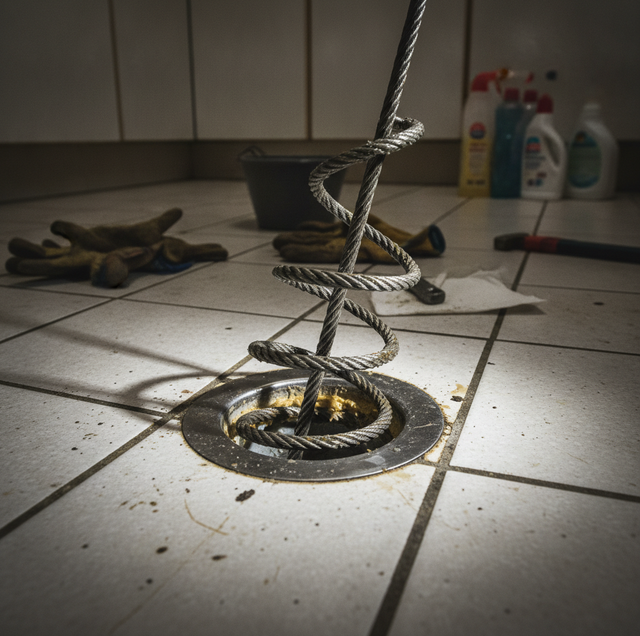
Quick Answer: A kitchen sink that keeps clogging usually has a layer of hardened grease coating the inside of the pipe. Food particles and coffee grounds stick to that layer, the opening narrows, and water backs up. Home remedies clear the middle of the pipe but leave the greasy ring behind, so it closes back up within weeks. Lasting relief comes from scouring the pipe wall clean, not just poking a hole through the blockage.
You clear the sink. It drains fine for a week, maybe two, then the water starts pooling around the strainer again. You clear it, pour something down, and buy yourself a little more time before the whole cycle repeats. If that pattern sounds familiar, the problem is not that you keep getting unlucky. It is that the blockage is rebuilding faster than you are removing it.
A drain that clogs once is an event. A drain that clogs repeatedly is a problem. Understanding the difference is the key to actually stopping it, because the two are almost never fixed the same way.
The Real Reason Grease Runs the Show
The number one cause of a repeat kitchen clog is fats, oils, and grease, often shortened to FOG. This includes bacon drippings, the oil left in a pan after cooking, butter, salad dressing, gravy, and the fatty residue rinsed off plates and cookware.
Here is the mechanism that makes it so stubborn. When you pour grease down the drain, it is warm and runs like water, so it seems harmless. But the pipe under your sink is cooler than the grease. As that liquid fat moves down the line, it loses heat and solidifies, coating the inside of the pipe the way candle wax hardens on the side of a candle. That coating is sticky. Every bit of food, every rinse of coffee grounds, every starchy particle that comes down after it catches on the surface and stays. Layer by layer, over weeks, the channel in the pipe narrows until water can barely squeeze through.
This is why the clog seems to appear out of nowhere. Nothing dramatic went down the drain. The buildup was quiet and gradual, and the pipe simply reached the point where it could no longer keep up.
What Else Feeds a Chronic Clog
Grease is the headliner, but it rarely works alone. Several other factors either create blockages on their own or make the grease problem worse.
Starchy and fibrous food- Pasta and rice keep absorbing water after they go down and swell inside the pipe. Potato peels turn into a gummy paste. Celery, corn husks, and other stringy vegetables have fibers that wrap and bind together. Eggshells break into gritty fragments that settle into low spots. None of these dissolve, and all of them give grease something to grab.
A partial blockage in the P-trap or branch drain- The P-trap is the curved section of pipe directly under the sink, and it is a common place for debris to lodge. Farther along, the branch drain that carries water to the main line can hold a partial obstruction that slows everything upstream of it.
A sagging or undersized pipe- If a section of drain line has settled and no longer runs at a proper downward slope, water and waste pool in the low spot instead of flowing through. A pipe that is too small for the load has the same effect. Both create a natural collection point where buildup starts.
Soap scum- Dish soap combines with minerals in the water and with grease to form a filmy residue that clings to pipe walls and adds to the narrowing.
A poorly draining vent- Drains rely on vent pipes to let air in behind the water. When a vent is blocked, drainage turns sluggish and gurgly, which can look and feel like a clog even when the pipe itself is fairly clear.
Buildup deep in the line- Sometimes the trouble sits well past anything a plunger can reach, deep enough that surface-level fixes never touch it.
Why the Clog Always Comes Back
This is the part that frustrates most people, and it comes down to what home remedies actually accomplish. A plunger, a hand-poured mixture, or a quick pass with a small tool tends to clear the pipe’s open center. Water starts flowing, the sink drains, and it looks solved.
But the greasy ring coating the pipe wall is still there. You opened a channel through the middle without removing the material that caused the narrowing in the first place. Because the ring is still sticky and still collecting food particles, it starts closing back up almost immediately. Within a couple of weeks, you are right back where you started. The cycle is not bad luck. It is the predictable result of clearing the symptom while leaving the cause bolted to the pipe wall.
That distinction also tells you what you are dealing with. A true one-off clog has a single obvious trigger: a serving of rice went down, or something dropped in and lodged. Clear it, and it stays clear. A chronic clog that recurs on a schedule points to grease or a pipe problem, and it will keep returning until the pipe wall itself is addressed.
What Actually Helps at Home
You cannot undo an existing grease coating with kitchen habits, but you can stop feeding it and keep a cleared drain clear longer.
- Never pour grease down the drain- Let it cool, pour it into an old jar or can, and throw it in the trash. This single habit does more than anything else on this list.
- Scrape plates and pans before rinsing- Get the fatty film and food scraps into the garbage or compost first so they never enter the pipe.
- Run hot water while you rinse, and strain solids- Hot water keeps small amounts of residue moving instead of settling. A basket strainer over the drain catches particles before they get in.
- Do not count on your garbage disposal- A disposal grinds solids into smaller pieces, but it does nothing to remove grease, and the ground-up particles it produces still combine with FOG farther down the line.
These habits are prevention, not repair. If your sink already clogs on a cycle, the coating is established, and no amount of careful rinsing will strip it out.
When It Is Time for a Professional Cleaning
For a drain that keeps clogging, the fix has to remove the grease layer from the pipe wall, not just breach it. This is where the tool matters.
A cable auger, often called a snake, feeds a rotating cable into the pipe. It is excellent for breaking through and retrieving a solid obstruction. But against a grease ring, a snake frequently just punches a hole through the coating rather than scraping it off. Flow returns; the ring closes over the opening, and the clog is back. That is why snaking a greasy line so often buys only temporary relief.
Hydro jetting takes a different approach. It sends water through a specialized nozzle at high pressure, and that water scours the entire circumference of the pipe wall, cutting the grease, soap scum, and debris back toward the bare pipe. Because it removes the buildup rather than poking through it, the pipe takes much longer to narrow again. For a chronic FOG clog, that difference is the whole point.
A professional can also read the drain correctly. If the real issue is a sagging pipe, a venting problem, or a blockage deep in the line, the right cleaning method and the right diagnosis prevent you from spending money on fixes that were never going to hold.
A Word on Chemical Drain Cleaners
When a sink keeps backing up, the bottle of drain cleaner under most sinks looks tempting. It is worth understanding why it is a poor match for this particular problem.
Caustic drain cleaners work by generating heat and a strong chemical reaction. That reaction struggles to fully clear hardened grease, so it often opens a small passage and leaves the ring to reform, the same limitation as any center-only fix. Meanwhile, the chemicals sit against your pipes, and repeated use can degrade them, especially older metal or aging plastic. The reaction also produces heat and fumes inside the drain.
There is a safety dimension too. If the product does not clear the blockage and standing water remains, that water is now caustic. A follow-up attempt with a plunger or by opening the trap risks a splashback of chemical onto skin and eyes. For a grease clog specifically, the risk rarely pays off because the cleaner does not address what keeps bringing the clog back.
What Repeat Clogs Are Telling You
A kitchen sink that clogs on repeat is telling you something specific: a layer of grease and debris is coating the pipe wall and rebuilding faster than your fixes remove it. Home habits keep a clear drain clear, but they cannot strip an established coating. Clearing the center of the pipe, whether with a plunger, a chemical, or a snake, treats the symptom and leaves the cause in place. Scouring the pipe wall clean is what breaks the cycle for good.
Frequently Asked Questions
Grease starts setting within a few feet of the sink, where the pipe runs coolest, so it solidifies close to home rather than washing far down the line. Running cold water while it goes down makes it congeal faster, contrary to the common belief that cold water hardens it enough for the disposal to chop up and flush away. In practice, the fat firms against the pipe wall and stay put, ready to catch the next thing that comes down. Warm or cold, the destination is the same coating.
A disposal's horsepower makes no difference to grease at all, because grinding cannot change what fat does when it cools. In a septic system, a disposal adds to the solids load the tank has to process, which can shorten the interval between pump-outs. What it buys is convenience at the sink, not clog prevention downstream. The fine particles it produces still ride the water into the same greasy stretch of pipe and get caught there.
A cable snake is the right tool for a solid object or a tree root, where a rotating head can grab or shear through the obstruction. On a grease-coated pipe, it leaves the sticky ring bonded to the wall, punching an opening through the middle while the coating stays intact around it. Water moves again for a while, then the ring collects debris and closes the gap. That is why a greasy line has to be scoured rather than snaked; the wall itself is what needs stripping.
Caustic cleaners give off heat that can soften and warp ABS or PVC pipe and corrode an older metal trap, so repeated use trades a clog for pipe damage. Enzyme or bacterial products avoid that harm but work slowly, digesting organic film over days, which makes them better suited to upkeep than to an active blockage. Neither reliably clears an established grease ring in one pass. And any caustic product that fails leaves standing water that is now hazardous to bail or clear by hand.
Keep coffee grounds, eggshells, pasta, rice, and stringy peels out, since each either swells, turns to grit, or binds into a mat that grease can grab. Beyond that, a monthly enzyme or bacterial drain treatment digests the thin film that restarts a clog, working on the residue that mechanical clearing leaves behind. A snake or jet takes out the bulk, but only the biological treatment keeps the early film from rebuilding between cleanings. The habit and the treatment together do what neither does alone.
Hydro jetting operates at 1,500 to 4,000 psi, sending water through a nozzle that scours the entire pipe wall back to bare metal rather than boring a single channel. A camera inspection usually goes first to confirm the pipe is sound enough to take that pressure, since a cracked or badly corroded line could be worsened by it. That diagnosis also locates a sag or a deeper blockage that a snake would miss. The result is a wall stripped clean, so the line takes far longer to narrow again.
Schedule a professional drain cleaning that clears the pipe wall — not just the middle, so the clog stays gone. Clog Squad serves Holland, Grand Rapids, Grand Haven, and West Michigan. Call (616) 779-7675 to schedule.
