
How Long Does a Cured-in-Place Pipe Liner Last?
A six-inch piece of cured liner sample sits on the kitchen table next to a coffee cup. Smooth amber resin on the outside, fiberglass weave bonded underneath, hard as a hockey puck. The contractor handed it across an hour ago with the same line every CIPP rep uses: fifty-year design life.
Fifty years is what the manufacturer says it will do. The number is real — engineered, tested, and warrantied on paper. It's also a class rating, not a guarantee that any specific liner in any specific pipe sees that calendar. The gap between the brochure number and the lived number is the part most homeowners don't get walked through before the install date.
What "fifty-year design life" actually means on the spec sheet
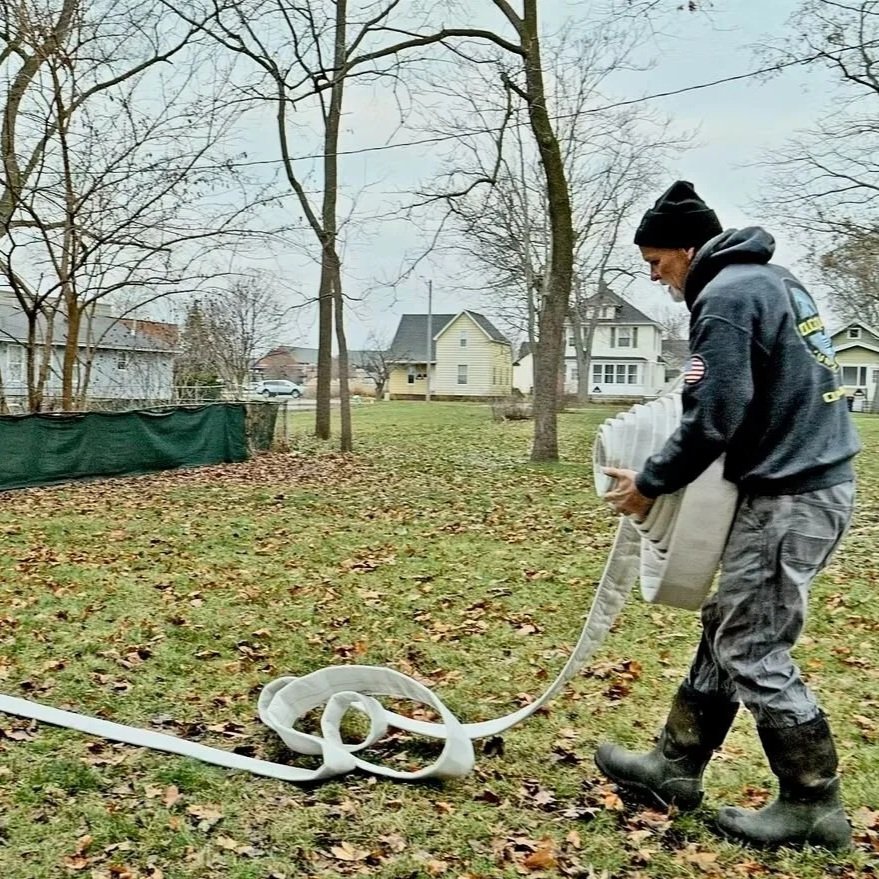
Technician preparing cured-in-place sewer liner installation across resident The rating means the material, installed to spec, holds its structural properties across that calendar.
The number isn't a guarantee. It's a class rating, like the load class on a steel beam. A liner installed correctly into a sound host with normal residential wastewater reaches it. A liner installed against spec, or into a host that fails in ways the liner can't bridge, will not.
For context, the rated life of a CIPP liner sits at or above the rated life of what it replaces. cast iron drain pipe runs 50 to 75 years in residential conditions before serious wall loss. clay tile sewer runs 50 to 60 before root and joint failure get aggressive. New PVC is rated near a hundred in ideal bedding. A fifty-year structural liner sits in the same lifespan tier as new pipe — and longer than the pipe it lives inside.
The CIPP track record from the early 1990s to now
CIPP is older than most homeowners realize. The first municipal liner went into service in London in 1971. Residential and lateral systems followed in the late 1980s. The first U.S. small-diameter lateral liners hit the market around 1991 to 1993.
That early cohort is now 32 to 35 years old. Field reports from the trade are consistent. The liners are running. The resin hasn't crazed in any structural way. The felt-reinforced wall hasn't delaminated. Camera footage from a 1993 install pulled in 2025 looks close to the way it looked in 2003.
Failures from that early cohort traced mostly back to install conditions, not material wear — under-cured resin from a steam temperature held too low, a reinstatement cut that left a flap, a host pipe with a defect the original camera missed. Material-failure callbacks across thirty-plus years are rare. The first generation of residential liners haven't reached anything close to their rating, and the data so far is on track.
How the host pipe shapes the liner's working years
A CIPP liner isn't a freestanding pipe. It's a structural sleeve bonded to the inside of a host — a fiberglass cast inside a broken bone, where the bone has to be sound enough to hold the cast. The host condition at install, confirmed by a pre-cure camera pass, shapes how the whole system behaves over time.
A liner installed into clay tile sewer with sound segments and only joint defects rides comfortably for its full rating. The liner spans the cracked joints, the joints don't move much under load, and the soil carries on the way it always did. That install lives its rated fifty years without much drama.
A liner installed into severely deteriorated cast iron is a different geometry. The host can keep corroding behind the liner. Over the next two or three decades, what was once a structural pipe turns into a sleeve of rust around the liner. The liner is engineered for this — CIPP is rated as a standalone structural member, meaning it carries the full soil load on its own when the host eventually disintegrates. Field installations across three decades have confirmed the geometry holds.
The host condition that ends a liner early is collapse. A liner can't bridge a host that loses geometry mid-life — a section caving in, an offset opening past the liner's flexible range. Rare in residential laterals, possible in older clay sewers. A pre-install camera catches these before the liner gets pulled.
Spot liners — short CIPP segments installed at a single defect rather than along the full run — follow the same material rating as full-length liners. A properly installed spot in a sound host can run 30 to 50 years. The shorter calendar shows up when the rest of the line, the part nobody lined, fails first and pulls the spot into a larger repair.
Resin chemistry and what shortens it
The two-part epoxy or polyester resin in a residential CIPP liner is the load-bearing material — fiberglass or felt provides reinforcement, but the resin carries the structural rating. How the resin ages decides how long the liner ages.
Cured resin is a thermoset polymer. Once cross-linked, it doesn't melt back, doesn't peel under load, doesn't dissolve in any chemistry a residential drain produces. What it does, across decades, is undergo what materials engineers call hydrolytic aging — a small fraction of polymer bonds break in the presence of warm, mildly acidic water over thousands of contact-hours. The reaction is slow enough at residential temperatures and pH that the fifty-year rating already accounts for it. Accelerated-aging tests project sixty to seventy years before structural properties drop below the threshold.
Household drain water sits well inside that window — mildly alkaline most of the time, mildly acidic when food acids or detergents pass through. Liners in commercial settings that handle chemical waste, laboratory drains, or food-processing lines see a different attack pattern and use different resin chemistry.
Chemical drain cleaners are the residential exception. Caustic and sulfuric-acid cleaners do nothing acute to the liner — it shrugs them off in single doses — but repeat use over a decade can shorten the rated life by a measurable margin. The same caustic strips the bonded edge at reinstatement cuts faster than time alone. Switching a household off chemical cleaners is one of the few daily-practice decisions that protects the liner's calendar.
How temperature and flow shape the math
Residential drain water runs cool. Most fixture discharge sits between 50°F and 110°F. Even kitchen sink runoff after a hot rinse rarely exceeds 130°F at the pipe wall by the time it travels a few feet through the line. The fifty-year rating assumes this duty.
A liner downstream of a dishwasher or commercial sink sees regular 160°F+ shots. Thermal cycling — warm, hot, cool, hot — works the bond between liner and host the way freeze-thaw works on a poorly bedded concrete slab. The damage isn't a sudden event; it's a fraction of useful life trimmed at each cycle. Residential dishwasher discharge isn't a deal-breaker on its own; the line from a commercial dishwasher to a grease trap is a known stress location that gets a thicker-walled liner matched to it.
Flow rate matters less than temperature. What wears the wall isn't volume — it's abrasion. Grit, sand, and inorganic debris moving at velocity over the same surface point wear a polished interior down to a roughened one. On a residential line that doesn't see industrial sand, this effect stays minimal across the rating window.
What ends a liner early
When a CIPP liner fails ahead of schedule, the cause is almost never the polymer wearing out on the calendar. The pattern traces to install quality.
Under-cured resin is the most common early-life failure. A liner pulled out of the truck on a 35°F morning and cured with ambient pressure alone can finish with soft zones where the resin didn't fully cross-link. The post-install camera looks fine, but the soft zones lose material over the first 5 to 10 years. Modern installations use steam, hot water, or UV cure precisely to remove this variable. A contractor running an ambient cure on a residential winter install is the warning sign.
Reinstatement defects are second. Every branch connection — kitchen drain, laundry tie-in, toilet stub-out — gets cut open through the cured liner with a robotic cutter. A clean chamfered cut is sealed by the resin chemistry. A ragged cut leaves a lip where the liner can lift away from the host. The lip catches debris, traps wastewater between the liner and the host, and starts a delamination zone. Five to fifteen years in, that section can need spot repair.
Host pipe collapse is third, and it doesn't trace to the liner itself. A clay tile section with significant deterioration outside the liner-bonded zone can drop under load. The liner inside stays intact; the geometry it depended on doesn't. This shows on camera as a sag, not a material failure.
Mechanical damage from ground movement is rarest — major excavation overhead, heavy-vehicle traffic across a known shallow section, or root intrusion finding an unsealed gap can take damage outside the design envelope.
What gets a liner to the high end
The decisions that move a residential liner from rated life to maximum life are made mostly at installation. A few happen across the next fifty years.
Cure conditions are first. A steam-cured or UV-cured liner installed at the manufacturer's specified temperature and pressure window finishes with full design properties. Steam cures run two to four hours, hot-water three to six, UV around ninety seconds after a longer pre-stage. Ambient cure runs twelve to twenty-four hours and depends on the air temperature in the basement that day. Most reputable shops won't accept a winter ambient-cure job on a residential basement run.
Pre-cleaning is second. A liner bonds to a clean host wall. Grease, scale, and biofilm left in the line create a weak adhesion zone that telegraphs through the liner. Pipe milling or a thorough hydro-jetting pass before installation is normal practice for shops doing this work right.
Reinstatement quality is third. Robotic cutters that produce a chamfered, sealed edge at each branch take longer than rough cutters that just punch the opening. The longer cut pays back in a generation of trouble-free branches.
What homeowners can do across the liner's working life is short. Skip caustic drain cleaners — enzyme maintenance instead. Get a trenchless pipe lining camera check every five to seven years to catch reinstatement or host issues before they progress. None of these adds years to the rating; collectively, they make sure the calendar is reached.
Frequently Asked Questions
How often should I have a CIPP liner inspected after installation?
+A push-camera survey every five to seven years catches reinstatement edge issues, root intrusion at any unsealed gap, and the rare host-pipe sag before any of them affect daily use. The cost runs about a quarter of what a spot repair runs. A camera at twenty years and again at forty is the bare minimum on a residential lateral.
Does the resin used in CIPP affect the lifespan?
+Yes — meaningfully. Epoxy resins typically run longer in residential service than polyester, and vinyl ester sits between them on the wear curve. Most residential lateral liners use epoxy because the cure window and the lateral geometry suit it. The product spec on the install paperwork tells you what's actually in the wall. If the spec sheet isn't offered before the install, ask for it.
Will a CIPP liner crack or peel before it fails structurally?
+Cracking is rare on residential-grade epoxy outside of mechanical damage. Peeling shows up only at reinstatement edges or where the adhesion was poor. Crazing — fine surface stress patterns — can show on a 30-year camera without affecting the structural rating. Crazing is cosmetic; the wall is still doing the job. A peeled edge at a branch cut is repairable as a spot patch without relining the run.
What's left of the original pipe behind the liner after thirty years?
+On clay, the original tile is usually still mostly there. The liner sealed the joints, water stays inside the liner, the host doesn't see wastewater attacking it. On cast iron, more of the original pipe will have corroded behind the liner across the decades. The liner carries the full soil load on its own, so the host's deterioration doesn't reach the water and doesn't compromise the function. The liner is the structural member; the host is just bedding.
Are CIPP liners affected by hot water from a dishwasher or laundry?
+At residential duty cycles, no. Dishwasher discharge hits the line at 110°F to 150°F a few times a day. A residential epoxy liner is rated for continuous service above that. The question matters in commercial duty — a restaurant dishwasher cycling 160°F+ water dozens of times daily calls for a higher-temperature liner system matched to that environment.
Why do some liners fail in twenty years instead of fifty?
+Install quality, almost always. A liner finished with under-cured resin, rough reinstatement cuts, or a host pipe condition that nobody caught on the pre-install camera will not reach its rating. Material failures inside the rated window are uncommon. Install failures show up across the first ten to twenty years and trace to choices made on the install day.
What the fifty-year number actually buys you
The fifty-year design life on a CIPP liner is a real engineering rating, and the field data across thirty-plus years backs it up for installs done correctly. What it isn't is a sticker that automatically transfers from the brochure to the basement.
A properly installed liner is a continuous pipe inside the old one; it carries the soil load and seals the joints against roots. The interior runs smooth enough that scale and grease have nothing to anchor to. That product holds for a calendar measured in decades — typically the rest of the homeowner's tenure in the house and beyond. The variables that move the number — install conditions, host pipe at install, resin chemistry, branch-cut quality, the chemistry the line sees across the years — all sit on the install date and the daily practice afterward.
A liner installed by a shop that runs cameras, controls the cure, and finishes reinstatement cuts cleanly reaches its rating. A liner installed otherwise might still hold for a long time — just not the brochure calendar. The fifty-year number is earned by the install, not by the sticker.
One last note on paperwork. Most residential CIPP warranties run ten to fifty years and cover material defects and workmanship — not soil shifts, not chemical abuse, not conditions outside the installer's control. The right comparison when reading the paperwork is whether the coverage matches the install conditions: transferable to a new owner, recorded cure parameters, before-and-after camera footage retained — not whether the year-count on the warranty equals the year-count on the brochure.
