
Root Cutting vs Pipe Lining: Which One Permanently Stops Roots?
The technician hands you the tablet. On the screen, a clay-pipe joint sits in the upper third of the frame, and the lower two-thirds of the pipe is gone — replaced by a pale tangle that looks like a head of grass growing sideways into the line. The cursor reads sixty-two feet from the cleanout. Last fall the line was rooted at sixty-two feet too.
Two questions follow this picture, and only one of them gets asked enough. The first is what tool clears the roots now. The second, the one that matters more, is what stops them from being back next October.
Cutting and lining are two different categories of work. One is a cleaning. The other is a repair. Knowing which one your line actually needs is the difference between budgeting for a yearly service call and writing one check that ends the cycle.
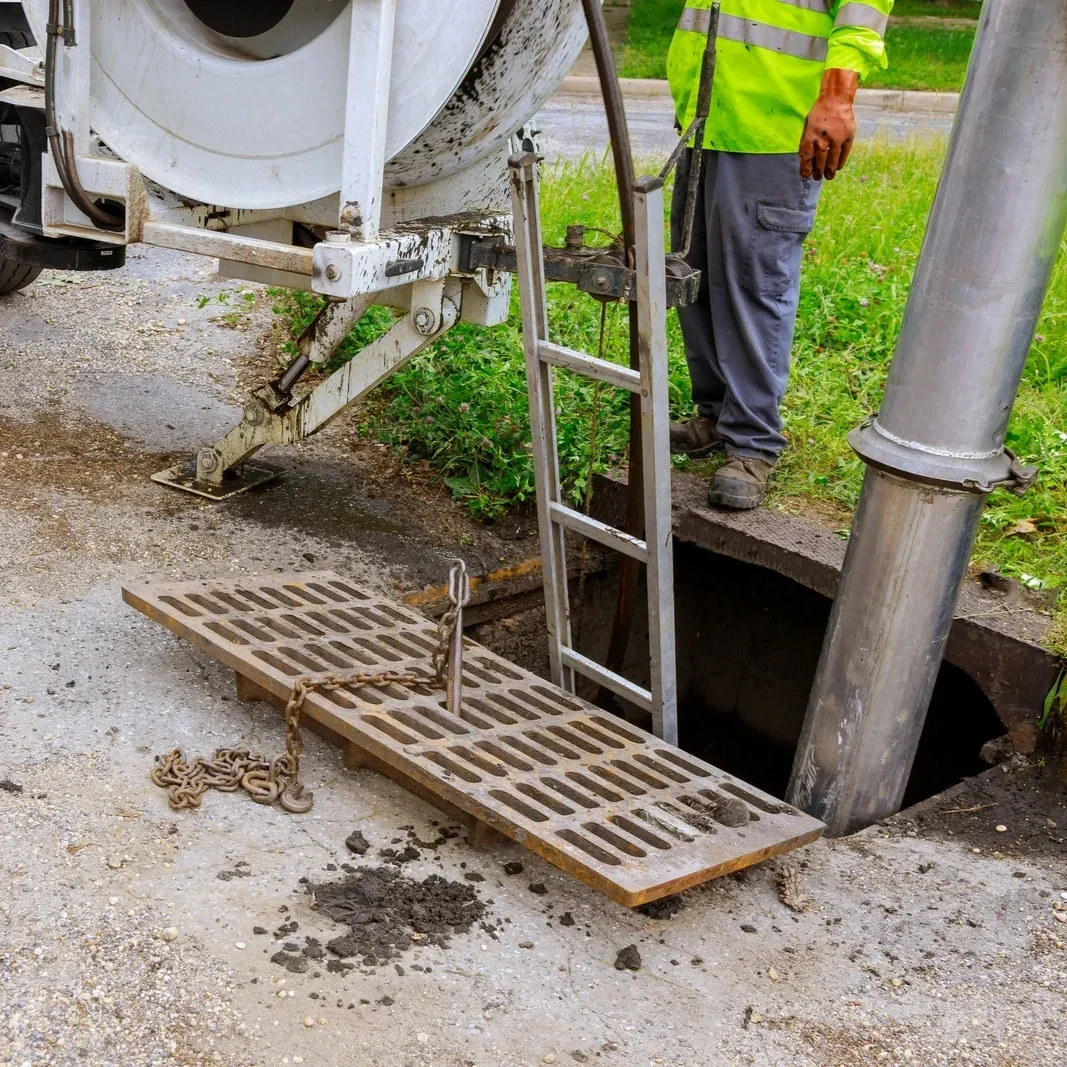
What root cutting actually does
A root cutting clears the line. It does not fix the line.
The mechanism is mechanical. A Flex-Shaft cable — a flexible drive shaft with a chain head at the tip — feeds down the sewer through a cleanout. The chain spins at several thousand RPM and chops the root mass against the pipe wall. A jetter flush moves the chopped material downstream. Done well, the pipe goes back to a clean interior wall, edge to edge.
What the cutting does not touch is the opening the roots grew through. Sewer line root intrusion almost always happens at a joint — the gap where two sections of clay or concrete pipe meet, sealed originally with a mortar collar or a rubber gasket. Decades of soil shift, freeze cycles, and small pipe movement open hairline gaps in those seals. A tree root growing within fifteen feet of the line senses the moisture coming through that gap, follows the gradient, and threads itself in through a crack you can't see from inside the pipe.
Cut the roots out and the gap is still there. The same root system pushes through next year. Eight to eighteen months later, the cleanout shows the same picture at the same depth on the screen. The cleaning works. The conditions for re-growth don't change.
What pipe lining does that cutting can't
Trenchless pipe lining — the process is called cured-in-place pipe, or CIPP — installs a new pipe inside the old one without digging the yard up.
The mechanism is structural. A felt sleeve soaked in a two-part epoxy is pulled or inverted into the existing sewer line and inflated against the pipe wall. The resin cures over a few hours, and what's left is a continuous fiberglass-reinforced liner bonded to the inside of the old pipe. The new interior is smooth, jointless, and a structural pipe in its own right. The original pipe becomes a sleeve around it.
What that does to roots is end the conversation. Roots got in through joint gaps and hairline cracks. The liner covers every joint and every crack along the lined section. There is no longer an opening for a root to find. Existing roots outside the line still grow — the tree doesn't know anything happened — but they have nowhere to enter. The line stays clean.
The result is a pipe rated for fifty-plus years of service inside a host that was on its way to needing replacement anyway. ASTM testing puts CIPP design life at a minimum of fifty years; many municipal projects spec it as a hundred-year solution. For a residential lateral with repeat root intrusion, lining is a one-time fix.
The numbers — how long each method actually holds
The duration difference is the part of this decision that most homeowners underestimate.
| Treatment | Typical interval before roots return | Long-term commitment |
|---|---|---|
| Cable cutting (drum machine with root blade) | 6 to 12 months, heavy-tree yards | Recurring service for as long as the trees and the joint stay where they are |
| Flex-Shaft cutting (chain head, edge-to-edge) | 12 to 24 months in heavy-tree yards, 2 to 4 years in moderate | Indefinite, but longer cycles than cable; the joint stays open |
| Cutting paired with annual jetting flush | 12 to 30 months between callbacks | Indefinite — better cleaning, same underlying gap |
| Cured-in-place pipe lining | 50+ years per ASTM standards | One-time per lined section, assuming the host pipe is sound |
Cable cutting is what most older houses run on by default. The drain backs up, a cable machine clears a tunnel through the root mass, and the line drains until the cut roots regrow. Smaller cable blades leave more root tissue behind than a chain head does, so cable-cut lines tend to call back faster than Flex-Shaft-cut ones. Either way, the joint is still open, and the cycle continues.
Lining is the other end of the chart. The lined section is, from the line's perspective, a new pipe — root-tight, joint-free, and engineered for a service life longer than most owners will live in the house. The cycle stops because the gap stops.
What gets missed when you keep cutting
Annual root cutting feels manageable. Hour-long visit, a few hundred dollars, water drains afterward. Two costs build up underneath that cadence.
The first is the pipe. Every root that pushes through a joint widens the gap a little. After ten or fifteen years of recurring intrusion, a clay-to-clay joint that started with a hairline gap can be missing the top inch of its mortar collar entirely. The joint is no longer a sealed pipe joint — it's two sections of pipe pointed at each other across an open space. Soil washes in. Sand collects in the line. Cutting still clears the roots, but the pipe underneath is degrading on its own timeline.
The second is what happens when a heavily compromised joint drops out of alignment. An offset changes the question from "remove the roots" to "is the line still a continuous pipe at this point." Sometimes lining is still a candidate. Sometimes the section needs spot repair or open excavation. The cost gap between lining a sound but rooted pipe and excavating a settled one is often two to four times the dollars. Catching the joint while it's still lineable is the cheaper number.
When cutting is still the right answer
Lining isn't the right call for every rooted line. A few conditions make cutting a reasonable long-term plan.
A short-tenure homeowner — third year of a five-year window — often does the math at "cheaper now is the right answer" and lives with a yearly cut. The line transfers to the next owner, and as long as the disclosure is honest, that's a defensible call.
A line with light root activity at a single isolated joint, in a yard with one mature tree scheduled for removal anyway, can be cut once and watched. If the tree comes out, the new feeder roots stop growing toward the pipe.
A pipe that isn't a good lining candidate is the other case. Severe offsets, multiple structural failures, or a host pipe so corroded the liner can't bond push the work toward open excavation instead of trenchless lining. In those situations, cutting is the holding pattern until a planned excavation can happen.
When lining stops being optional
A few signals shift the call from "cutting is fine for now" to "the next visit should be a lining estimate."
The clearest is the callback frequency that keeps shortening. A line that needed cutting every twenty-four months and is now backing up every eight is telling you the joint is widening. By the time the interval is below a year, the conditions inside the line are getting worse on their own.
Second is the rising debris in the cut visits. The cleaning starts pulling out chunks of mortar with the roots, or the camera shows soil at the floor of the pipe past the rooted joint. Soil in the line means the joint isn't sealing against the dirt outside — a pipe-condition issue, not a root issue, and cutting no longer addresses the right problem.
Third is the camera finding more than one rooted joint along the run. A single bad joint can be spot-lined. A series of rooted joints across a fifty-foot stretch is usually a sign the host pipe is at the end of its life. Lining the full section becomes cheaper than spot-fixing each joint as it fails.
Fourth is a yard situation that's about to get more aggressive — a new tree planted ten feet off the line, a neighbor's mature root system tracking across the property, and construction that disturbed the soil column. Anything that increases root pressure shortens the next cleaning interval.
The cost math over a ten-year window
A side-by-side dollar comparison clarifies the decision more than any single visit cost does.
Residential root cutting runs roughly $300 to $600 per visit for a Flex-Shaft pass at a single cleanout, more if the line needs jetting the same day. Annual service in a heavy-root yard sits at about $400 a year on average. Over ten years, that's $4,000 in cleaning costs, assuming no emergency callouts. Add one or two after-hours backups during a wet spring — typical for a roots-driven line — and the ten-year number lands closer to $5,500 to $7,000 once cleanup is included.
A trenchless lining for a residential lateral typically runs $4,500 to $12,000, depending on length, access, and pipe condition. A 40-to-70-foot lateral lined in one shot lands toward the lower-middle of that range. Most lining work is a one-time expense for the lined section, with no recurring service beyond an occasional camera check.
The break-even on a heavy-root line falls between year six and year nine of continued cutting. Past that point, lining is cheaper per year of clear flow. The other variable not on the dollar sheet is sale value — a house disclosed as having a recurring sewer-line root issue draws a price discount and an inspection contingency. A finished lining with camera footage in hand draws neither.
What each job looks like on the day
Root cutting is a one-truck, one-tech visit. The Flex-Shaft cable goes in through the existing cleanout, the chain spins, debris flushes downstream, and a camera confirms clean wall after the cut. Total job runs an hour to two and a half hours, water service stays on, and the only downtime is a request not to flush during the cutting pass.
Trenchless lining is a longer job. A camera maps the line first, then a cleaning pass — jetting paired with mechanical cutting — preps the interior. A wet-out liner is pulled or inverted into the pipe through the cleanout, inflated against the wall, and cured over several hours. Lateral connections get reinstated with a small cutter from inside the new liner, and a final camera run confirms the install.
Most residential lining jobs run a single day, occasionally two for longer runs. Water service is off for the cure window — typically four to eight hours. No excavation. No yard repair. The lawn looks the same the day after as the day before.
Frequently Asked Questions
What's the difference between root cutting and pipe lining in plain terms?
+Cutting clears whatever roots are inside the line right now. Lining seals the openings the roots came through. One is a periodic cleaning; the other is a structural repair that ends the cycle for the lined section.
Will pipe lining handle roots that have already invaded the pipe?
+The roots inside the line get removed during the cleaning pass that prepares the pipe for lining — that step is required before the liner goes in. Once the liner is cured, the joint the roots came through is sealed, and new roots have nowhere to enter the line. The roots in the soil outside the pipe keep growing; they just stop being a sewer problem.
How often do roots come back after a Flex-Shaft cutting?
+In a yard with mature trees, twelve to twenty-four months is typical. In a yard with light tree pressure, two to four years. The interval shortens over time as the joint the roots are entering widens, which is one of the signals that lining is worth pricing.
Is pipe lining always more expensive than continued root cutting?
+Not over a long enough window. The break-even on a heavy-root line falls between year six and year nine of continued cutting, after which lining is the cheaper number per year of clear flow. For a five-year horizon, cutting often pencils out cheaper on paper; for a fifteen-year horizon, lining almost always does.
Can every rooted sewer line be lined trenchlessly?
+No. The host pipe has to be intact enough for the liner to bond and hold its shape during the cure. Severe offsets, collapsed sections, or extensively corroded cast iron sometimes need spot excavation or replacement before any lining is possible. A camera inspection answers the eligibility question before any quote is finalized.
Do foaming root killers in the toilet work as a substitute for cutting or lining?
+Not really. Copper sulfate and herbicide foams kill the surface roots they contact and can slow regrowth for six to twelve months in a lightly rooted line. They don't remove the root mass already in the pipe, they don't seal the joint the roots came in through, and they're hard on the bacterial film a septic system depends on. Useful as a stop-gap between cleanings; not a replacement for either treatment.
Choosing the fix that ends the cycle
A rooted sewer line is one of the few drain problems where the cheaper choice and the cheaper outcome aren't the same. Cutting wins on the invoice for any given visit. Lining wins once the math catches up, and it wins for the rest of the pipe's service life.
A camera run that maps the rooted joints, pipe condition, and host material, is what turns the question from a guess into a number. Two rooted joints on an otherwise sound clay lateral is a different conversation than four offsets and a collapsed elbow. The first is a straightforward lining candidate. The second is a different repair entirely.
Once the picture is on the screen, the cost of ten more years of cutting lines up against the cost of lining the failing section. For a line called back year after year at the same depth, lining is the one repair that puts the cleanout visits out of the calendar for good.
