
Signs Your Drain Needs Hydro Jetting Instead of a Snake
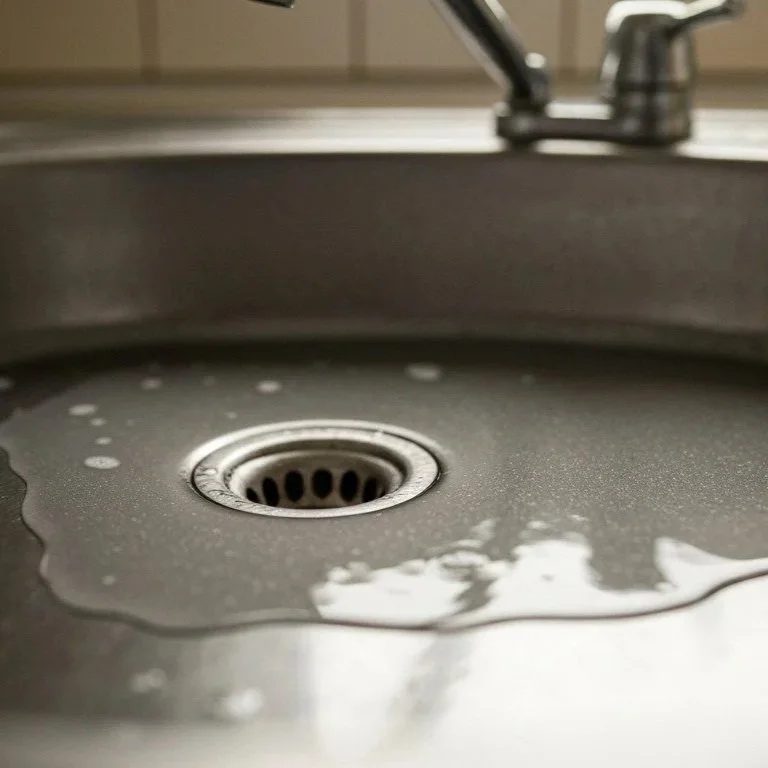
There is a small fold of receipts in your kitchen drawer. Same drain, same plumber, three visits this year. Each time the cable went down the line, the sink ran fine for a couple weeks. Then the water started pooling again. By month two it was backed up to the rim.
That pattern — clog, snake, two-week reprieve, repeat — is the single most reliable sign the line needs something a cable machine can't deliver. The clog isn't really being cleared. It's being tunneled through. Hydro jetting is the difference between punching a hole through a coating and scrubbing the coating off the pipe.
The trick is knowing which drains actually need it. Not every clog calls for a jetter. Here are the signs that tell you a snake isn't going to finish the job.
What hydro jetting actually does (and a snake doesn't)
A cable snake feeds a spinning metal line down the pipe until it hits the obstruction, then bores through it. Whatever blocked the line gets chewed up or pushed past the cable's reach. Water flows again. But the coated wall that caused the clog is still coated. The cable made a tunnel through it.
Hydro jetting works on a different principle. A specialized hose runs water at 1,500 to 4,000 psi through a nozzle with rear-facing jets and a forward-facing jet. The rear jets pull the hose through the pipe and scour the wall as they move. The forward jet breaks up the obstruction ahead. Pressure that high doesn't tunnel. It strips the pipe back to bare interior — wall to wall — and flushes the debris downstream.
The job a snake does is clear the line. The job a jetter does is clean the pipe. They're not the same thing, and the distinction shows up in how long the fix lasts.
Sign 1: The same drain keeps clogging on a one-to-three-week cycle
A drain that backs up, gets snaked, runs clear for one to four weeks, then slows back down is telling you the cleaning wasn't complete. The pipe still has its coating. The cable made a temporary path through it. Fresh debris catches on the same coated wall within days.
This is the most common pattern in kitchen lines, and the cause is almost always grease. Cooking fats go down as a hot liquid, cool against the pipe wall at room temperature, and harden into a wax-like layer. A snake punches a tunnel through the soft middle. Behind the tunnel, the grease layer is still there waiting to catch the next round of food scraps.
Hydro jetting flushes the grease layer off the pipe wall. With the right nozzle for the line size, the diameter returns to the original interior, and a kitchen line cleaned this way typically stays clear for one to three years — not weeks. If your kitchen sink has been snaked twice this year and is already slowing again, more snaking won't change the pattern.
Sign 2: A camera shows a coating, not just a plug
A camera inspection is the most useful diagnostic for choosing between a snake and a jetter. The picture either shows a discrete obstruction — a wad of paper, a foreign object, a tangled hair mat — or it shows the inside of the pipe coated in grease, sludge, mineral scale, or biofilm.
A discrete obstruction is a snake job. The cable goes down, breaks the plug, and water flows.
A coated pipe is a jetter job. There's no single point to break through. The whole interior of the pipe needs to come back to bare wall, and high-pressure water is the only common tool that does that without taking the line apart.
If a camera shows a long stretch of pipe narrowed by what's stuck to the walls — kitchen grease, fryer oil, laundry soap film, mineral scale — the line will not stay clear on snaking alone. Even a cable with chains on the tip clears partway, and the back side of the coating usually stays. Hydro jetting restores the diameter, end-to-end.
A persistent sewer smell after snaking points to the same thing. A clean trap stops the odor. So does a working vent stack. If both check out and the line still smells, the organic film on the pipe wall — bacterial slime, decomposing food residue, hair-and-soap muck — is still there and venting back through the trap. Jetting flushes that layer off, and the smell usually goes with it.
Sign 3: An older home with cast iron pipes and a slow main
In houses built before the 1960s, cast iron is the common drain material. The interior corrodes over decades, building hard knobs of rust scale — a process called tuberculation — that grow inward from the pipe wall. After 50 to 80 years, a 4-inch cast iron line can have an effective diameter of closer to 2.5 inches.
Snaking older cast iron has a low ceiling. The cable spins past the scale without removing it. Jetting on its own won't strip mature tuberculation off the wall either — pipe milling does that heavy work, and jetting follows to flush the debris.
Where jetting does shine in older houses is keeping a restored line clean on a maintenance interval, and clearing the grease and sludge that settle into the rough sections of the wall. If your house is over fifty years old and the main slows every fall when leaf debris and grease combine, an annual jetting schedule is the maintenance answer.
Sign 4: Multiple fixtures slow at the same time
When more than one drain slows at the same time — kitchen sink, bathroom tub, laundry standpipe — the restriction isn't in any one branch line. It's in the main line downstream of where those branches meet. Snaking a single branch accomplishes nothing; the line is still draining into a restricted main.
A main line that's been collecting grease, soap, hair, paper, and household sediment for years has a coating just like a kitchen branch line does, only larger. The coating drops capacity. The reduced velocity drops more sediment. The line gets dirtier the longer it sits.
A camera inspection of a slow main often shows what looks like sand or dirt at the bottom of the pipe — not a clog, not a coating, but settled debris collected in a low-slope section or a developed low spot. A snake passes through that material without removing it. Jetting carries it all the way out to the city sewer.
The same logic applies to root debris left behind by a previous root cutting. Chopped roots settle into low spots and contribute to the next slowdown until jetting flushes them out.
Hydro jetting handles main-line coatings because the volume of water at high pressure can move the debris all the way downstream. A cable snake can chew through a localized blockage in a main, but it can't carry the residue out. Jetting flushes the line clean end to end. The fixtures upstream all drain better, not because the branch lines got cleaned, but because the main is back to its original diameter.
Sign 5: Restaurant and high-volume kitchen lines that won't stay open
Commercial kitchen lines are jetting work, almost without exception. Fryer grease, dishwasher discharge, food-prep scraps — the volume going through a restaurant drain in one shift is more than a household line sees in a week. Coating builds fast. By the time a commercial line shows trouble, the grease layer is thick, and a snake won't touch it.
A grease trap intercepts most of the fats before they reach the line, but the downstream line still collects what passes through. A commercial kitchen on a maintenance jetting schedule — every three to six months, depending on volume — keeps the line at original diameter and avoids the backed-up floor drain that brings the health department to the door.
For homes, this matters because some residential kitchens behave like small commercial ones. A household that fries food daily and washes dishes for a large family puts grease into the line at a much higher rate than the typical home. Those lines often need jetting on an annual interval.
When hydro jetting isn't the right call
Jetting isn't a universal answer. A pipe in poor structural condition is the biggest exception. Cast iron with active rust-through, clay with offset joints, galvanized pitted from the inside — high-pressure water in those lines can find the weakness and make it worse. A camera inspection is what tells you whether the pipe is sound enough to jet. If it shows active deterioration, the next step is repair or hydro jetting paired with lining, not jetting alone.
A localized hair-and-soap clog in a bathroom sink or tub is usually snake work — short line, clog near the entrance, a flex-shaft or basic cable handles it in ten minutes. Jetting a one-inch line for a single hair plug is overkill.
An active root mass in a main line is usually flex-shaft work first, jetting second. The flex-shaft cuts the mass edge-to-edge, including the smaller roots a cable misses, and the jetter follows to flush out debris. Jetting alone struggles with thick, woody root material at residential pressures.
For everything in between — coatings, sludge, scale-and-sediment, recurring grease, multi-fixture slowdowns — jetting is the tool that restores the line.
Frequently Asked Questions
How do I know if my pipes can handle hydro jetting?
+A camera inspection before the jetting tells you. The picture shows whether the pipe is structurally sound — smooth interior, no offset joints, no active rust-through — or whether the line has weaknesses that high-pressure water might exacerbate. Reputable shops camera the line before jetting an older system. If a plumber wants to jet without an inspection on a house more than fifty years old, ask for the camera first.
Does hydro jetting hurt PVC or modern pipe?
+No. PVC, ABS, and cast iron in good condition handle residential jetting pressures without issue. The 1,500 to 4,000 psi range is well below what those materials are designed to withstand. The risk is specific to old, deteriorated pipe — cast iron eaten thin by rust, clay with cracked joints, and galvanized pitted from the inside. A healthy pipe is not damaged by jetting.
Can hydro jetting clear a complete blockage on its own?
+For most household clogs, yes. The forward jet on a flush nozzle is powerful enough to cut through grease, sludge, soap film, and most paper clogs. For dense root masses, a flex-shaft or cable usually opens the line first, then a jetter follows to clean the wall and flush debris. The order depends on what's in the line, which is why a camera ahead of time saves money.
How much water does hydro jetting use?
+A typical residential jetting job uses two to twenty gallons per minute at the nozzle, depending on line size and pressure. The water scours and flushes, then exits through the main sewer. For a one-hour main-line cleaning, total water use is usually under 600 gallons — comparable to a long shower.
Will hydro jetting clear tree roots?
+Partly. Jetting flushes loose root material and the smaller hair-like roots that catch debris. It struggles with established root masses that are thick and woody because the water has trouble cutting through the woody core at residential pressures. For real root intrusion, a flex-shaft cutter handles the mass first, then jetting follows to flush the debris and clean the wall. Permanent root prevention generally requires sealing the joint the roots are coming through — trenchless pipe lining is the typical fix.
How often should hydro jetting be done on a residential line?
+Depends on the line and the household. A typical kitchen line that's been jetted clean stays clear one to three years before grease builds back enough to slow it. A main line on a house without active roots usually goes two to four years between cleanings. A house with mature trees and a clay sewer often runs an annual schedule.
How to choose between a snake and a jetter for your line
+When the plumber comes out — or worse, doesn't give you a choice and just runs a cable — the question worth asking is what the camera shows. Without a picture of the inside of the pipe, both the homeowner and the plumber are guessing about the cause of the slowdown, and the tool that gets picked tends to be whatever was on the truck.
A camera inspection turns that into an answerable question. If the line is coated, jetting. If it has a discrete plug and is otherwise clean, a snake. If the pipe has structural problems, repair or lining before any cleaning.
The pattern to watch for is a drain that keeps coming back to the same problem after each snaking. That's the strongest sign the cable isn't reaching what's wrong, and switching tools is usually how the cycle ends.
